Showing posts with label March Browns. Show all posts

Friday, 5 June 2015

Resurrection – March Browns, River Usk

At the risk of repeating myself, it’s been a while since my last entry. Short on time, I've been forced to make the choice between fishing, tying flies and blogging - my fly boxes are also sparsely populated at the moment.

Early Riser

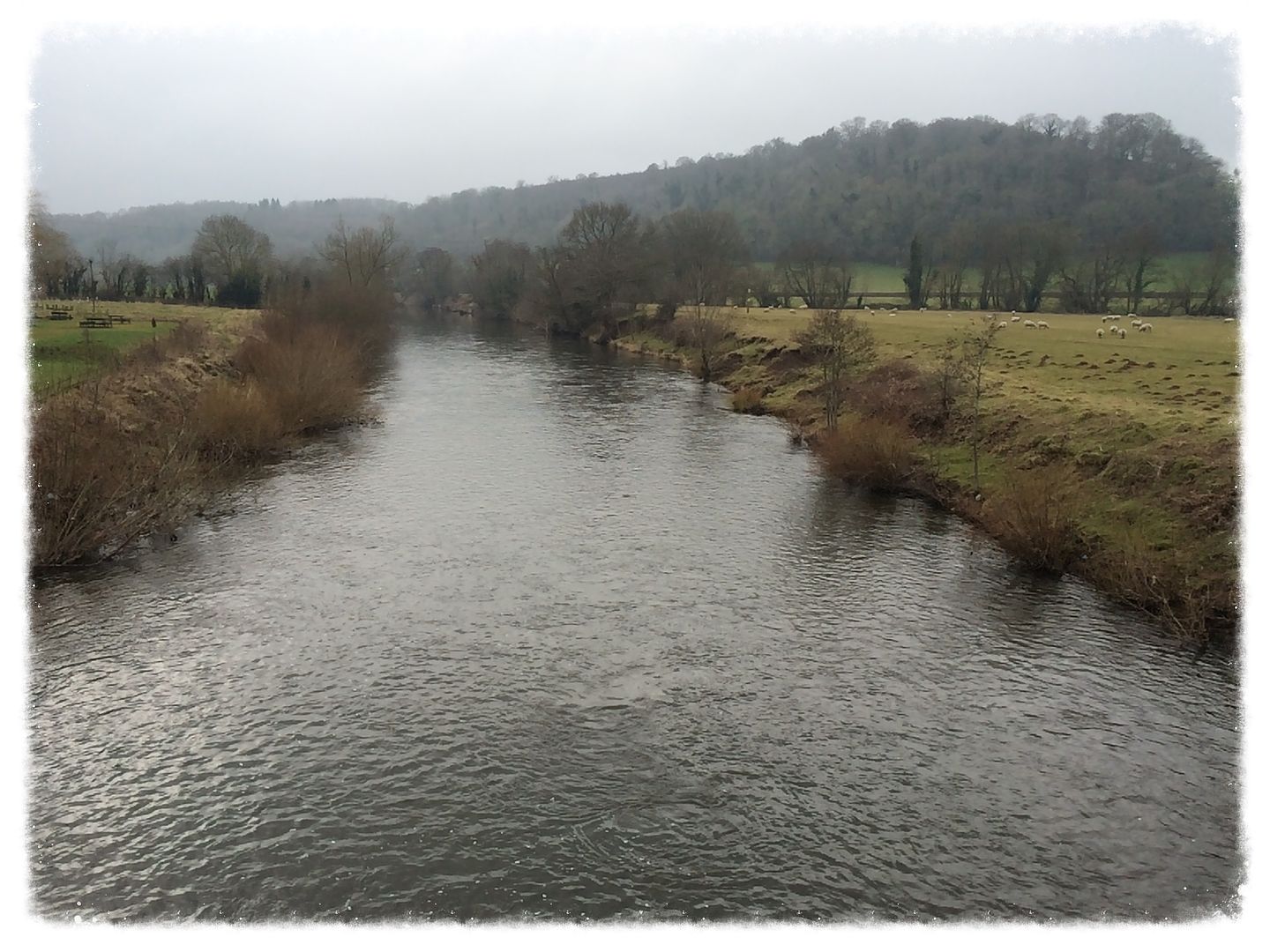
We start early on the Usk and unlike last year the river was relatively low throughout March and April. As such, it was fishable for long periods but, during the driest April I can remember, the fish population suffered (more on this in another entry).

The first few weeks of March saw me taking the rod for a walk along the banks of the Lower Middle Usk in search of post meridian risers. I found a few but, in hindsight, time would have been better spent upstream. When I did venture above Abergavenny I caught more, including one warm day where I caught my last fish at nearly 5pm.

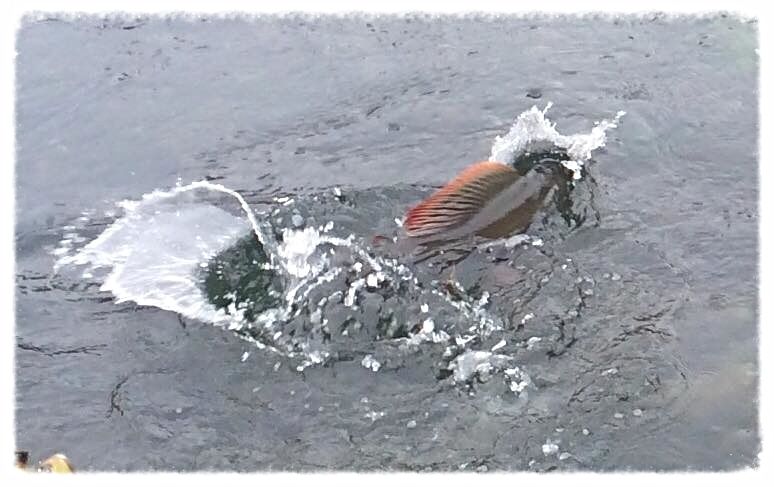
Early riser: LDO feeder

Large Dark Olives (LDOs) have been less prolific in the last few years, but the March Brown (MB) hatch has steadily improved. Most sustained LDO feeders were witnessed on drizzly, windless afternoons (perfect conditions) where large numbers of duns were fixed to the surface.

Missing in Action 

The first March Brown hatch I observed provided a harsh reminder of how quickly the angler needs to react. I saw a couple of big fish rising for MBs every twenty seconds and slowly moved in to cover the rear fish. By the time I was in position the hatch was over.
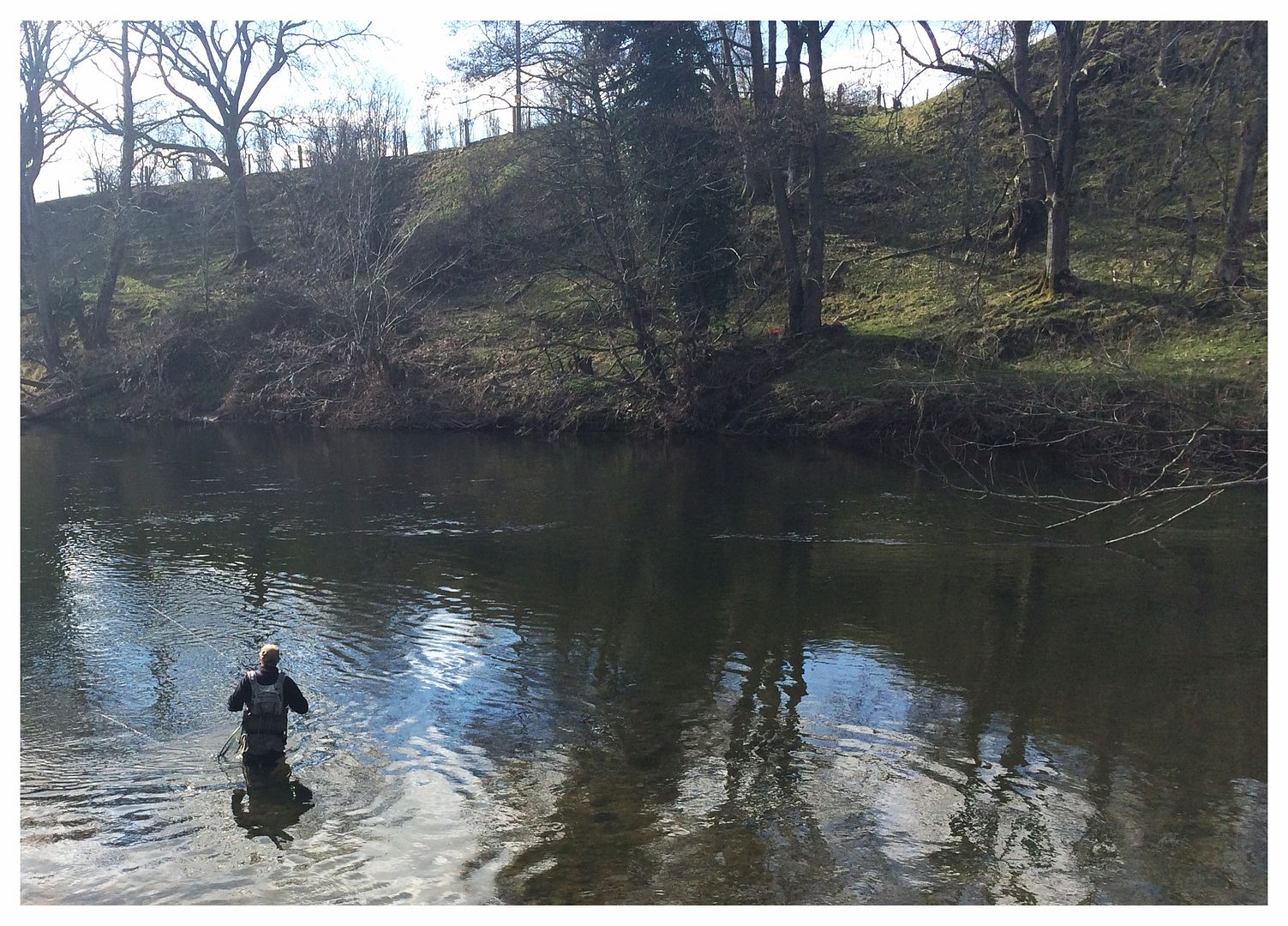
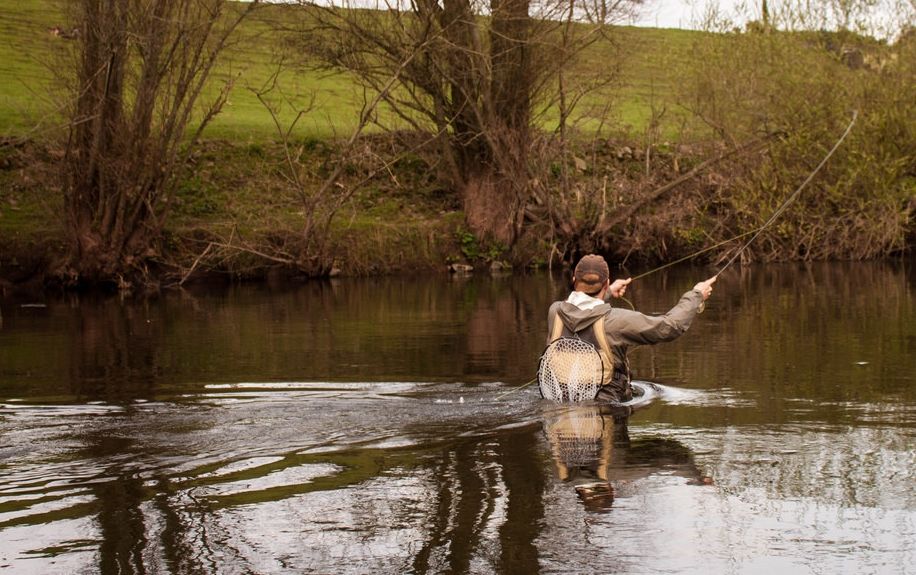
Wasting no time: Dave Wiltshire approaching a rising fish

The isolated nature and short duration of MB flurries means that, to increase the chances of coinciding with one, unless you know the water intimately, it’s best to keep moving. This tactic worked well one session on the Upper Usk with Nicholas Steadman; we walked a one mile beat, top to bottom, eight times. During that day we managed to locate four or five large emergences that lasted up to ten minutes. The largest occurred mid-afternoon and the fish responded in the most spectacular fashion I have witnessed.
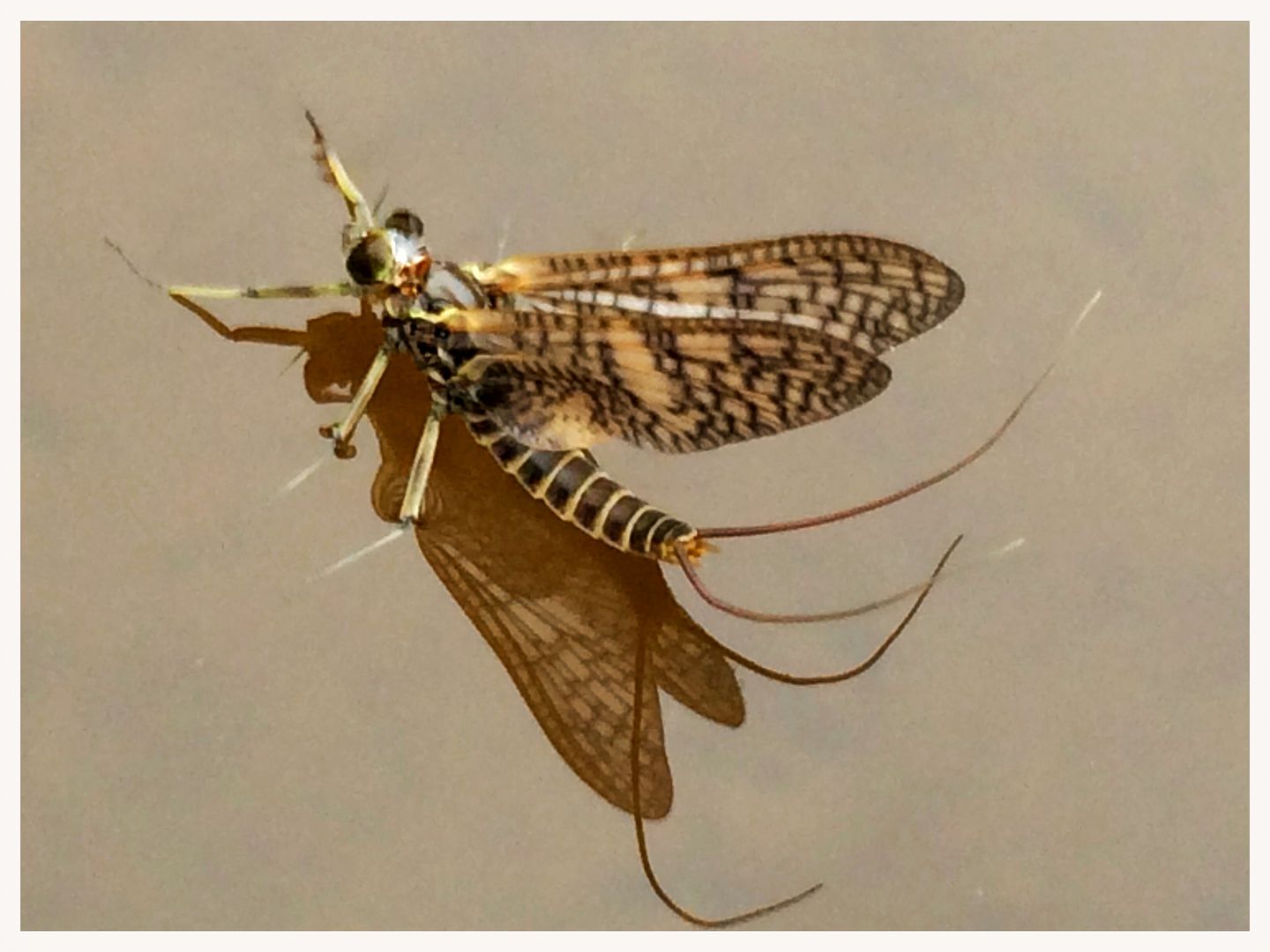
In the surface: March Brown

As we approached the top of the beat we noticed huge numbers (probably hundreds) of March Browns hatching in a fast run at the head of a pool and riding the rapids downstream to fixated trout. They were so preoccupied that Nicholas and I, stood in ankle-deep water twenty meters apart, caught trout from directly in between us.
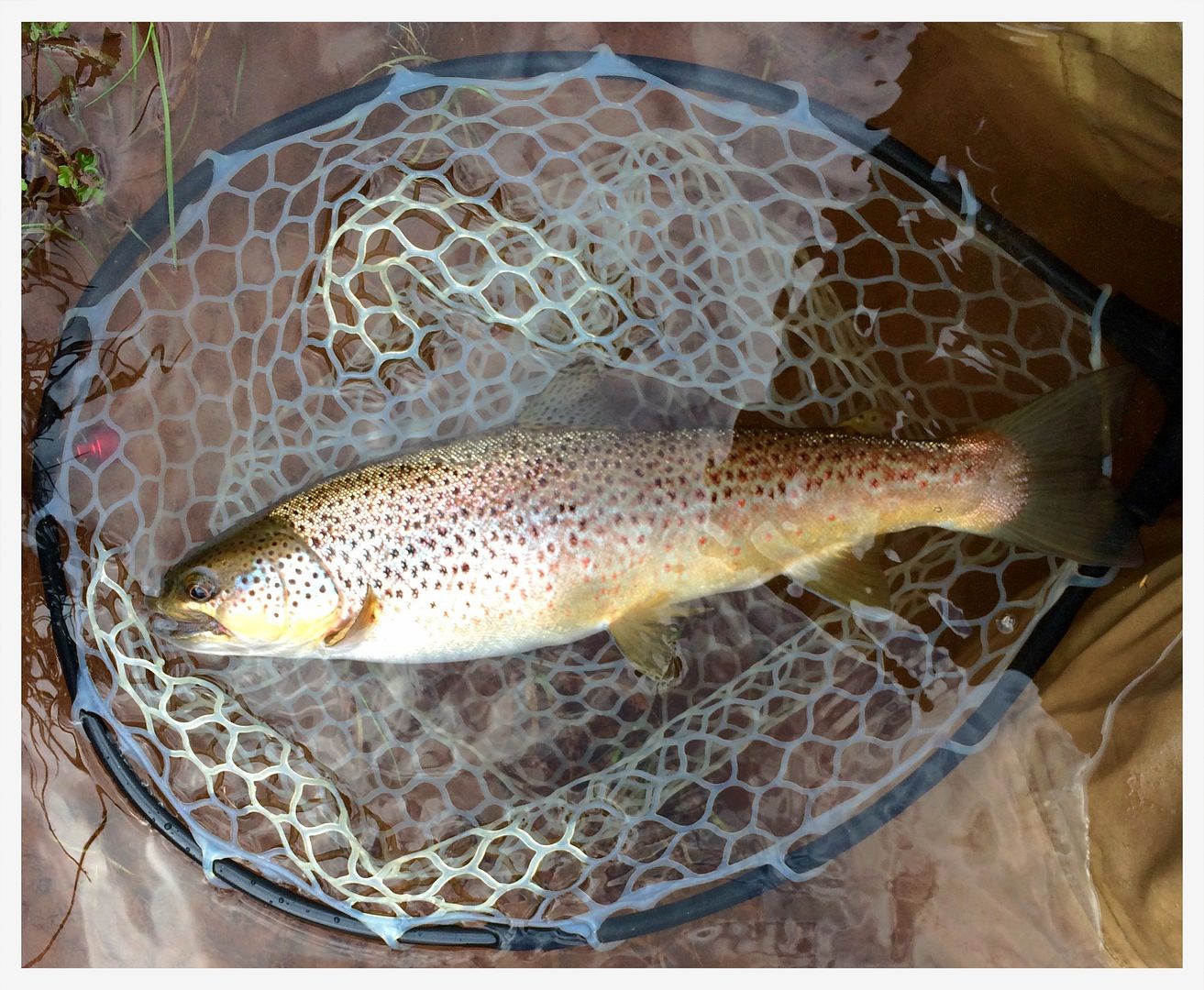
Caught in 20cms of water


As the hatch peaked, we noticed a huge commotion at the pool head and were astounded by what was unfolding. An up-welling to the side of the bridge had concentrated the newly hatched MBs into an area of flat swirling water no bigger than three or four square meters. These sitting ducks were being frantically snatched by numerous trout in a feeding frenzy more akin to a shoal of piranha! I took out my phone to start filming, but the excitement was too much and I continued fishing. This was the right choice as the hatch petered out within the next five minutes.

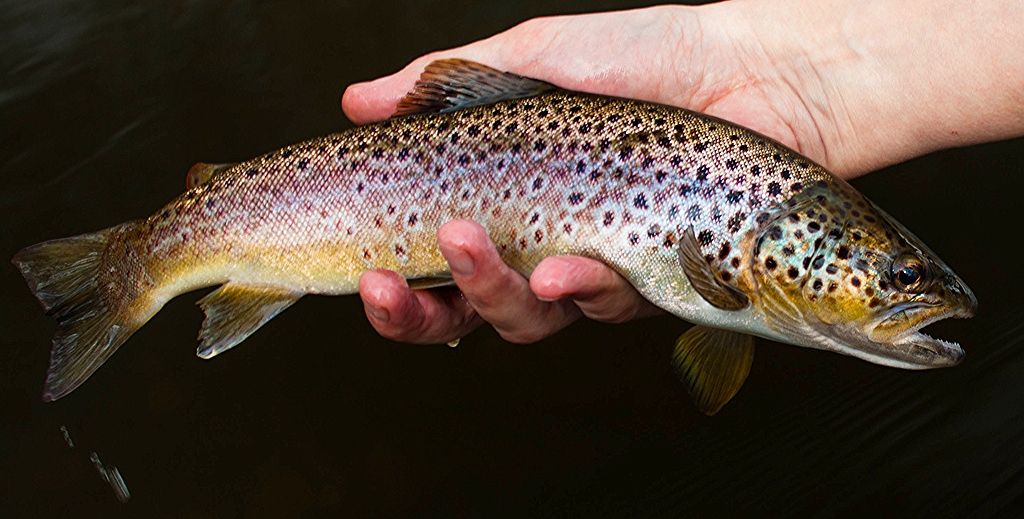
Upper Usk March Brown feeder

The difficulty in catching MB feeders is more in understanding and locating the hatch than hooking the fish. Size is important and I have noted that the fish respond far more readily to a size 12 than a size 14 dun pattern. 
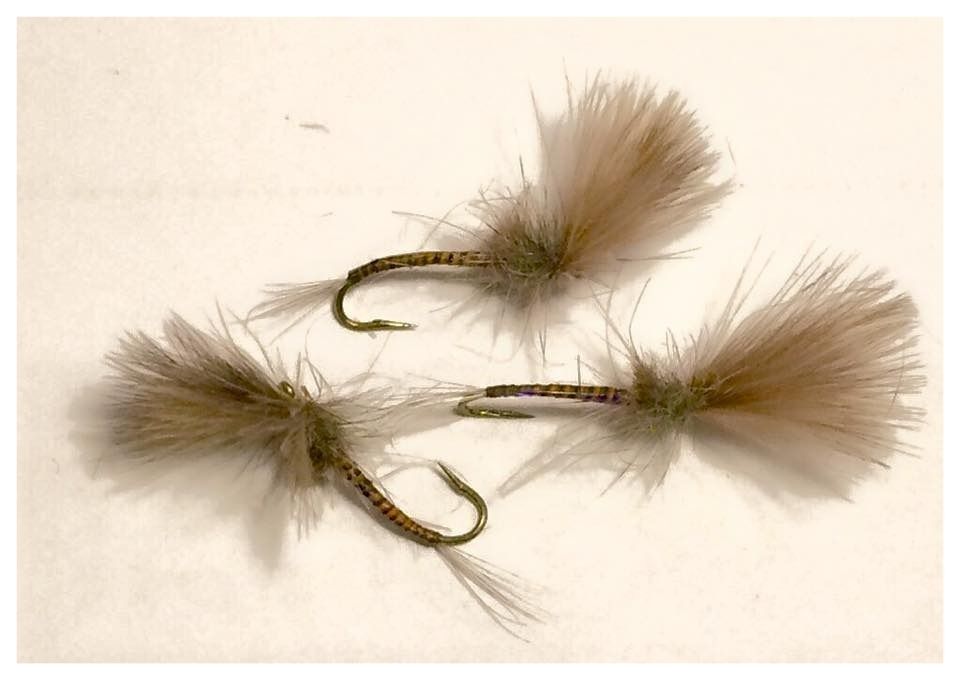
Emergers

Duns

As already alluded to, being prepared is essential and in my case, the fly needs to be attached to the tippet, as by the time I attach an emerger or dun imitation with shaking hands, I usually miss the best part of the hatch!
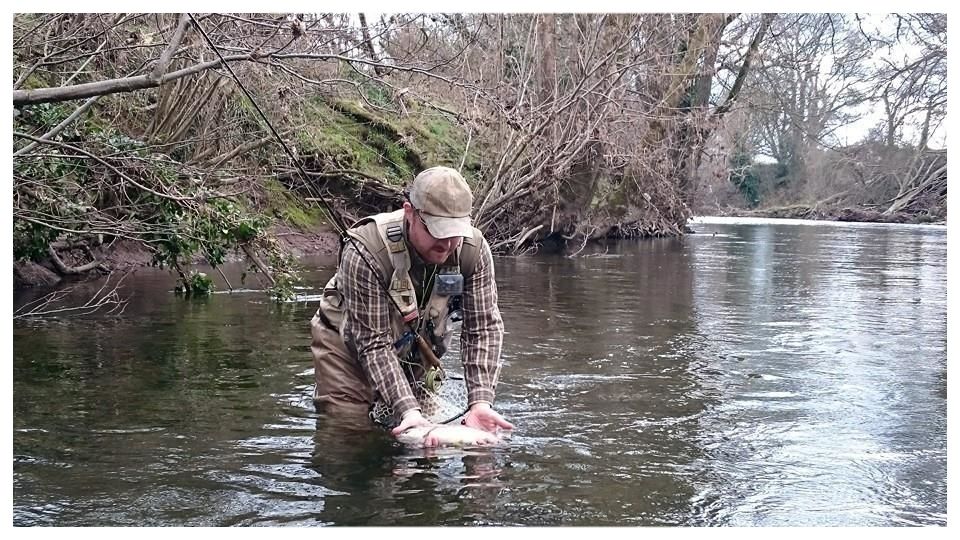
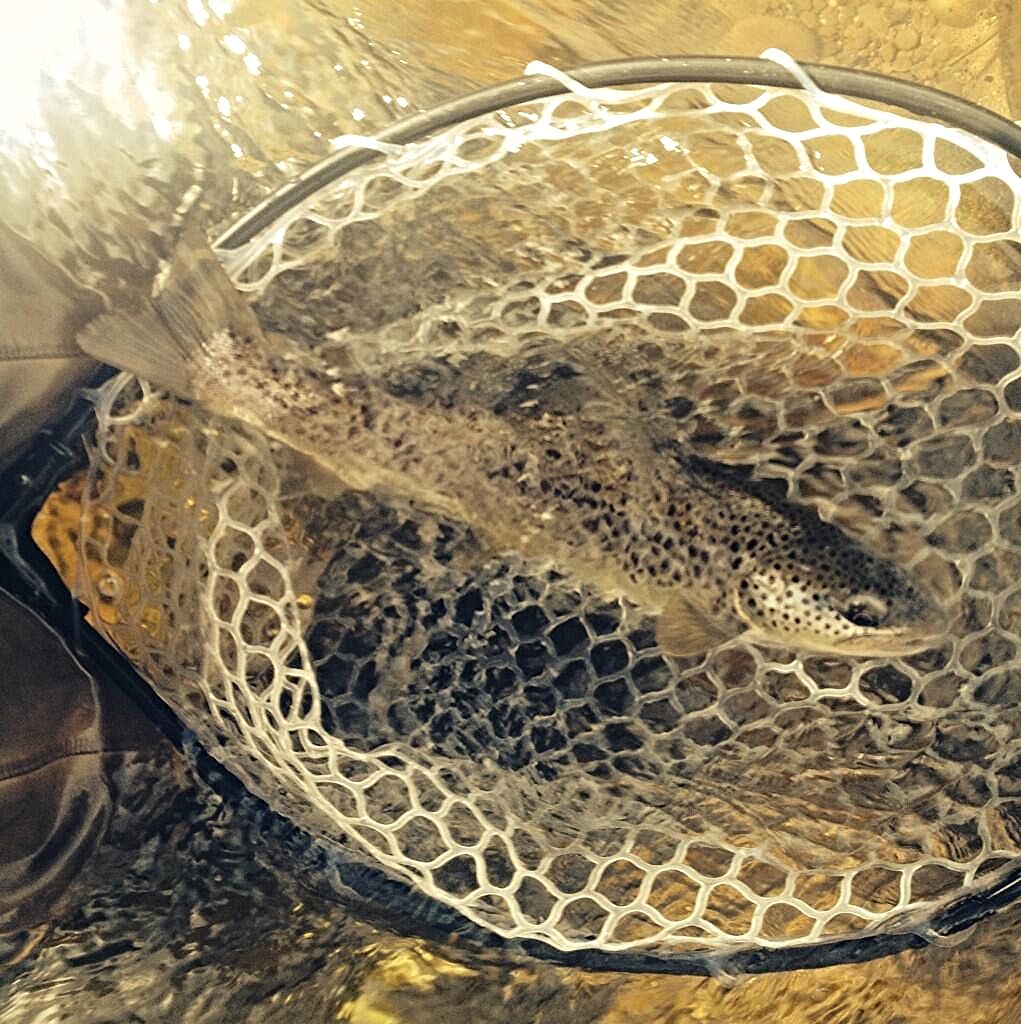
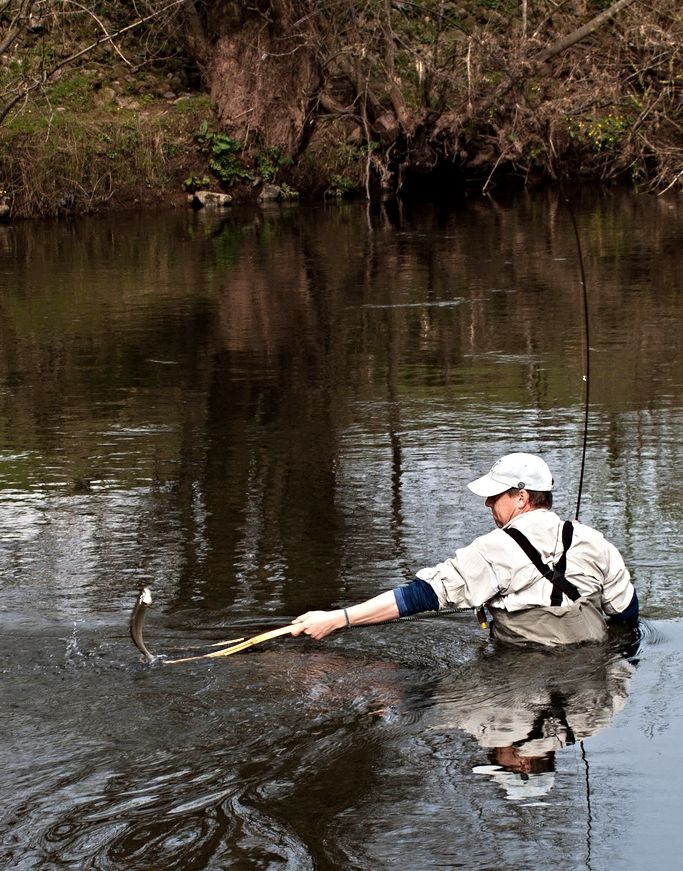
Returning a March Brown feeder (pic courtesy of Dave Wiltshire)


Resurgence

During March and early April, reports of these prolific MBs attracted anglers from throughout the UK. If they continue to improve, then more and more anglers will follow Oliver Kite's example in fishing the early season Usk.

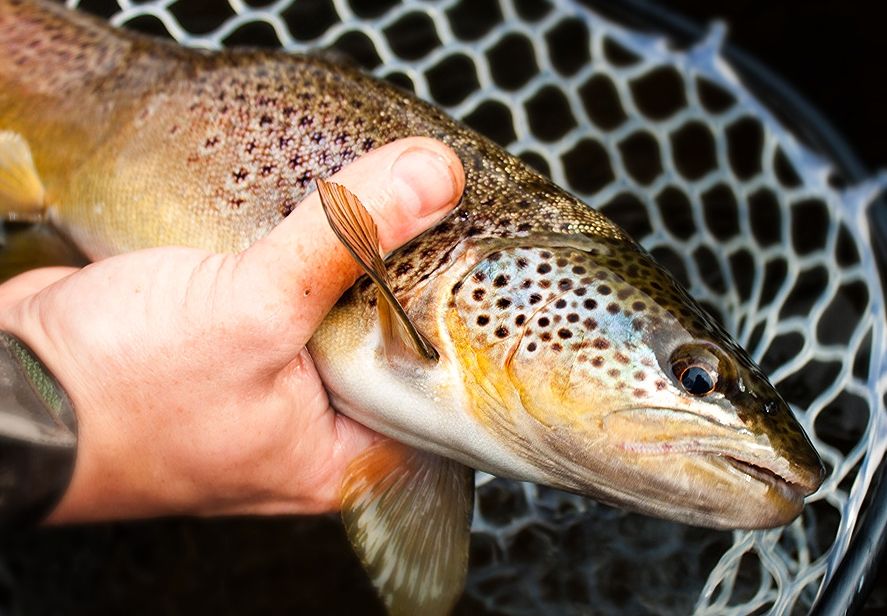
Bryn Derwen March Brown Feeder


I’m told by the more experienced (older) Usk fishermen that forty years ago the river would boil with MB feeders and that the flies all but disappeared from the river in the early eighties. To my knowledge, MBs were not recorded (in any number) on the Usk for decades. I’ve discussed the reasons for the revival with numerous anglers and ecologists; some attribute it to agricultural practices, particularly the use of organophosphate based sheep dips. I don’t know, but what I am sure of is that this majestic Heptageniida is making a welcome comeback. 
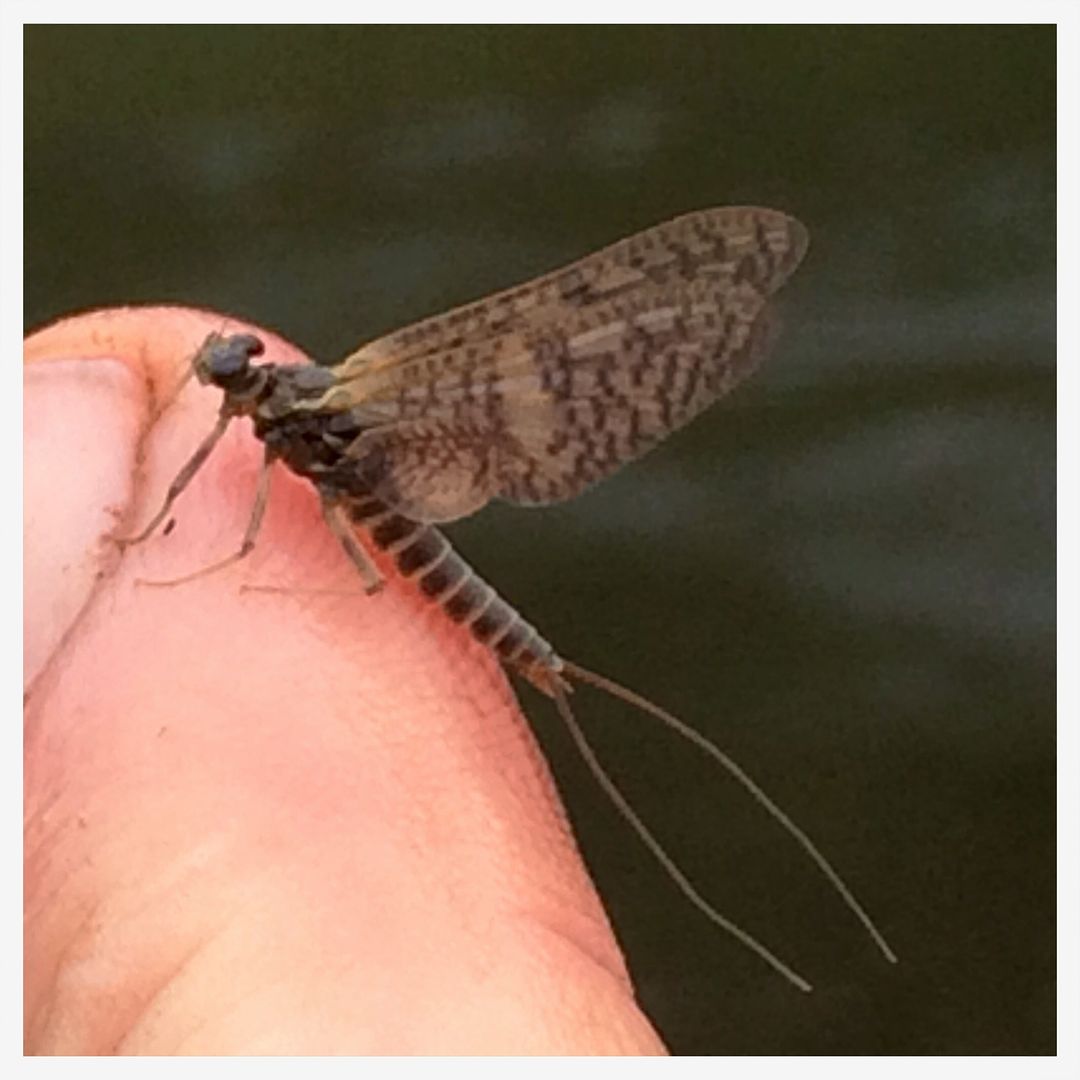
Rhithrogena germanica


Sunday, 1 March 2015

Out of Time, Winter 2014/15

Inactivity

I’ve not posted a blog entry since August and it’s been nagging at me. Since then I have started a demanding new job and my wife has given birth to our daughter. Changing priorities and less spare time have resulted in fewer hours on the river.

During the colder months I only managed to get out a handful of times; to the Frome, a southern chalk stream (that will remain unnamed), the Irfon, the Upper Wye and (of course) the Taff.

Beasts of the Southern Chalk

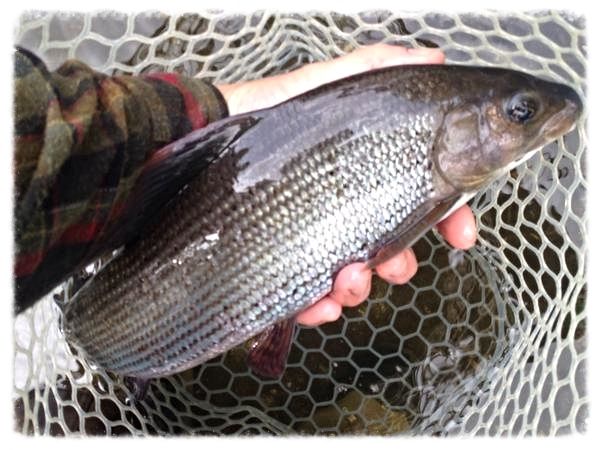
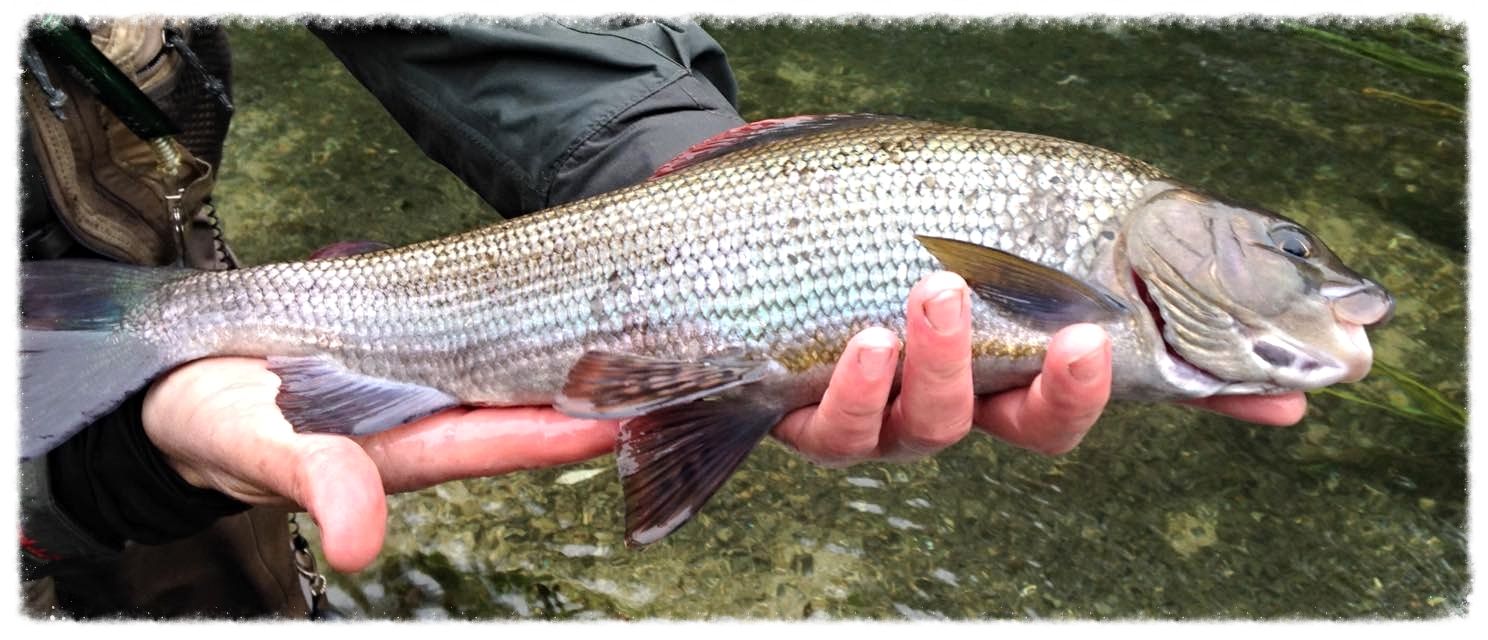
The first grayling outing of the new season saw me fishing the Frome near Dorchester where Ian Stirling had kindly organised a day for a few us. As trout were still in season we were pleased to land plenty of brownies and quite a few grayling, with a few nudging the two pound mark (including one weighed by Nicholas - not pictured).


One of the larger fish 


Frome grayling

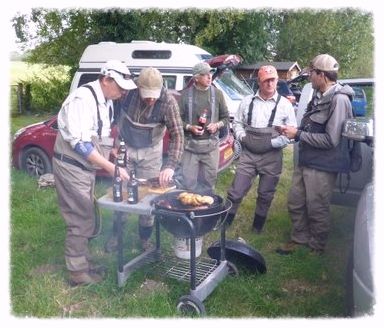
I was in great company. As this was a social occasion we had a memorable lunch, cooked mainly on John Aplin’s well used barbecue with a few additions, including what can only be described as 'Ian's Italian Quiche'.


Beasts of the southern chalk

John - pike spotting with the keeper (courtesy of John Grindle)

The Frome


Staying low with Nicholas (courtesy of John Grindle)


One for Dave (courtesy of Dave Smith)


It was a lovely day in superb surroundings and I am very grateful to Ian for organising it. 


..................................


On the second grayling outing I was the guest of Nicholas on a 'southern chalk stream'. We met at 8.00 am and by 8.30 am (and please don't misunderstand me here) it was clear that he had taken me to a special place; I was amazed by the number of fish and, being relatively new to chalk stream fishing, I struggled to spot some of them in the low light. But when I did... 

By mid-morning I was transfixed with a particular fish and managed to shuffle (on my knees) off a three foot bank and into the river. As good as the fishing was, I think that was the highlight of the day for my companion. 


Average size


Nicholas with a slim fish


The sport was frantic and we caught many hard-fighting blue-hued fish, no monsters but a few just over two pounds. 


The fight

2lb 2oz


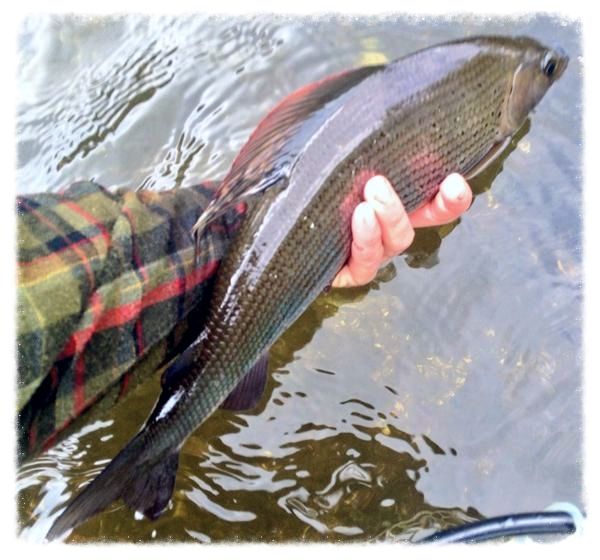
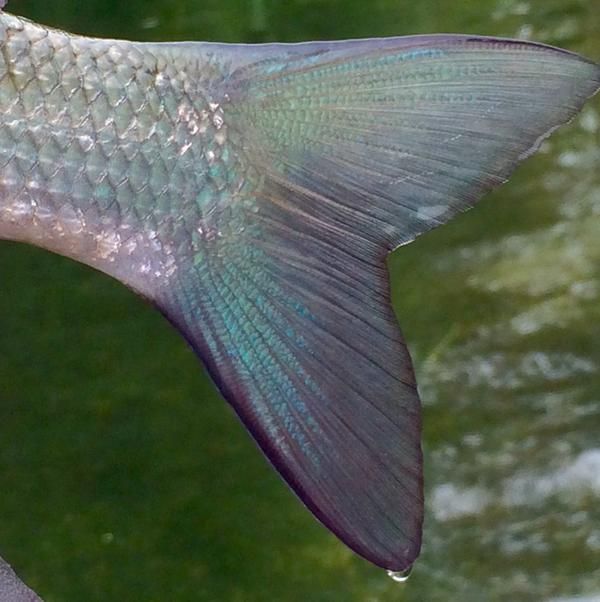
These fish were very special, almost irridescent. Certainly the prettiest grayling I've seen.


Irridescence 


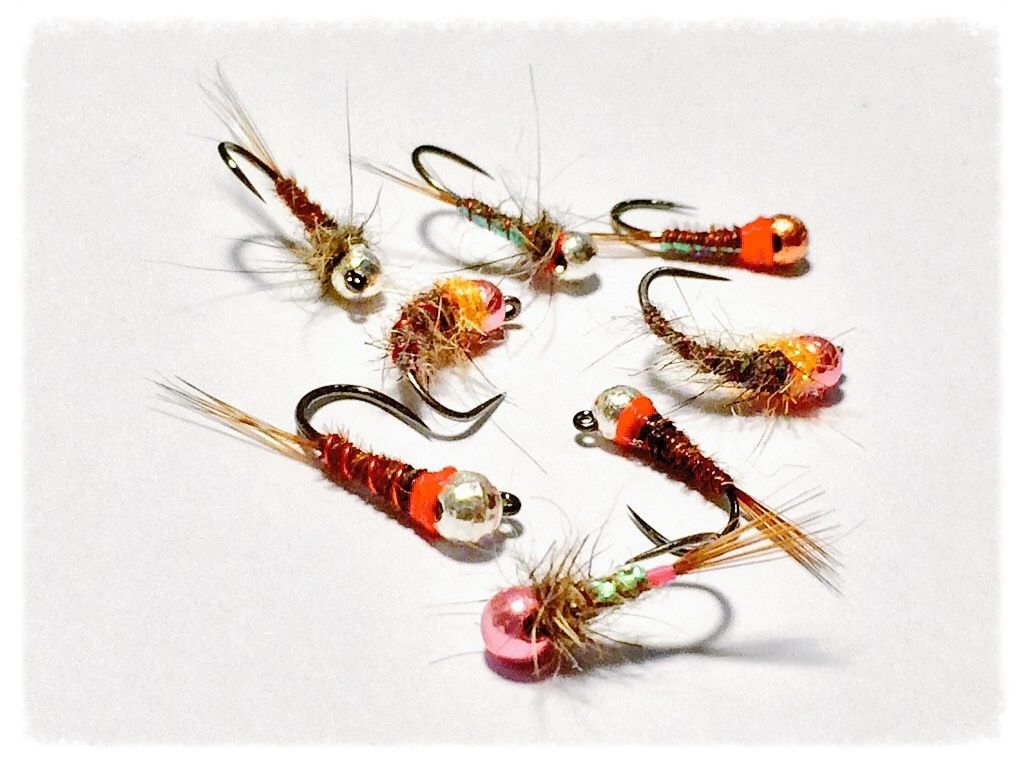
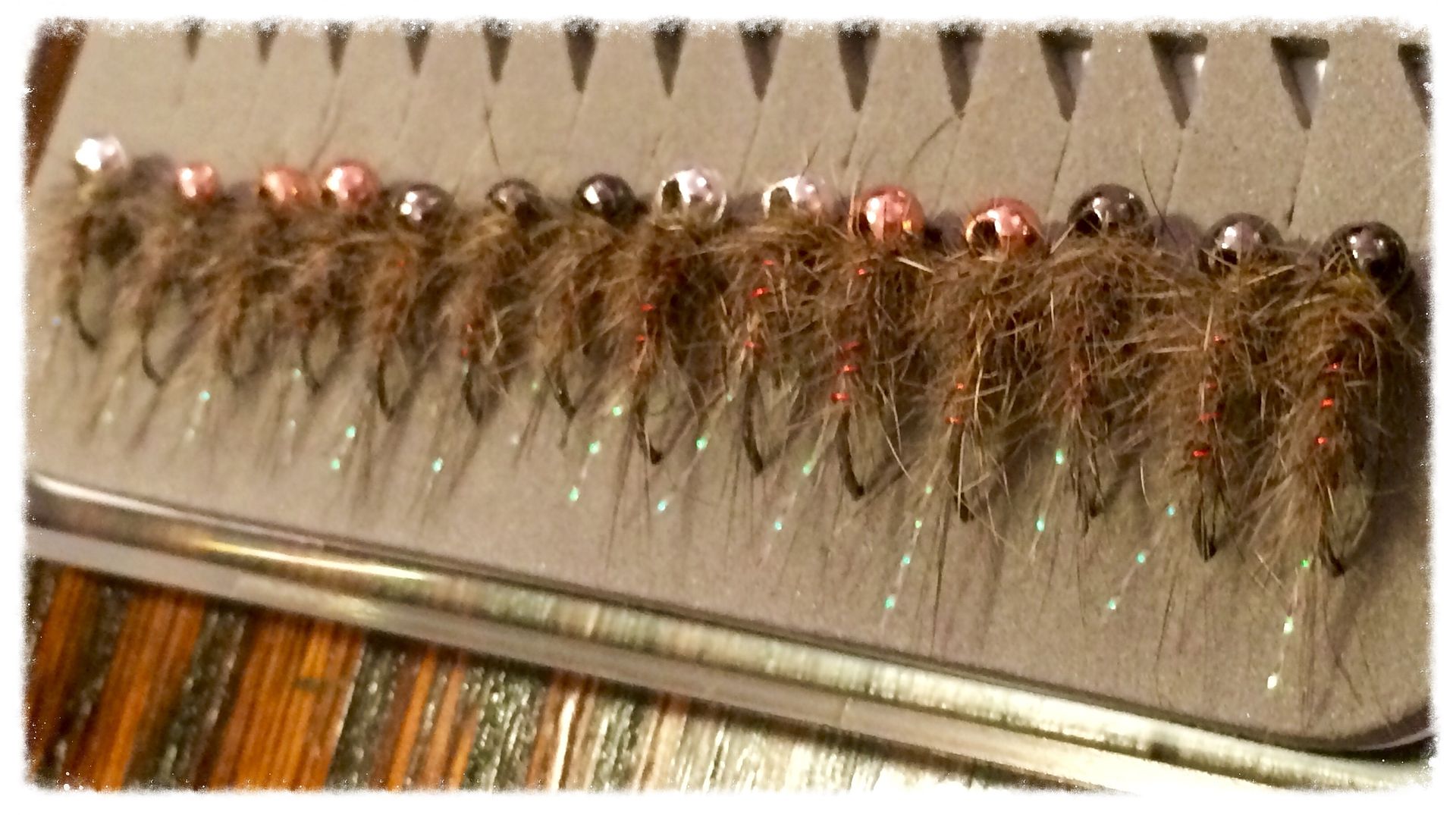
The flies that I used on both days were similar to those I employ on the Taff, except for a killer pink, orange and brown shrimp pattern that Nicholas gave me (that rarely left my tippet). The pink butted hare's mask nymph (below) caught my largest fish on each trip.

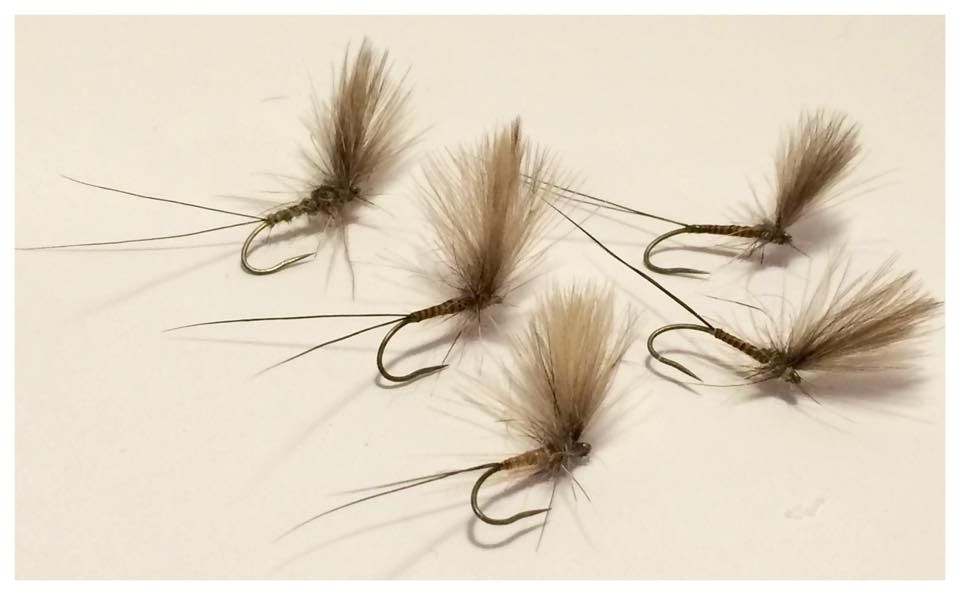
Taff grayling flies
..................................

Principles

This year I will mainly fish the Bryn Derwen Sporting Syndicate (near my house) and shall retain my Gwent Angling Society (GAS) membership. I am now a bailiff on the GAS Baker’s Beat near Chainbridge (a few hundred metres below Bryn Derwen) and hope to find the time to take advantage of some of the other GAS beats.


Chainbridge and Baker's

I have been an on-off member of Merthyr Tydfil Angling Association (MTAA) for over twenty five years. As a schoolboy I took the bus into town to purchase a ticket from Tony Rees' butcher shop. Tony is long retired, but I recall him enthusiastically filling out my ticket and giving me encouragement. It was on MTAA's Taff and Usk beats that I developed my love for river fishing. 

With this in mind, it saddens me that I will not be rejoining this year. Members of the club have requested that competitions be held on the Usk; while I do not fish competitions, I have no strong feelings regarding the catch and release events in which many of my friends compete. However, this year's MTAA competitions will encourage any legal method (fly and worm) and, as there will be no controllers (as I understand it), the competitors will have to weigh in up to four dead brown trout at the end. I suspect I will make no friends in the club writing this but I do not believe that a modern angling club should be organising catch and kill competitions on a wild trout fishery.

To put this into context, if twenty competitors took eighty fish on the Mardy beat, then I estimate that they may be removing ~10% of the trout population (of takeable size). The fact that this success rate is highly unlikely, makes no difference to the principle and I would be a hypocrite if I retained my membership.


Signs of Spring 
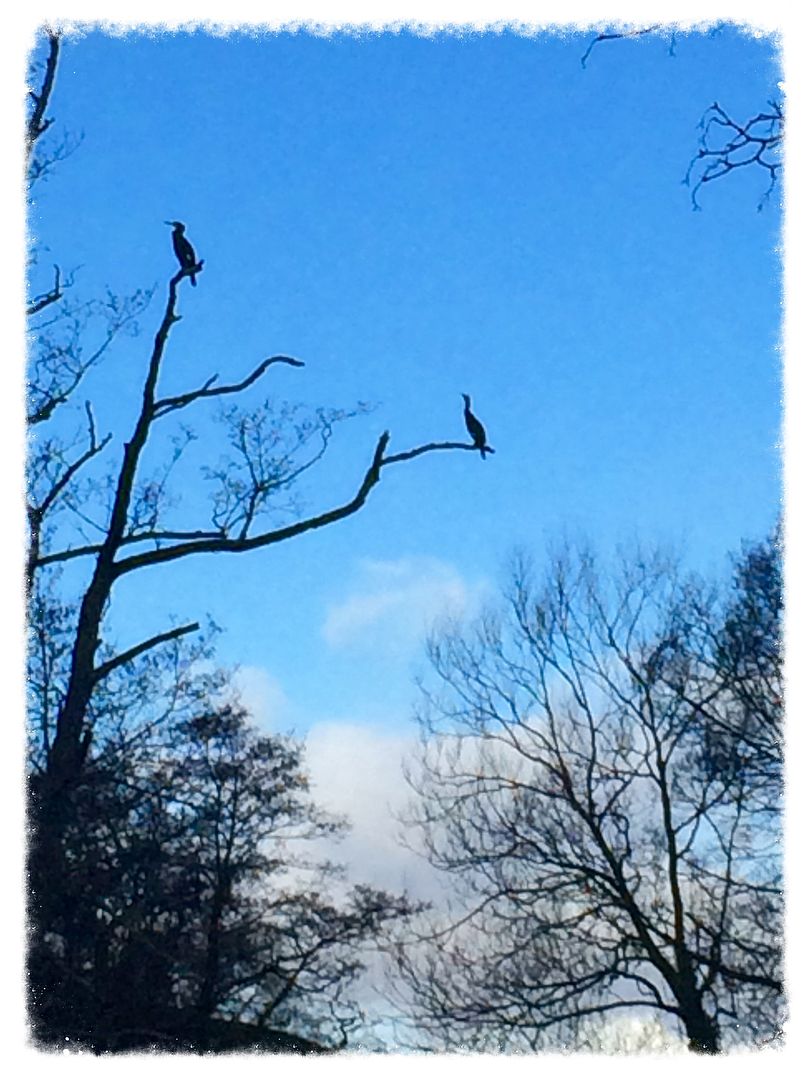
This time of year I can often be found walking the River Usk in expectation. (Usually between midday and 2.00 pm), I seek signs of spring and hope to spot hatching flies and rising trout. As yet, I've seen none. Although last week I thought I spotted a couple of rising fish but it turned out to be two cormorant crapping in the river!


Pesky piscivores 


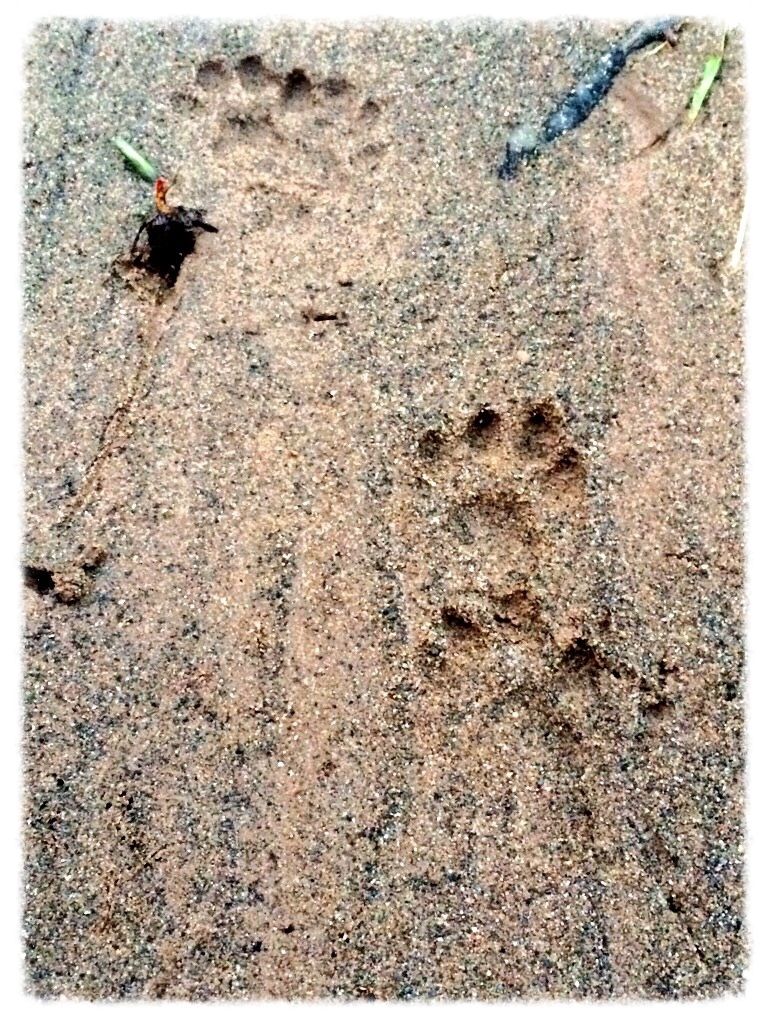
This year I've seen more signs of fish eaters than fish. Over the last few months I've been finding (with a bit of help from my lurcher Nel) trout tails up to over fifty meters from the river. 


Otter 


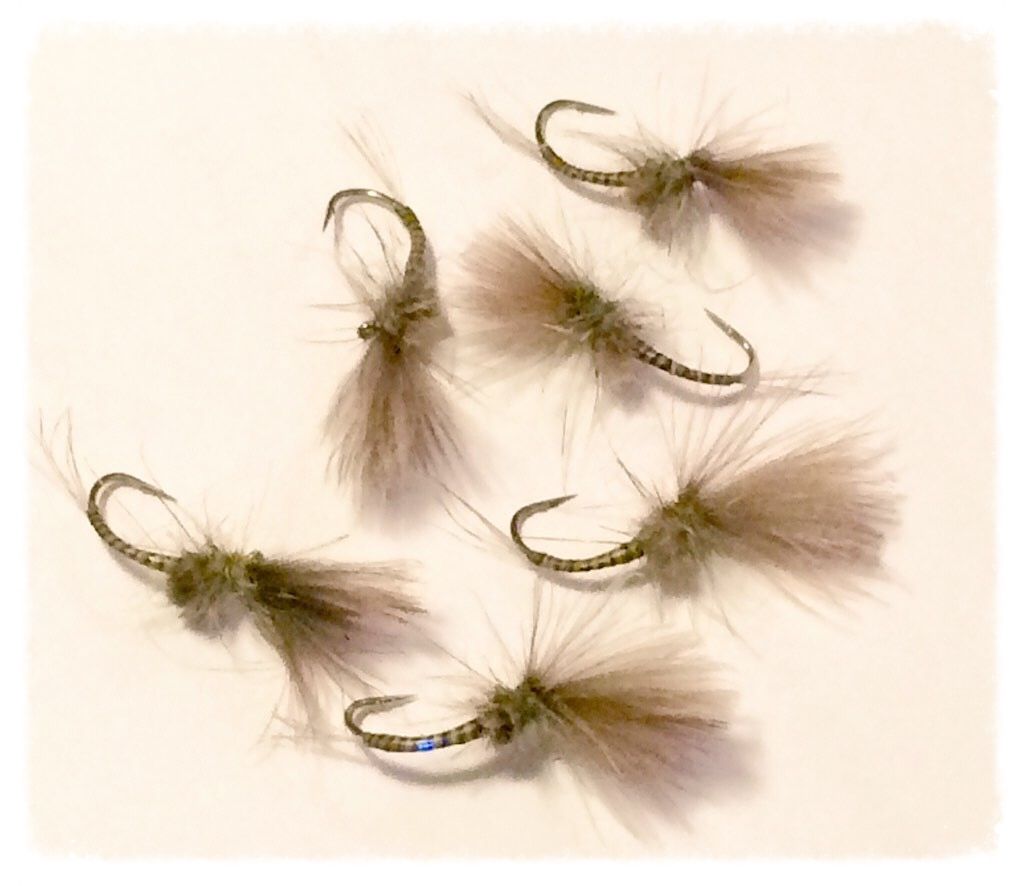
Expectation also drives industry and I tie most of my flies for the Usk in February and March. The first important hatches on the Usk are the Large Dark Olives (LDO) and March Browns and I imitate various life stages with tried and tested patterns, a few of which are shown below.  

UV backed olive emergers

Hook: Size 14 - Kamasan B100
Tail: Coq de Leon
Body: Olive or natural quill
Back: UV blobs tail fixed with a very thin coat of UV cure
Thorax: Hare's mask / pine squirrel / musk rat - mix of natural and olive
Plume: Natural CDC


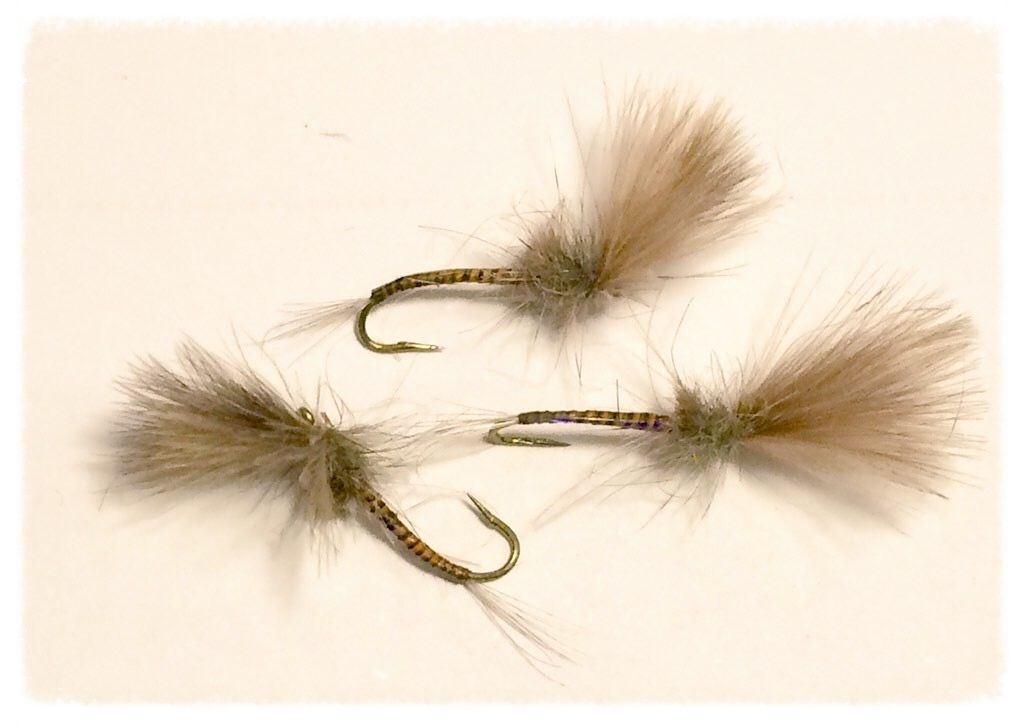
March Brown emergers


Hook: Size 12 - TMC 200R
Tail: Coq de Leon
Body: Ginger quill
Thorax: Hare's mask / pine squirrel / musk rat
Plume: Natural CDC


Bromwell's big boys


Signs of spring

Thoughts of Summer

Over the long and busy winter months I have been comforted by thoughts of the Usk in summer. As described in my previous entry, spending the last few hours of daylight on the river brought peace of mind. 


Last summer (courtesy of Jon Poutney)


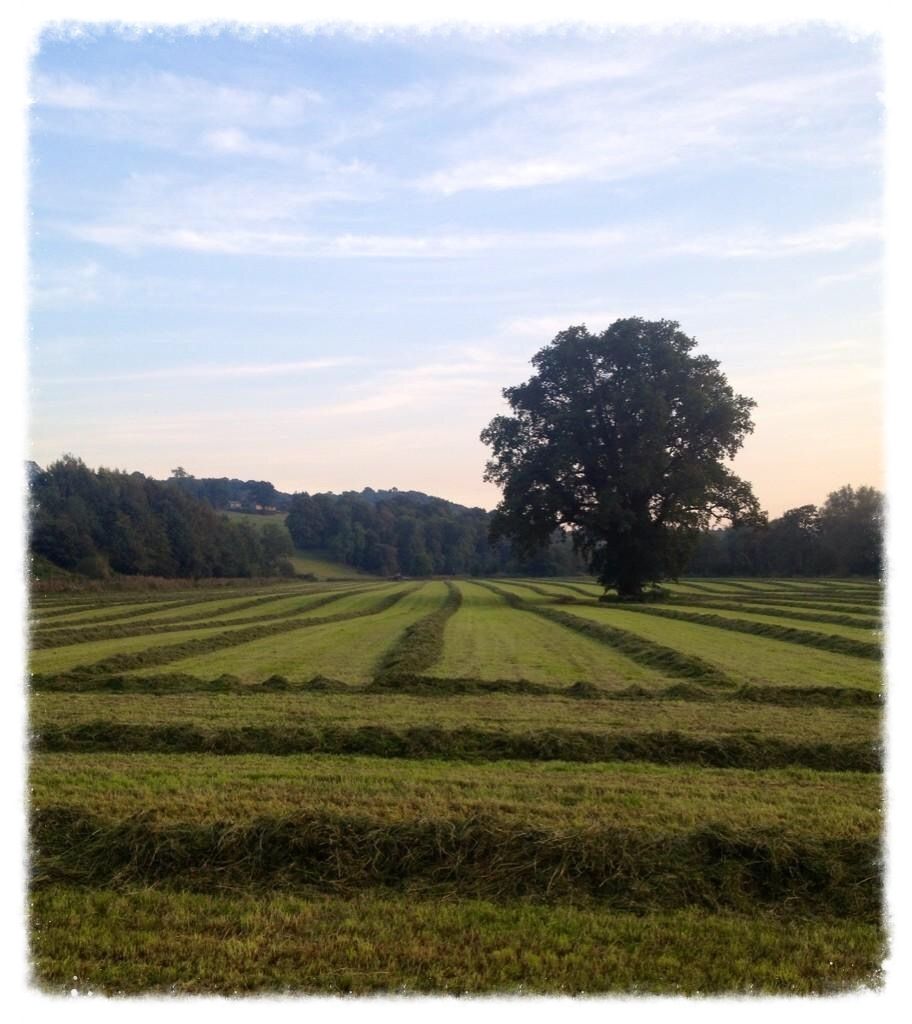
Ken's field 


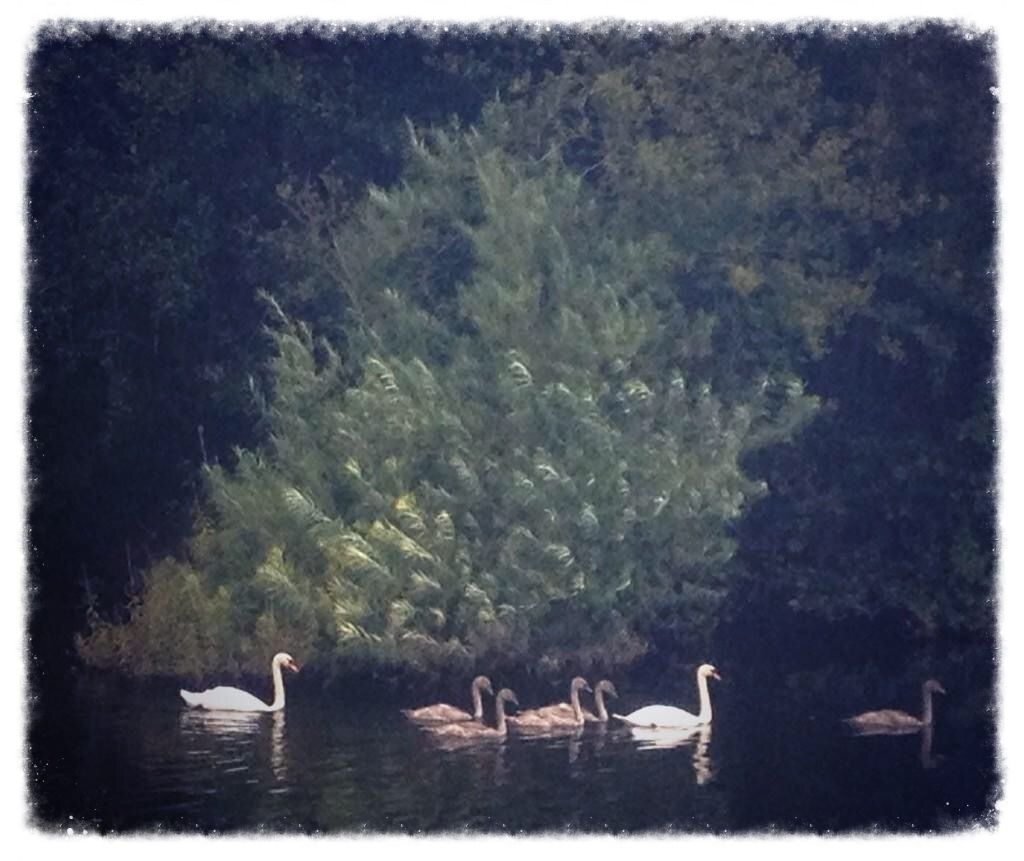
2014 - a good year for swans


That time in my life will stay with me and, as the end of summer proper coincided with the birth of my daughter, it seemed only fitting that we name her Hâf (summer in Welsh).


My PB (courtesy of Jon Poutney)


Wednesday, 2 April 2014

Brand New Beat - March Browns and Grannom, River Usk, March 2014

Death, Taxes and Leaky Waders - Ty Mawr (GAS), 14th March

American author John Gierach called it right; there are three certainties in life, namely 'Death, Taxes and Leaky Waders'. The inevitable came to mind, yet again, on a windy Friday afternoon the day before the Ides of March. It was my first session of the year on the Usk and I could feel cold patches spreading beneath my Simms G3s. This, and the strong northerly wind, was making me irritable but the stunning scenery set against a blue sky, the sight of long tailed tits and  the occasional Large Dark Olive (LDO) eased my troubled mind.

Trout were hard to come by, especially rising trout. Nymph tactics brought two to a size 12 hare and squirrel fur jig nymph that I copied from Terry Bromwell. This early season fly has served me well as a loose imitation of a March Brown (rithrogena germanica) nymph (I think).

Between gusts - Ty Mawr, March 2014

Becoming Acquainted - Bryn Derwen, 15th &16th March

On Saturday and Sunday (11.00am until 3.00pm), with crudely glued waders, I enjoyed (slightly) less windy conditions. I recently joined the Bryn Derwen Sporting syndicate and I am yet to get to know the beat, but as the fishing starts a couple of hundred metres from my house, I hope to do so over the coming season.

I caught three on Saturday and seven or eight on Sunday, nothing over 13 inches and all on the same nymph. I spotted only three oncers rising to the sparse hatches of March Browns and Large Dark Olives.

It was pleasing to see the Usk March Browns and I think that a report from Dave Collins the previous week may have been the earliest recorded UK sighting for 2014. These flies look similar to Large Brook Duns (LBDs) but I wouldn't usually expect to see LBDs until well into April. Upon close inspection, the March Browns I collected were identifiable by the presence of black areas on all femurs (upper legs), the absence of a yellow leading edge to wing and dark brown bodies with distinct gold(ish) banding.


Image courtesy of Dave Collins

Warming Up - Bryn Derwen, 22nd & 23rd March

The following weekend there were small hatches of LDOs and a few good flurries of March Browns. Despite the wind the fish began to look up; the occasional rising fish that would oblige when flies were hatching. I caught three on the Saturday (two to a CDC LDO dun pattern and another to a March Brown emerger) and three on the Sunday (all to the March Brown emerger).

The first top of the water trout of the season
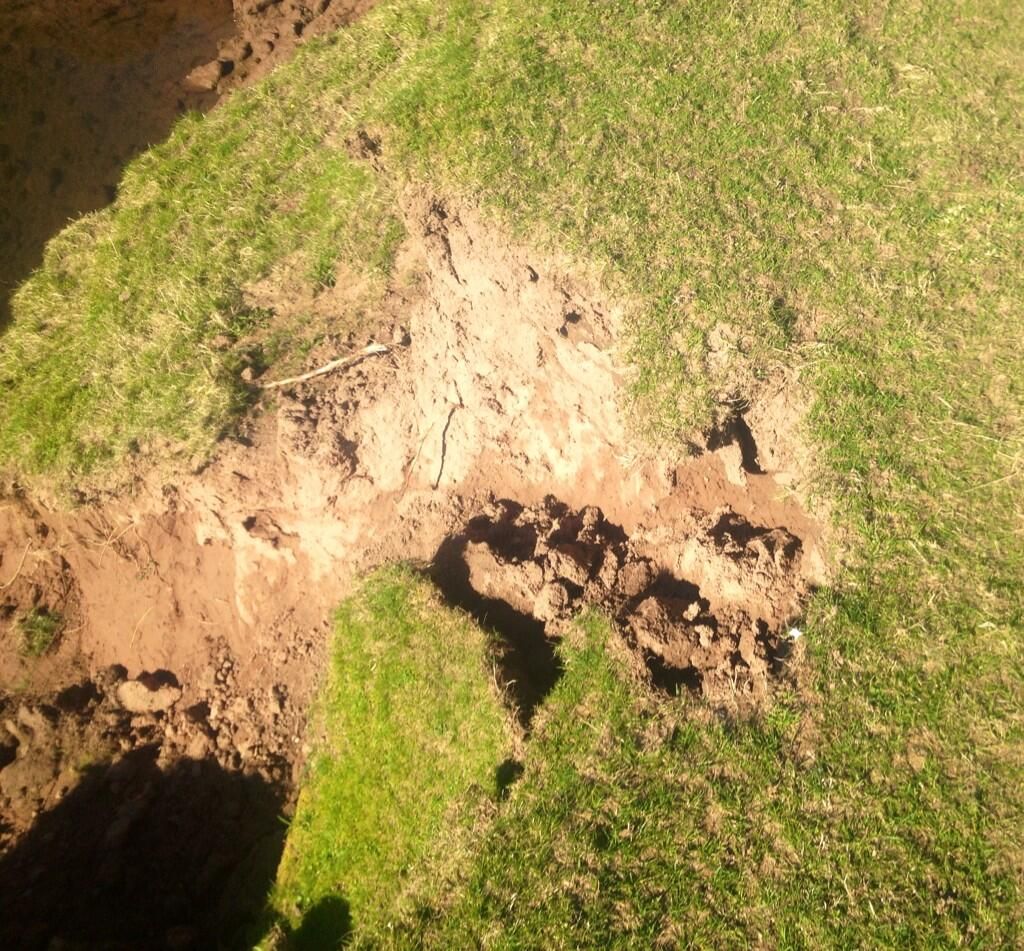
On the first day, I managed to fall down when a badly undercut bank gave way. I jarred my left shoulder but luckily I cast right handed.


Falling down
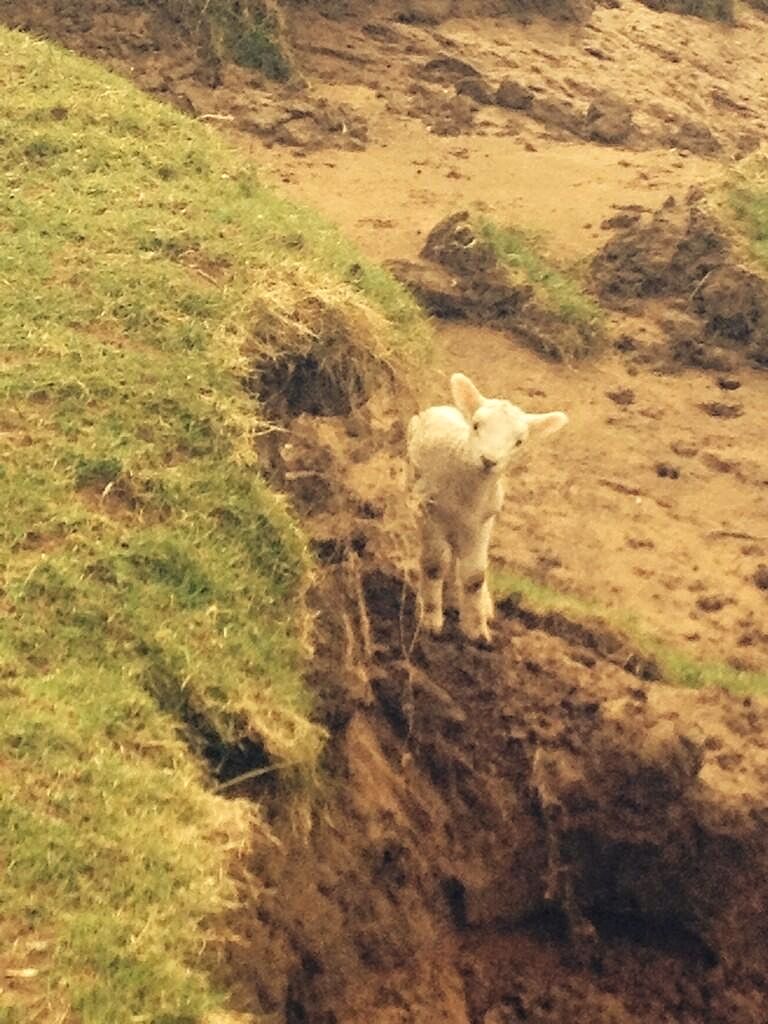
The next day I came across a frightened looking lamb and returned it to its ewe. She had fallen down the same section of bank and I smiled as my shoulder reminded me when I lifted her to field level.

In spite of my good deed the wader Gods frowned upon me once more and my left leg was soaking by the end of the session.
River bank emergency

Grannom - Bryn Derwen, 31st March

Last Monday Dave Smith visited to help me 'get know the new beat'. I hadn't seen Dave for a few months and was looking forward to putting the world to rights and, hopefully, catching a few on the surface.  

After breakfast we tackled up and walked to the river where we noticed clouds of flies drifting up stream - unmistakably grannom. The previous day, Mark Roberts had informed me that they'd begun to hatch further up. Dave and I scanned the water and almost immediately observed a number of kidney shaped rise forms towards the far bank. A sure sign! We knew then were in for a good day and my hands trembled slightly and I talked too much as I tied on a GH grannom/sedge emerger.


Gwilym Hughes and Dave Collins Grannom emergers


We expect grannom to start hatching from the second week of April, but I couldn't recall whether I'd seen them earlier than this year, and so consulted a very experienced fly fisherman, Dave Collins (see the emerger above). He remembers (and so do I now) that about five years ago, after a very warm February and a winter of low water levels, they were present from the third week of March. He also informed me that we saw Yellow Mays in the fourth week in April that year (when we usually expect to see them the first week in May).


In Deep

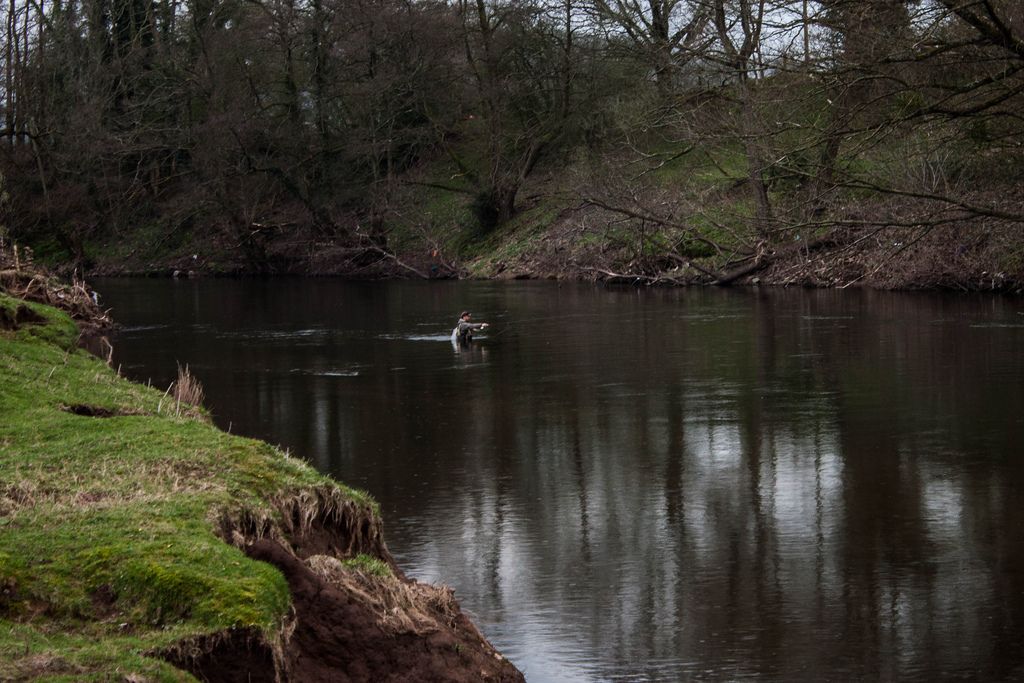
To allow more control and drag free drift, I try to carefully wade within about ten metres of a rising fish, but this is not always possible on the wide, deep lower Usk. As the water levels were high and the majority of fish feeding tight to the opposite bank, Dave and I had to wade deep and cast long. This was made more difficult by a limited back cast in many areas. 

I was using an 11ft #3 loaded with a 4 weight line. The longer rod offers more control at distance and the 4 weight line allows me to work the rod with less line in the air (I normally fish 'one up' when sewin fishing).


Fish rising on the opposite bank...
Timing our casts correctly, we caught fish. The targets would not respond immediately after rising with the most enthusiastic feeding at around thirty second intervals. We took it in turns to spot and cast to fish, both losing large trout that had appeared highly efficient feeders in their bankside lies.


Bryn Derwen beauty


Average stamp
We were impressed by the stamp of the fish (and the numbers in evidence) and, by lunch time, were at the top of our waders targeting what were very challenging trout.

Dave - and for my next trick...
The fish, again tight to the opposite bank, were stationed just off the cover of tree roots and submerged branches. They required a long slack line but (thankfully) were feeding confidently and we successfully hooked many of them.


Gill plate blues


Root and branch
We worked our way slowly upstream picking fish off as we went. On one of my 'turns' we noticed a very small kidney shaped indentation just off a clump of roots over deep water. Suspecting a large fish I concentrated. After a few nervous passes it took the CDC emerger and proved us correct.

Retreating to land the fish
Three or four minutes, a few heart stopping jumps and plenty of side strain later and the fish was in the net. Dave and I marvelled at the perfectly conditioned eighteen inch March beauty.

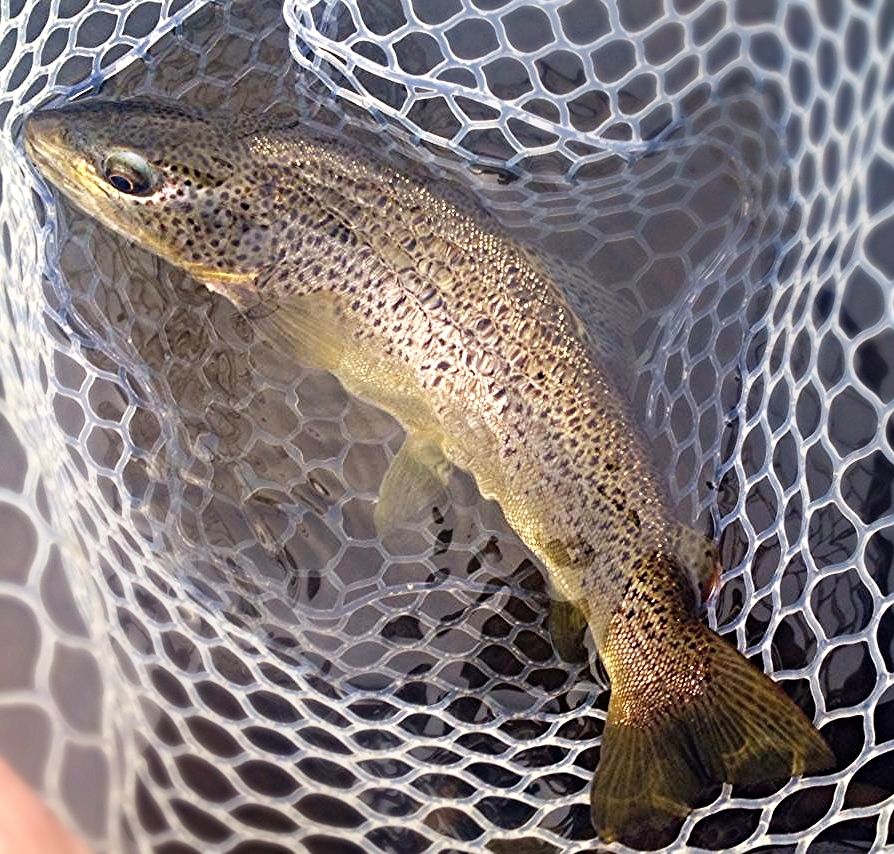
Grannom feeding Usk brown trout

Dave soon spotted what looked like another good fish, where the water was even deeper and the back cast more limited. Single minded in his approach, he overflowed his waders resulting in a slightly early bath for both of us (not that I minded as it had started raining and my waders were leaking again).

Certainties

Back at the house, we discussed our day over a warming cup of tea and, upon our goodbyes, Dave left me in no doubt that he would like to return to 'the new beat' in the near future.

I've all but given up on my year old Simms waders and, in a desperate attempt to keep dry, I have chanced my arm, ordering a reconditioned pair of Vision waders from Diver Dave. At £120, considering the places I fish and (I'm told) my odd shape, one other thing is certain:
 I'll be very happy if I can laugh in the face of Gierach and stay waterproof until the end of the season.

*Thanks to Dave Smith for some of the above images