Wednesday, 24 July 2013

Double Take - Mayfly, River Usk, June 2013

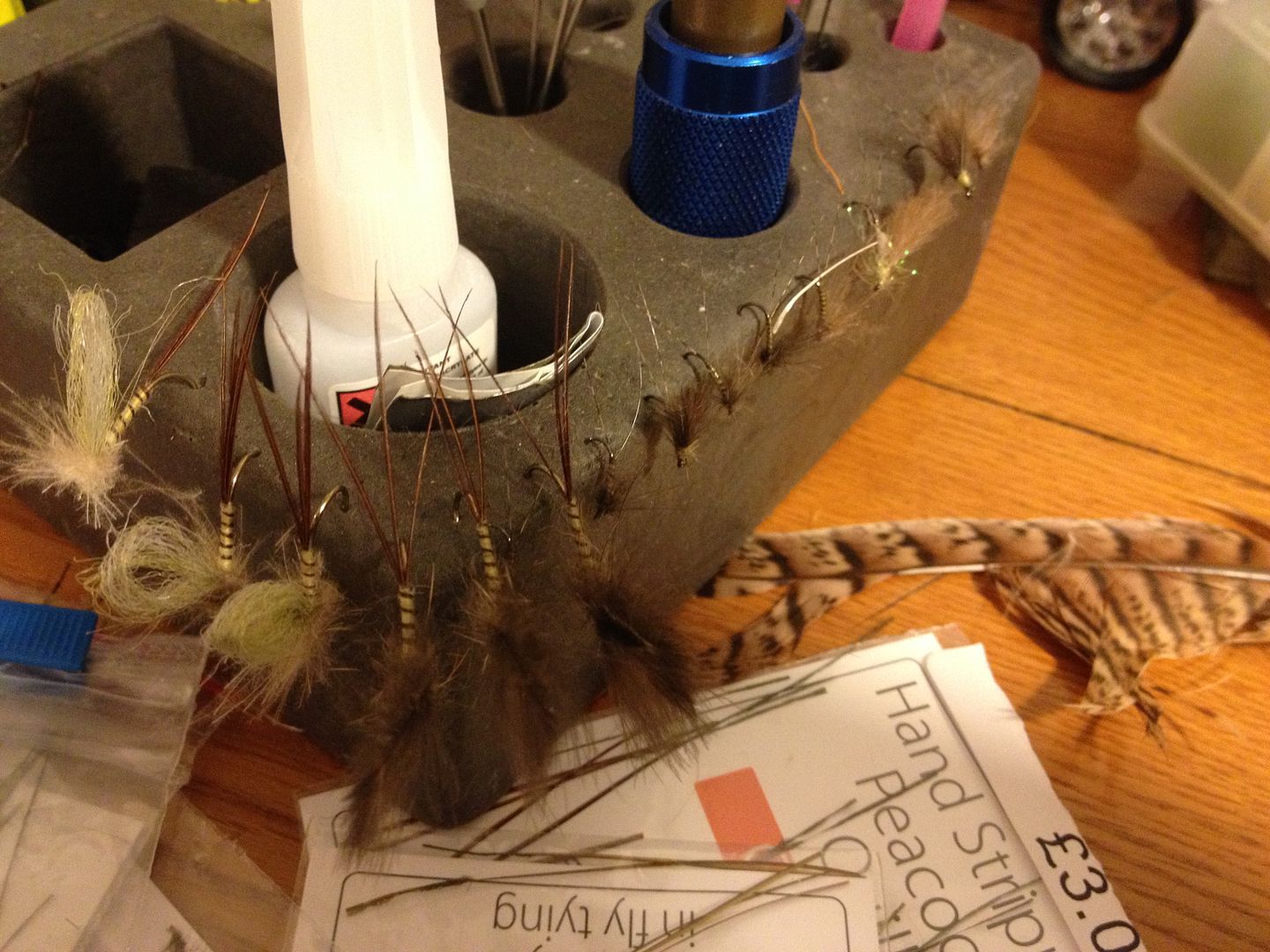
June mayfly

As everything on the Usk is three weeks late this year, I had some good sport with mayfly feeding fish in the early part of June.

Some of the older locals have told me that the Usk trout are 'afraid' of mayfly for the first few weeks and that the hatch doesn't amount to much. While I don't think the mayfly sport is as good as on the chalk streams, or even the nearby Monnow, I still beg to differ. Most seasons I have some sucess with mayfly emerger, dun and spinner patterns.

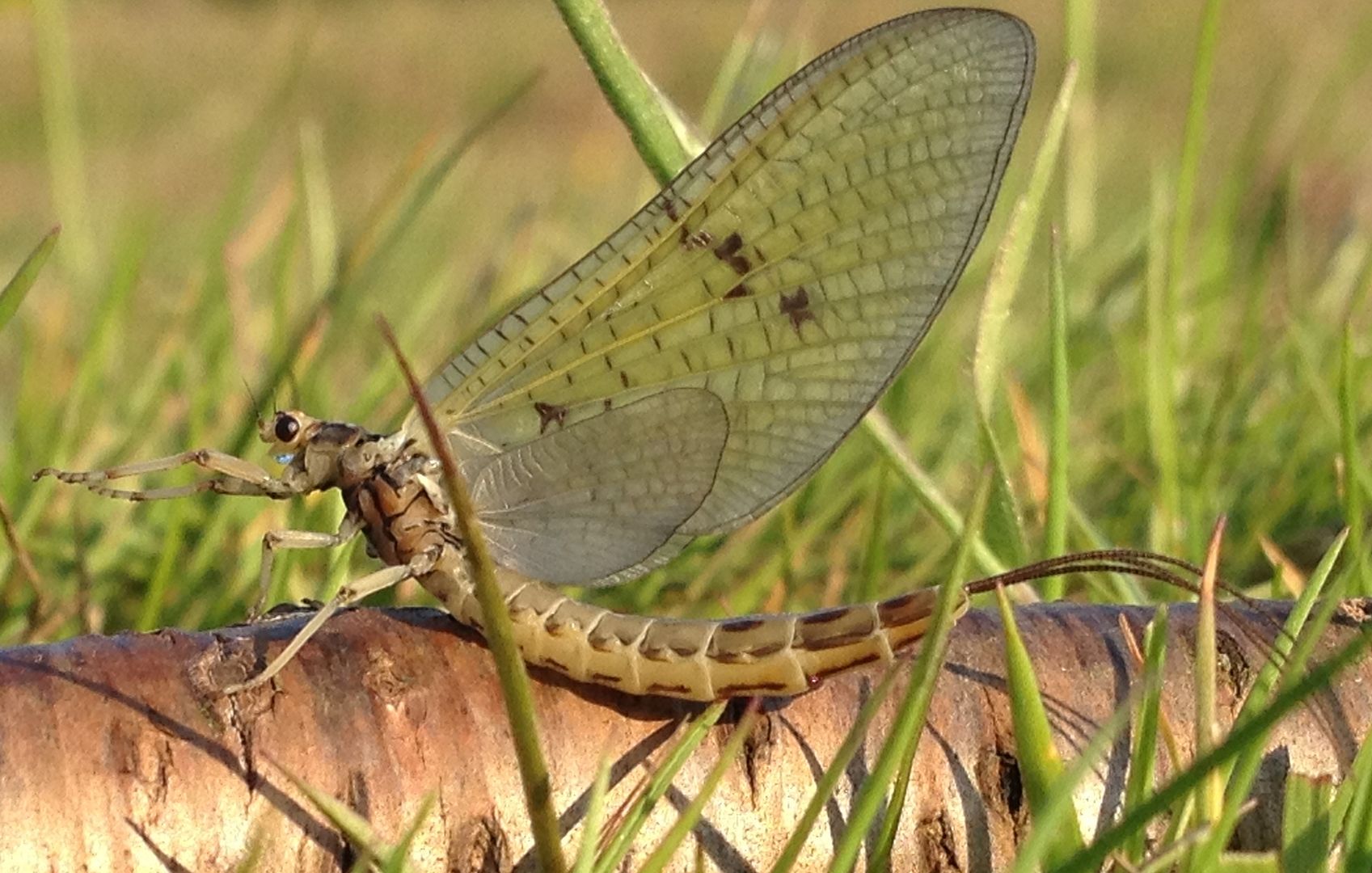
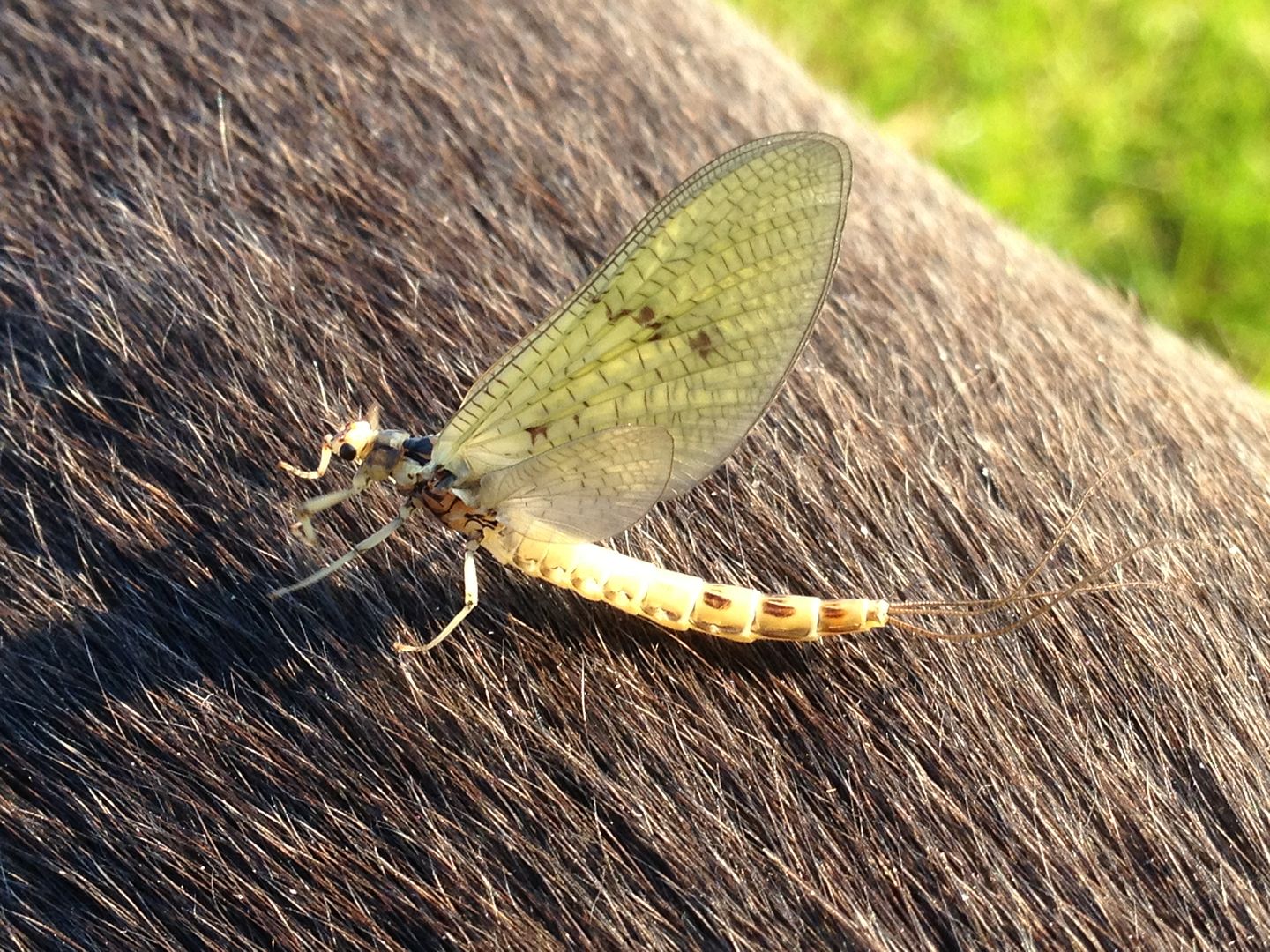
During the last week in May, I noticed a few danica whilst out walking the dog. The specimen below landed on my dog's back, which was a bad move as she turned around and ate it!
Danica

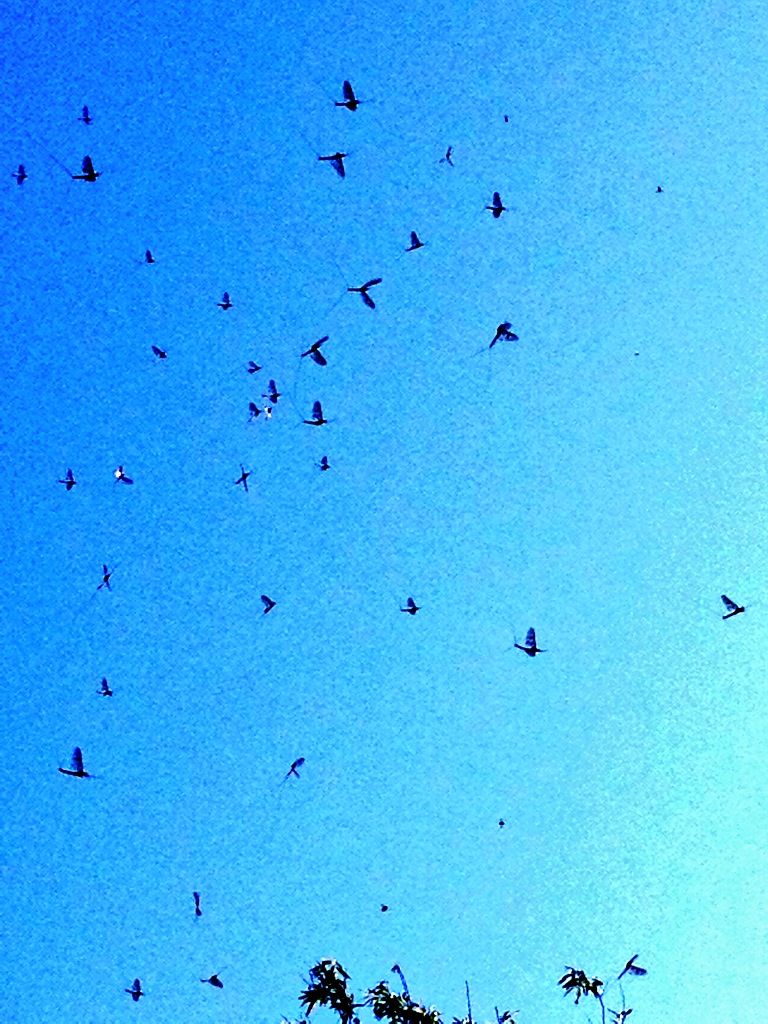
By the second week in June, some Usk trout appeared to be responding. It was during this week that my wife was away with work for two nights and I too responded. On the Wednesday I arrived at the Bakers (GAS) beat at 7.00pm and was delighted to be greeted by clouds of dancing spinners.
Usk Mayfly


Being  a member of both GAS and MTAA, I walked the half mile or so downstream to the Kemmeys beat with the intention of fishing the river back up to the car by dusk. I noticed a few fish feeding on emergers and suspected that they were taking both mayfly and the abundant yellow mays.


Stockies

I started out fishing a yellow may emerger which tempted a few fish to just over a pound, one of which was a stockie. Over the last ten years I have only caught a couple of stockies on the lower river, but this season I catch one most sessions. I chap them as, in my opinion, they have no place in the river and I wish the few clubs and owners that introduce these stunted creatures higher up would manage their water properly and cease to do so. I concluded that this batch was stocked in Abergavenny at the start of the season during, or just before, a period of high water that washed the poor swimmers down river. Even though they've been in a few months these beasts will take most correctly presented flies and are often missing their pectoral fins.

Take 1

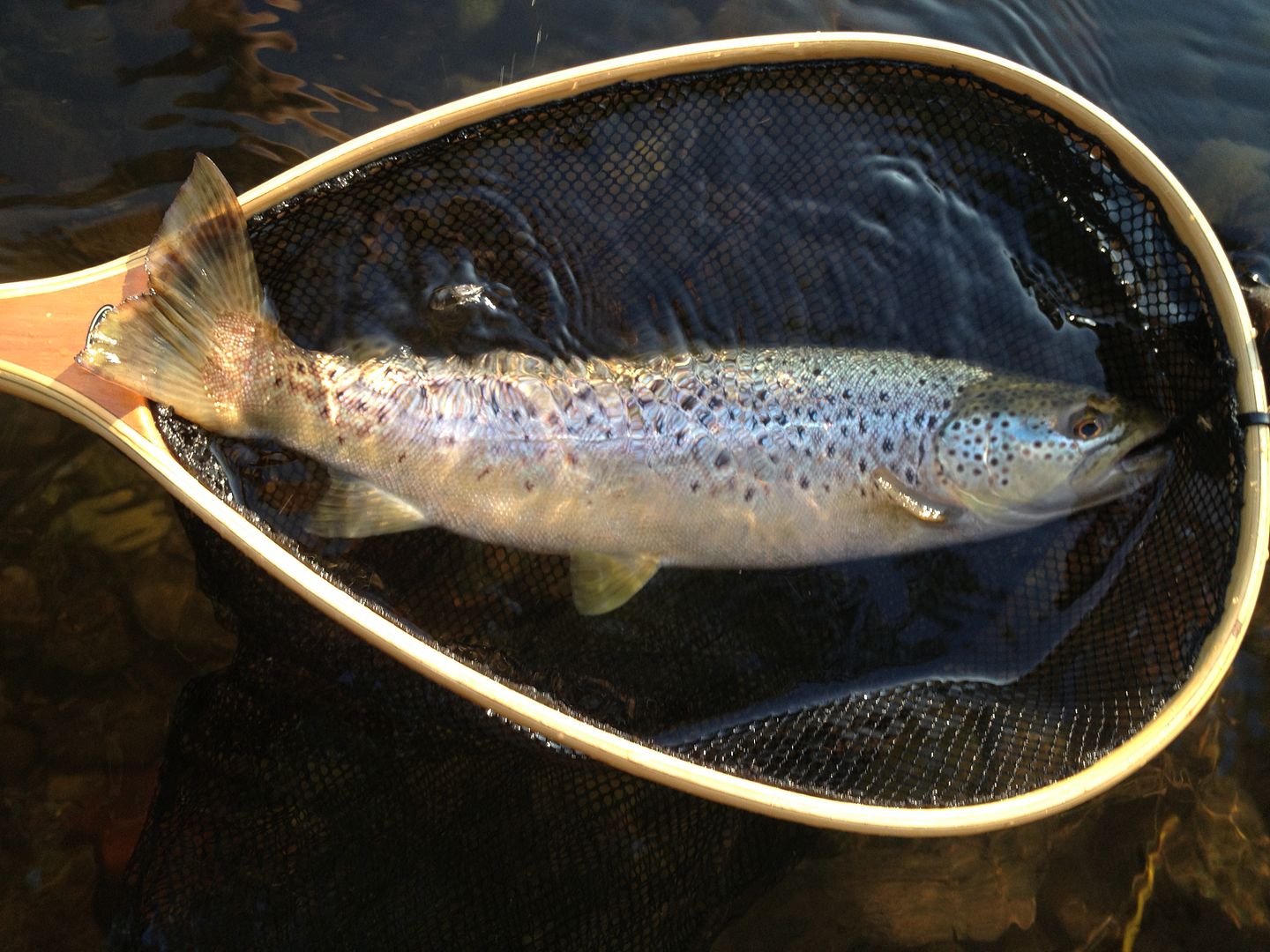
As I worked my way to the top of the pool I noticed that there were more danica coming off and so changed to a mayfly emerger. No sooner had I done so than I spotted a tiny blink-and-you'll-miss-it rise form tight to the bank, in about three feet of slowish water.

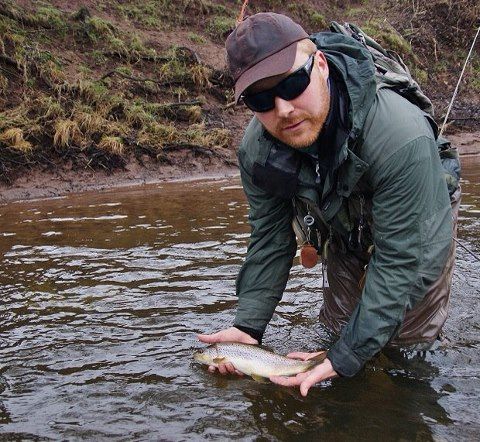
Considering the flow, I presented the fly two feet diagonally above the fish and, as it drifted towards the bank, the fish took very softly and ran hard up river. After a decent fight a shovel-tailed eighteen inch fish was slipped into the net.


Take 1


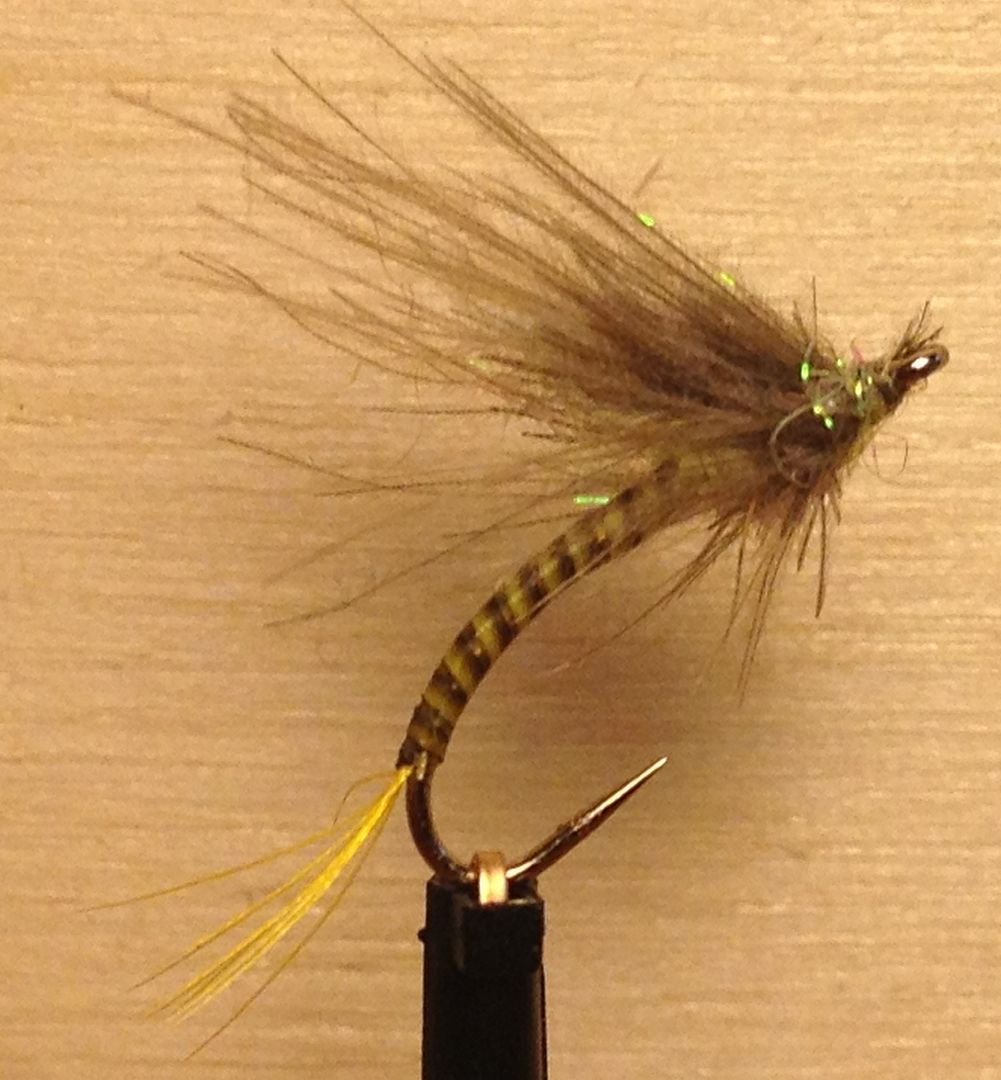
The actual fly that tempted this lovely brown trout has taken a bit of a hammering and is pictured below. It's a Paul Procter pattern that I tied on a size 12 emerger hook with an Aerodry shuck and loop wing. I especially like the pearl mylar rib and tag on this version.

PP Mayfly Emerger


Defeated

Every now and then I make a real hash of things on the river and that evening included one of those occasions.
 
The light had dropped and I moved up river with my sunglasses perched on my cap. I stopped and watched a fish occasionally rising in some very deep, slow water and wondered if I could get close enough without spooking it. Carefully wading to nearly the top of my chest waders I made a few longish casts. The fish took on the third pass and I immediately realised that I was into something big as it dived deep making three initial heart stopping runs.

I had cast over 15 metres and the fish emptied my reel with ease. This was the first river dry fly caught fish to take me to the backing and my main concern was to get some line back and not allow any slack. As such I held my rod high, and moved towards the angry fish as quickly as I could with both arms fully extended above my head. This resulted in water overflowing my waders and my sunglasses falling into the river. At the time, I wasn't too bothered as the fish was still on and I had some line back on the reel.
 
I'd not yet seen my foe and was desperate to do so. I managed to retrieve about half of the line and considered retreating into some shallower water. As I stepped back the fish ran down stream, lightening fast. I recall some spray from the reel cooling my flushed face just prior to the line sticking and my tippet snapping.
 
Defeated, damp and shaking like a leaf I wound in.
 
The next day I learned that a number of good sea trout had been seen, with a few caught, lower down the river...
 

Take 2

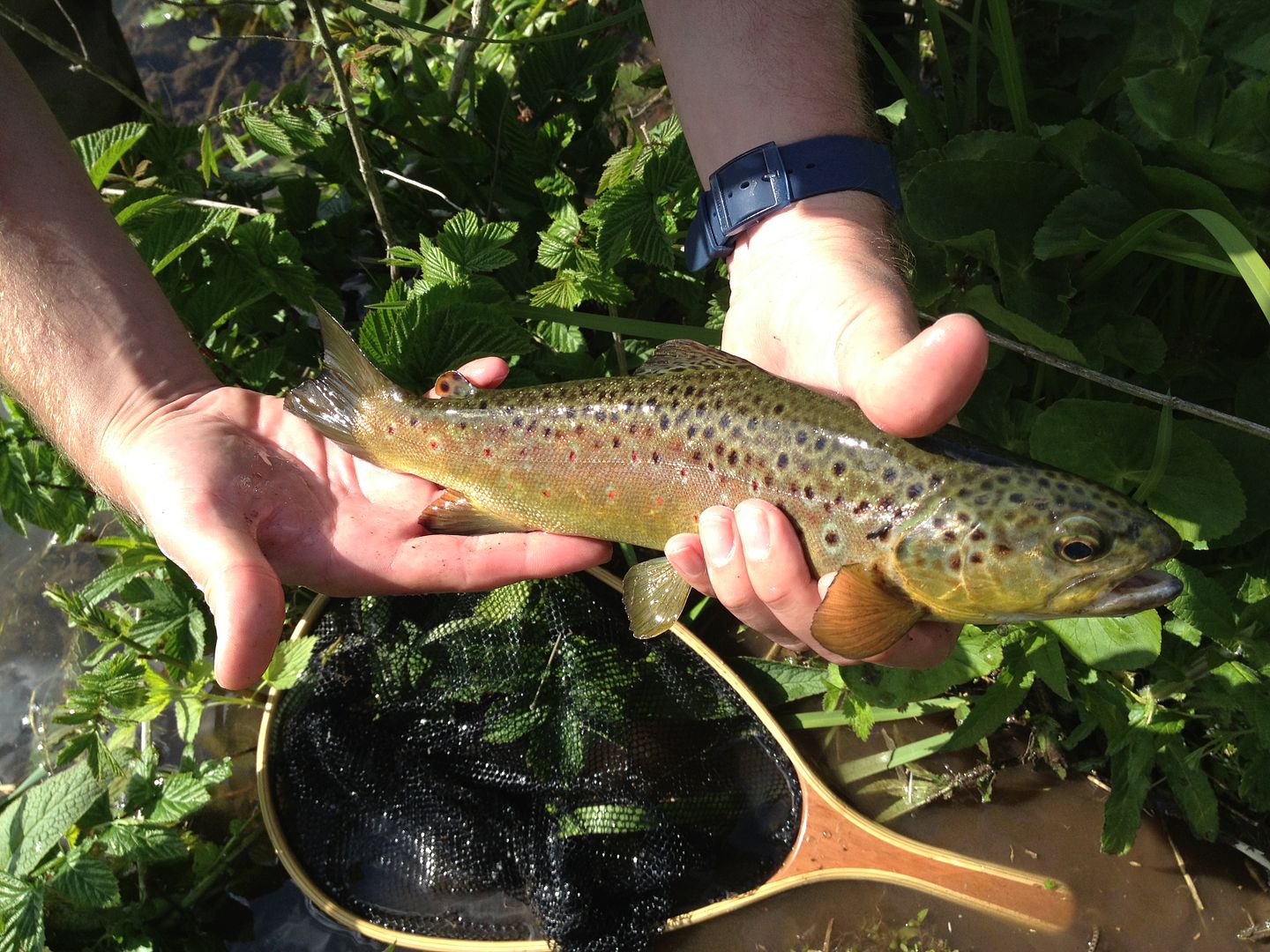
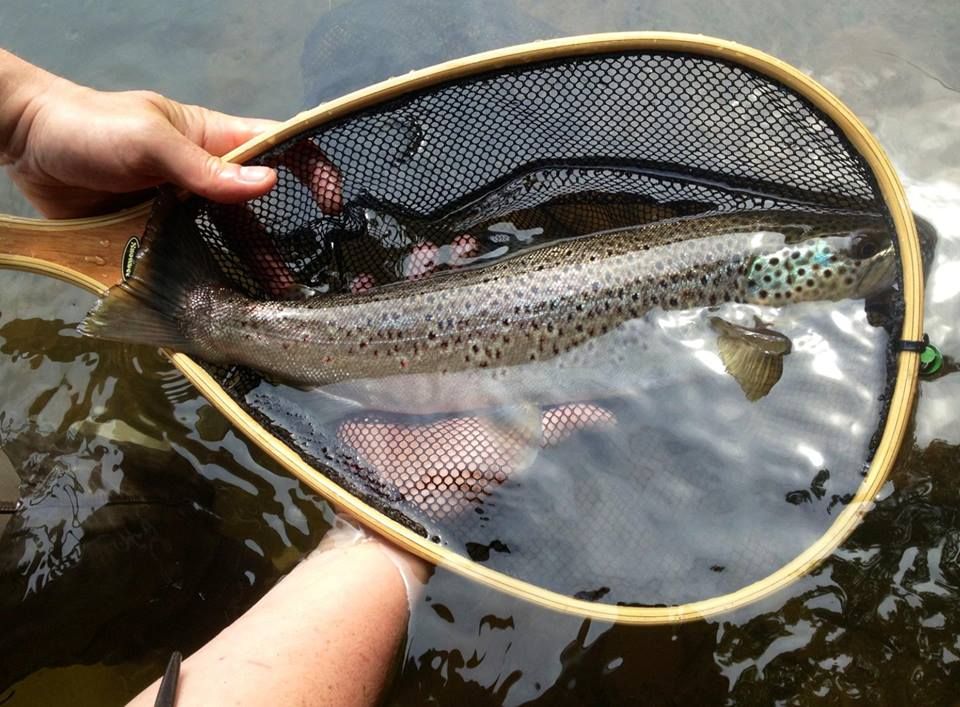
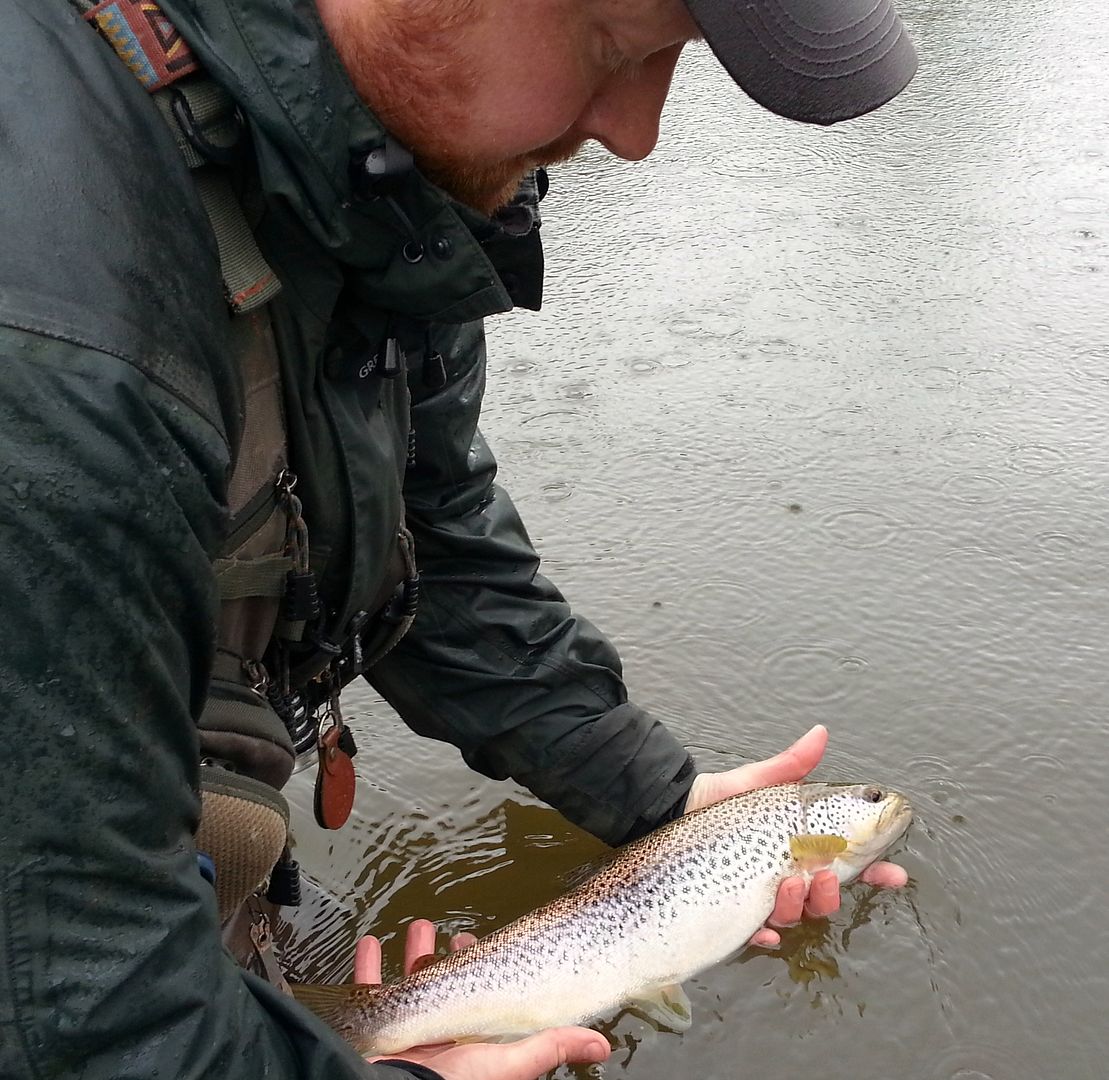
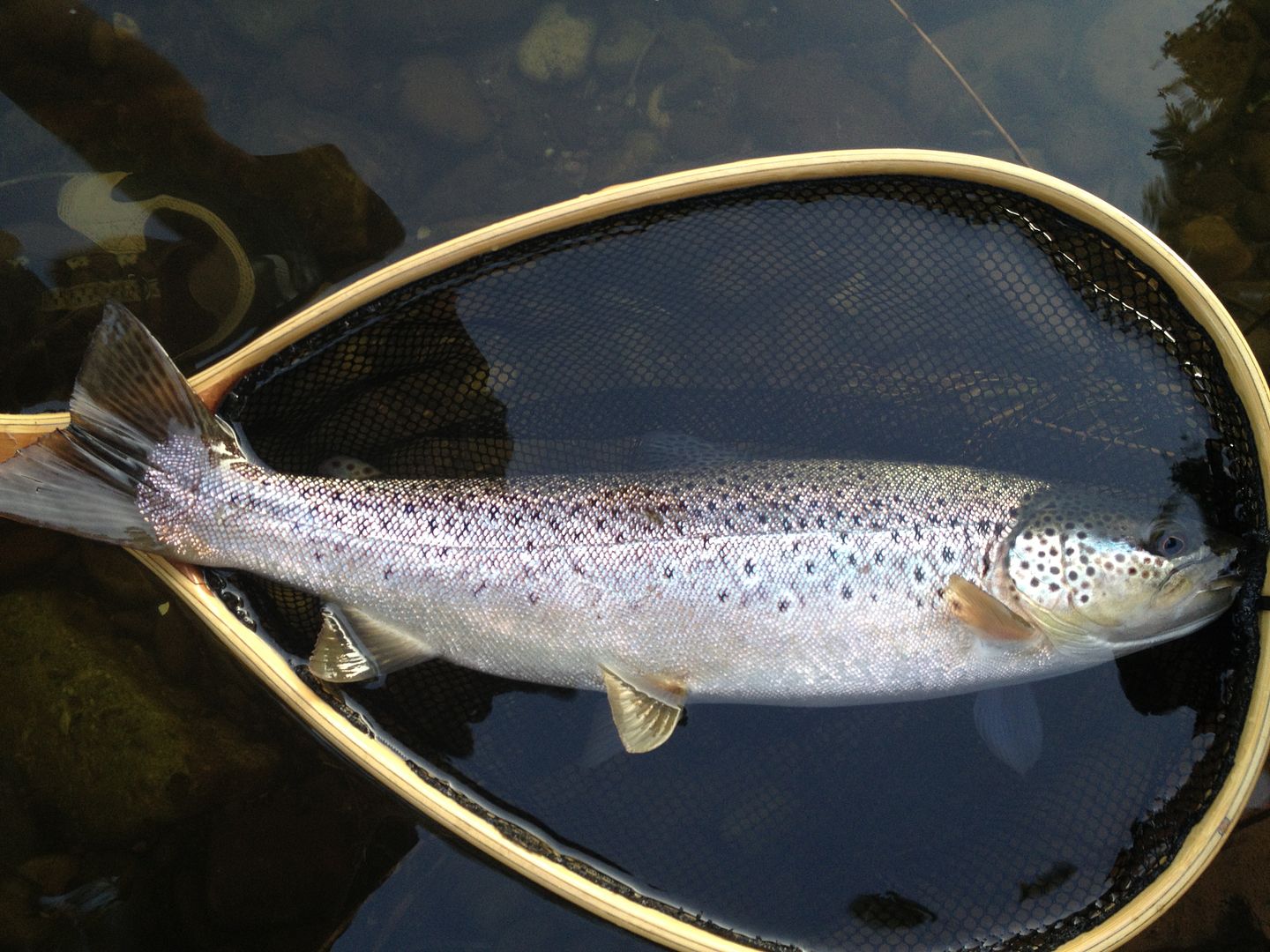
The following evening's routine followed that of the previous and, by 8.00pm, I was in the spot where I'd caught the 18 incher on the mayfly emerger. I again noticed a very small rise in the same lie, covered it and landed the fish below. Another cracker from the same spot (I thought).
Take 2


It wasn't until I arrived home and looked at the pictures that I realised there was a chance this was the same fish. The closer I looked, the more convinced I became. My photographer mate, Jon Poutney, then overlaid the two images (see below).


Haven't I seen you somewhere before?

I have previously suspected  that I've caught the same fish twice, more than a couple of weeks apart, but never with the same fly on the next day. The most pleasing aspect is that it was clearly unharmed by our previous encounter and actually fought harder the second time.

It's probably pushing it to ask for a third meeting, but every time I cover that lie, I hold my breath. We live in hope.

Friday, 5 July 2013

Day Dreaming - River Avon, 1st June 2013

Kind invite

At the start of the season I received a generous invite to fish the River Avon with David. As I'd never fished a chalk stream before, I could feel the excitement building through to the first day in June. At that time of year, I was informed, the fish would normally be feeding on Mayfly, but as everything was around three weeks late, I tied some duns, emergers and spinners more in hope than expectation.


Mayfly duns

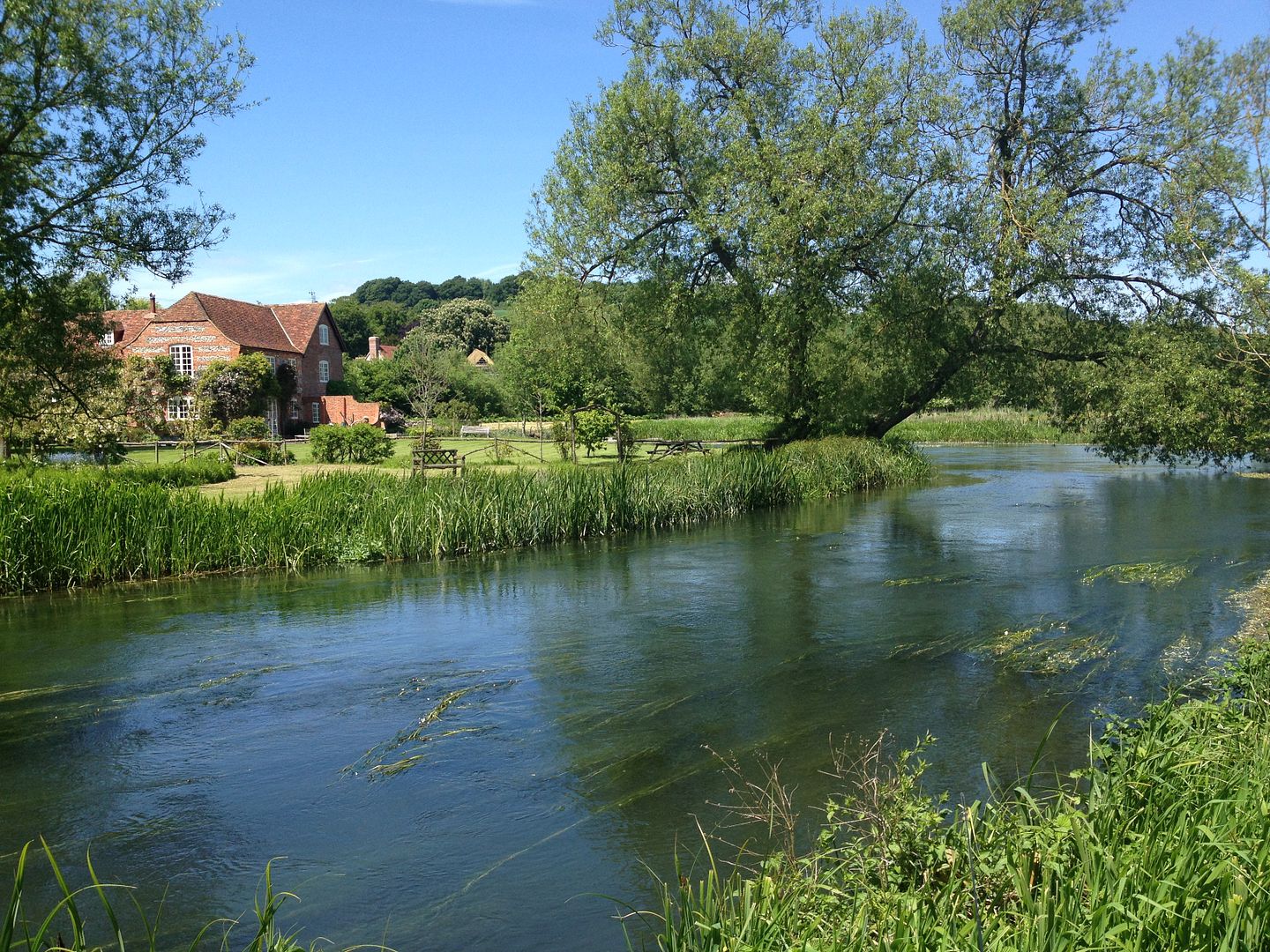
River Avon at Salterton

It was a two hour drive to meet David near Salterton and, though early morning, the sky was clear and the sun strong. I'd been out with friends the previous evening and distinctive character and rural beauty of the Salisbury area helped me forget my mild hangover. 

Upon tackling up at a small lodge, David informed me that there had been a sparse mayfly hatch but that the fish were not yet 'on' them and had been taking mainly olives. We followed a carrier to the main river, and as we crossed over a bridge, I was struck by the picturesque nature of the place.


The River Avon at Salterton


David and I took turns casting to feeding fish. This was very different to the rivers of South Wales, and the clarity of the water, coupled with the fact I'd not previously fished with my host, made me twitchy. David was the first to catch - a lovely 14 inch out of season grayling on a CDC and Elk.

As I focused on a fish that was on the fin -coming to look at my fly and turning away last minute- Morgan arrived. He was a welcome surprise as David had deliberately not told me his son (my mate) would be joining us. After a quick chat and photo opportunity, I went back to my two pounder.

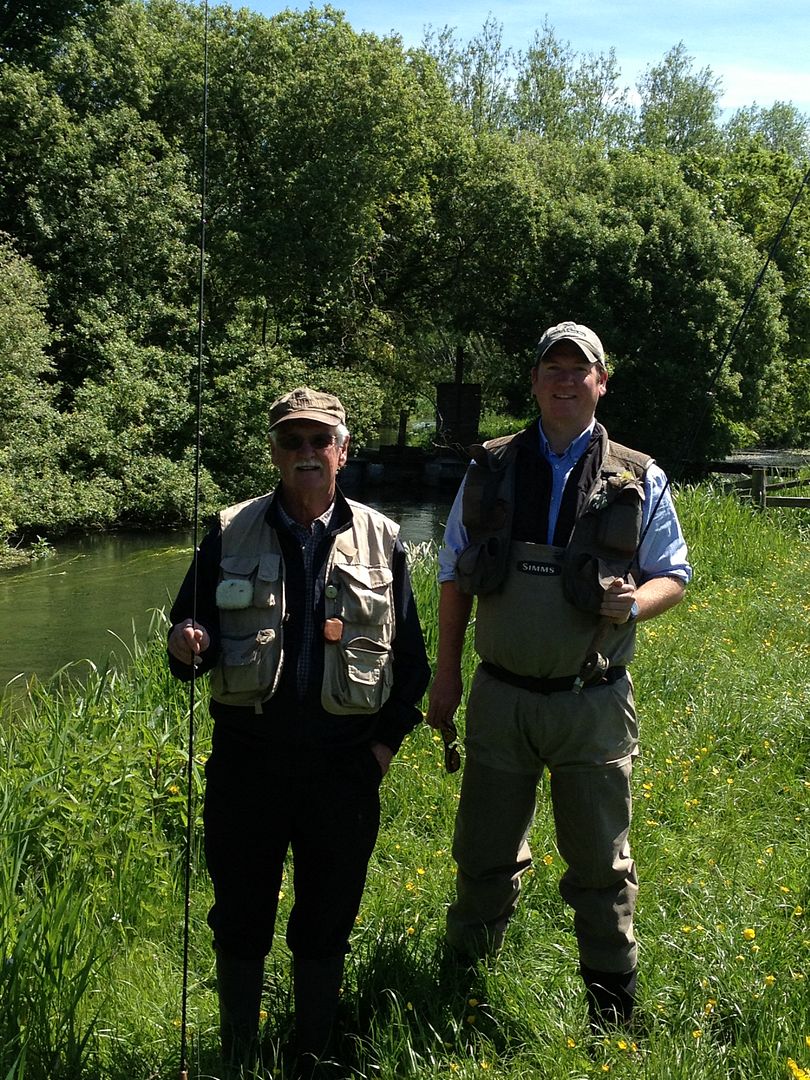
The Jones Boys
What followed was quite embarrassing. Feeling slightly daunted by the difficult fish and my grand surroundings, I was on edge and needed to settle.  As the target moved into faster water at the opposite bank, I covered it perfectly with plenty of lead and a reach cast. My arm felt tense as the fish rose and I struck letting out a triumphant 'Yes!'. I concluded that I'd had too much breakfast as a small fish came flying out of the water! Unbeknown to me (in the fast water) the intended quarry had been beaten to the fly by a cheeky four inch brown. Morgan laughed loud and long, David looked bemused, probably wondering what he'd let himself in for. I apologised.

Mayfly

We took our time walking the beat looking for rising fish. By midday a few mayfly started to appear and we caught fish on our emerger patterns. I had most success with a Paul Procter Spun CDC version.


Winged beauty

Great food and better company

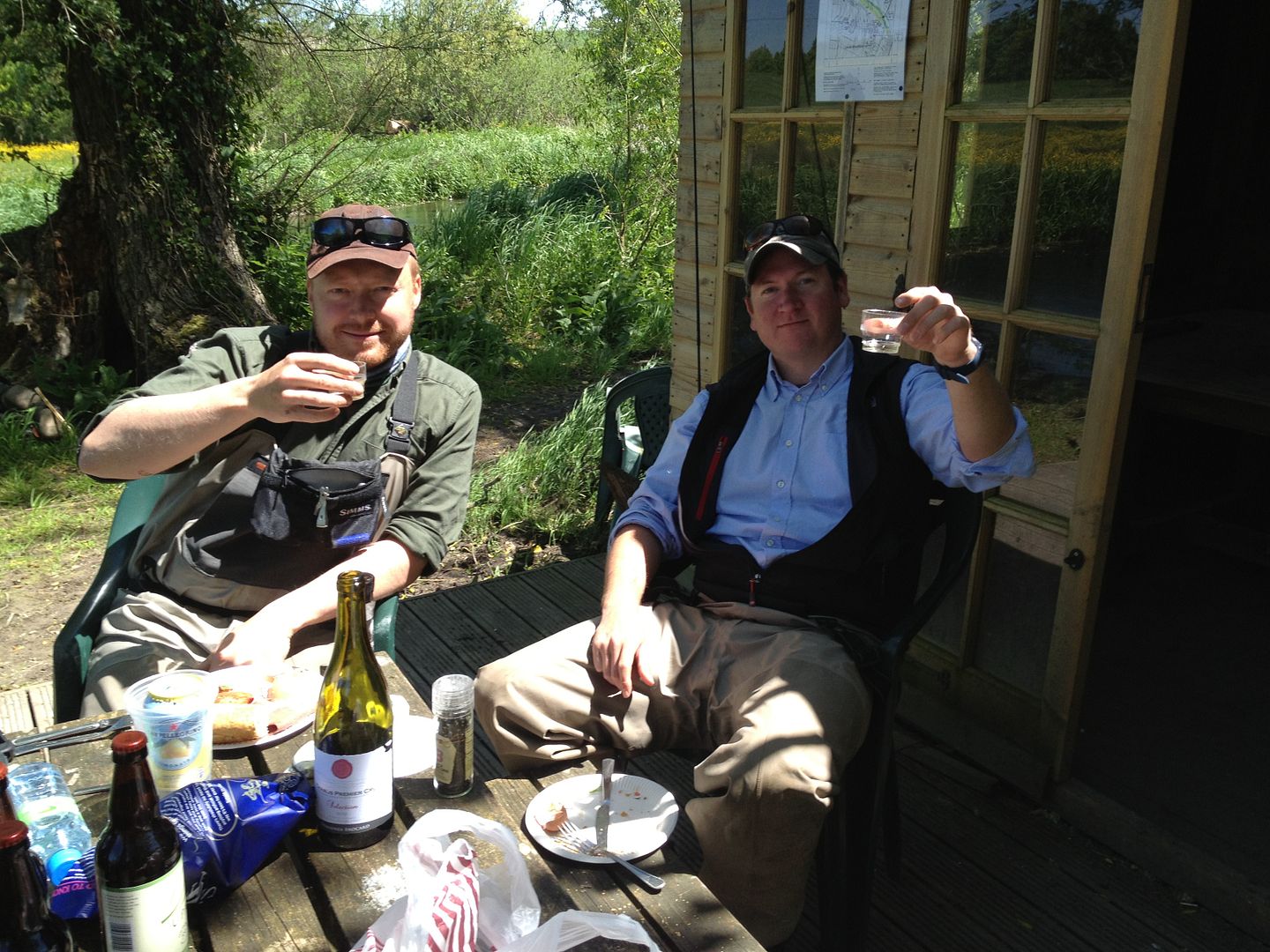
By one o'clock we were back at the lodge for the best fishing lunch I've ever had. David provided Wiltshire pasties, sandwiches, boiled eggs, salad, various breads and cheeses and strawberries. To do it justice, I had packed a nice bottle of Chablis and a few bottles of a favourite Untapped Pale Ale. A fry cry from the usual flask of coffee, cereal bar and bananas.


Long lunch

Afternoon session

As we walked down the beat in the early summer sun, the place shimmered and, I felt, had an almost ethereal feel to it. At the bottom of the beat, we managed to locate good mayfly hatch and a few fish appeared to be taking emergers and duns.

Morgan was his usual efficient purist self, hoovering up the surface feeding wild fish. Further upstream I, conversely, was missing most offers. Or were the fish missing me? The larger fish didn't seem to be turning on my mayfly emerger pattern and I was making no connection at all. I put on a dun and, a couple of times, saw the fish nosing it. I managed two, but one was foul hooked and it was tough going. Morgan then joined me and cast to a few of the difficult fish. He too struggled to hook them until he tried a small olive emerger... We concluded we were too early for the best of the mayfly.

A nice wild fish caught by Morgan


We continued to take the occasional fish on olive emergers until we packed up at around seven o'clock. After we said our goodbyes, the two hour drive did not seem a chore in the evening sun. A day (and a picnic) that will live long in the memory.


Chalk stream splendour

Sunday, 16 June 2013

Mixed bag - River Usk, May 2013

A few odds 'n' sods from May 2013.

Desperate times

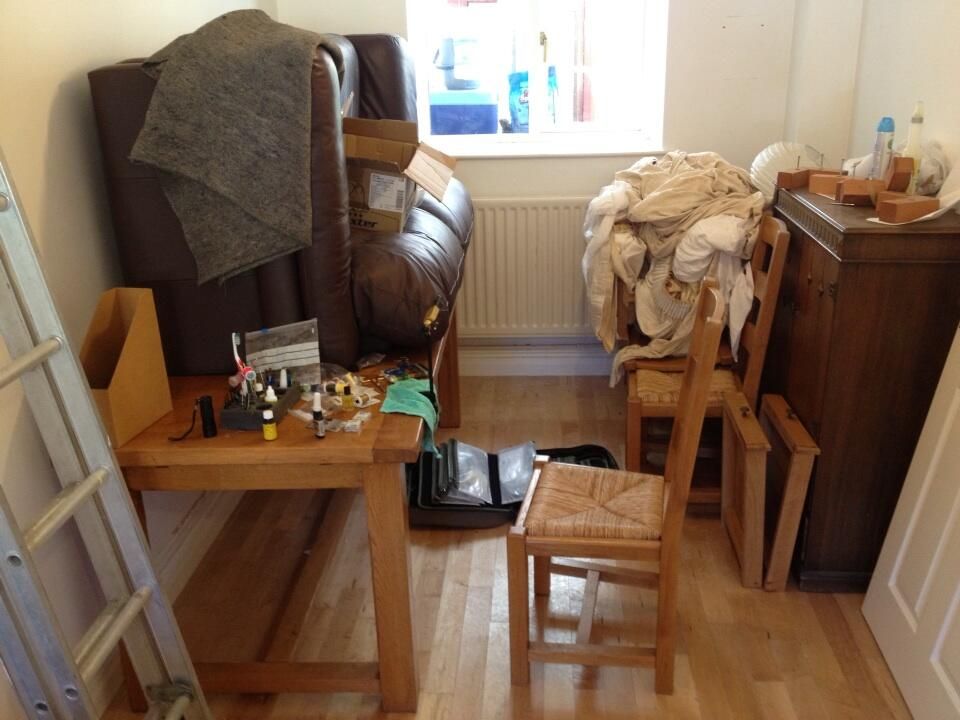
Renovating a house can be stressful at the best of times, but when you are struggling for a space to tie, things can become intolerable!


Desperate times
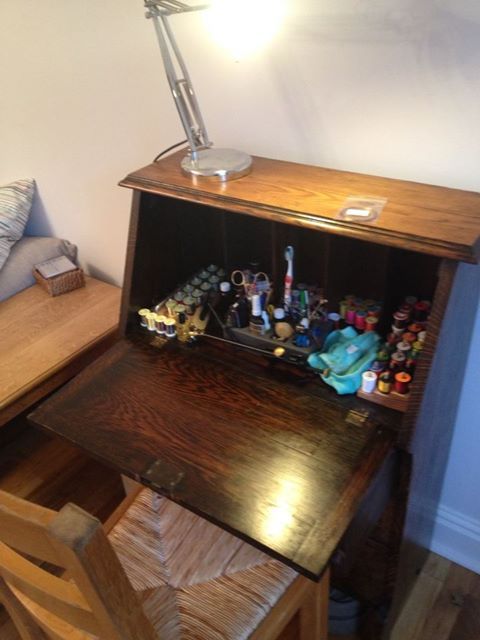
Thankfully an old bureau came to my rescue. This is located in the living room so that I can tie whilst my better half watches the telly.

 Situation remedied

Introductions

One warm Sunday I fished a new beat (GAS, Llan Farm) with a mate Alex. It was quite tough with the fish taking different food items depending upon their position on the beat.
During the early afternoon the water was thick with chironomids interspersed by a few hawthorn flies (see the foreground of the image below). I noticed a few taking the chironomids but also the occasional fish taking the less abundant hawthorns. As I rarely have the opportunity to fish a hawthorn imitation, I tied on a detached foam bodied version that I copied from Davie McPhail.
 
 A carpet of chironomids
 
The first time I successfully covered what looked like a good fish, my suspicions were confirmed as it took and dived to the bottom. This lovely fat fish of 17 inches put up a cracking scrap and took me a fair way down stream. The first and last fish I caught on a hawthorn fly this season. 


Gill plate blues

Salmon Fishing


As I’ve not been able to get out whenever I like, I’ve not fished the Usk for salmon when conditions were spot on, and have only wafted the fourteen footer in anger on two occasions.

One sunny Saturday morning I was accompanied on the MTAA Kemmeys beat by fellow member Dan Popp. Within the first hour Dan was shouting for me to come with the the gye net. Before I could get to him, I noticed an air of disappointment as he’d hooked the nice chubb pictured below. Old rubber lips had a penchant for orange Alley’s Shrimps that day as Dan caught another twenty minutes later. Let's hope the next one is sliver...

Dan Popp's Chub


Tuesday, 4 June 2013

(Yellow) May 2013 - River Usk

This time last year I was out at least three times a week but, as a recently middle aged new owner of a large debt on a property, domestic life and DIY drudgery have hampered my exploits. Having written all that, I did escape for a couple of sessions on the Usk and a day on the Avon (coming soon).

Each evening I walk the dog along the river noting the hatch and what the trout are taking. Last week, often in the pouring rain, the trout competed with martins for yellow may duns. Martins, swifts and swallows provide one of my favourite sights on the river when they take yellow may duns off the water, and especially in mid-air.

Emergers

During the last three Usk sessions I have tempted numerous fish on yellow may emerger patterns.This spun CDC style is adapted from a Paul Procter mayfly emerger pattern:


This is a tweaked version of the standard CDC emerger patterns that I use:

 
At the head I like to use a very small amount of yellow spectra spun via a split thread in order to give a trapped air effect.

Spooky

When fishing in low clear water, if fish refuse a fly that I know has previously worked, the first thing I do is degrease. Usk fish, feeding in slow clear water have declined my offerings with a freshly degreased 6X point, but responded when using 7X. I’m sure some will tell me that this is nonsense, but I’ve experienced it numerous times.

I don't degrease to sink the leader, I do it to take the flash off the the tippet. I don't want the leader to sink as I think that this adds drag to the fly and the mud that I use never seems to sink my copolymer tippet.

To emphasise how cautious Usk fish can be, last week my friend Dan Popp and I conducted an experiment when we spotted a very large fish feeding on emergers. Dan crouched down higher up the bank below the fish while I attempted (heron-like!) to enter the river downstream. Before I was in up to wellington height, the fish was back under the overhanging bank on the opposite side. 
As it was a bright slow afternoon, I waded in further and decided to wait to see if the target started to feed again. Luckily a few small fish started rising 20 metres downstream and I entertained myself collapsing the cast, feeding them line and trying to hook them on a spun CDC yellow may emerger and 7X tippet- I managed one.
Well after I’d put the rest of them down, and about twenty minutes into my vigil, I noticed a protrusion on the surface (that left no bubbles) adjacent to the lie of the big fish. My first cast was deliberately short in order that I could assess the current speed and angle. The second covered the fish and, as my hands trembled, the lump slowly rose and turned - remembering to breath, I lifted. Immediately the trout realised its situation and dived violently to the river bed. Upon a third short run, the line went slack. I was afraid to look, but knew that the fly was no longer attached to what was left of the 2.5 lb bs tippet. Despondently I wound in and went home. I hate leaving flies in fish (even if they are barbless).

Resolutions

I shall persevere with 6X tippet and no longer use 7X unless I’m fishing micro dries, and I am reminded to check my leader more regularly for scuffs and kinks.

I am also going to do my damnedest to catch that fish.

Tuesday, 28 May 2013

The Monnow Social - May 2013

It has been a long held ambition to fish at the Monnow Rivers Association Auction and Social and, thanks to a few mates, I managed to do so this year. 'The Social' is a celebration of the River Monnow and a great way to generate income to support the commendable river management activities of the organisers.

I had little charge in my iPhone and forgot my camera and so please excuse the absence of photographs in this entry. Probably just as well...

Middle age

I have previously fished the river (quite unsuccessfully) for winter grayling (no reflection on the river I'm sure), and so I was keen to catch a few Monnow browns on the dry fly. I met Morgan and Mark below Kentchurch at 3.00pm on Friday 10th May (my thirty fifth birthday). They had already moved a few fish on olive emerger patterns and Mark generously showed me around the Garway beat. I elected to fish a slow pool about half way down.

There were a few small olives hatching and we noticed the occasional large dark olive and brook dun. Upon first inspection, there were no surface feeding fish, but I cast blind in order to reacquaint myself with an 8 foot #4 rod that has not seen much use. It was a relief to be on the water again as I hadn’t fished since moving house nearly a fortnight ago.
As I approached the faster water at the head of the pool I noticed what appeared to be a small dimpled rise. As I watched I could not distinguish another but cast above the spot anyway. It was difficult to make out the CDC plume of my emerger, but second cast I observed it being sipped a 10 inch brown trout. Over the next hour, I managed two similar fish using the same method. A good start.

Happy camper

It was then time to find out why the Monnow Social was named as such and we were off to Longtown where twenty odd fishermen camp in a field (thanks for the lend of the tent pegs Dan Colloby) . When we arrived many of the old hands were already suitably refreshed and I felt immediately at home. It was a good night and I finally fell over one of the guy ropes outside my tent (apologies for the bent tent peg Dan Colloby) well after midnight. Being a light sleeper, I was awake most of the night, serenaded by the snoring (and other noises) of my fellow socialites.
The morning couldn’t come quickly enough and I was very pleased to find myself drawn on a beat behind the Bridge Inn, Kentchurch. I fished with a new friend, Vince, and we had an excellent and challenging day; the highlights being an 18 inch out of season grayling and Vince missing takes when turning around to talk to me on three separate occasions!   

Brook duns

On the day, the fly life was sparse on this beat and, throughout the morning and early afternoon, there were few rising fish. By 2.00pm a number of brook duns drifted either side of the main flow and the fish responded emphatically. I have read that these flies tend not to hatch in open water and  thus, are of limited significance to the fly fisherman. Some of my experiences on the Monnow and Usk contradict this. On a recent Usk outing, the fish took these duns in preference to others (I’m very confident they were not march browns).
That evening, I was feeling tired and managed to get to bed around 2.00am after an expensive auction and impromptu sing along session with Mark (a superb blues guitarist) and others. I can assure the reader, it was worse than it sounds!

Father and son

The next morning I wangled a session with father and son team, David and Morgan. We took a few fish on nymphs early on and, as the Monnow has been successfully improved, I lost many flies to the ‘submerged habitat’.
Despite the strong downstream wind, by mid-afternoon, we located a number of surface feeding fish at the tail of a pool and took turns to catch them well into the late afternoon.
A highly sociable conclusion to a thoroughly social weekend! Thank you very much Monnow Rivers Association, I hope you’ll invite me back.

Thursday, 18 April 2013

New Season's Greetings - More River Usk, April 2013

There was much excitement on my part as I knew weeks ago that two guests would be coming to fish the Usk and, as I counted down, the Met Office App on my phone was under regular scrutiny. As described in my previous entry, it rained heavily on Wednesday afternoon, and for most of the night, so when I awoke to find that the river level had barely risen, it felt like Christmas morning.

Llanover, Llanover Estate - Thursday 11th April
At 9.30am, Pete and I met river keeper (Tim) at Llanover Church Hall and, after a brief tour of the top of the beat, we were fishing. There was the occasional oncer rising to midges, but we agreed that nymphing would be the most effective method until the anticipated large dark olive (LDO) hatch.

As on the previous weekend, the fishing was slow for the first hour but I managed to briefly connect with two very slow, deep takes. A move to a fast run, that deepened into a backwater on the far side, produced another slow offer and the first fish, a fat 14 incher. It fell to a size 12, 3.5mm nickel bead, HE jig that I loosely copied from Terry Bromwell. I was relieved to land the fish early in the day as I hadn't previously fished with Pete and was keen to show what the river had to offer (and that I wasn’t a numpty).
This is a serious business


I cast again into the same spot and hooked and landed another, slightly smaller fish. In this type of run I suspected that the fish may be lined up, perhaps with larger fish in front, and so called Pete over. I looked on appreciatively as, on his third or fourth cast, a large fish slowly took his PTN fished on the dropper. The river’s gift to Pete measured 17 inches and kicked very hard back into its lie, before we had the chance of a good photograph. No matter, Pete had caught his largest Usk trout, as denoted by our wide grins.
 Pete's fish being netted

Later in the day there was a good hatch of LDOs and the fish responded accordingly. We had a few hours of dry fly action that Pete compared to a mayfly hatch on a chalk stream. Pete is great company and a skilled angler who exudes contagious enthusiasm, not that it was needed today. Over the session (much of which Pete spent taking photographs) we returned approximately 17 fish between us with over half falling to LDO dun imitations.

Trying to look effective


Covering a fish
 
On the way home, I stopped at The Clytha Arms to meet my friend James, who had helped arrange our session on the exclusive beat. I have to admit that I was tempted to buy him a half.

For Pete's version of events see Issue 17, Eat, Sleep, Fish.

Bakers, Gwent AnglingSociety – Sunday 14th April
Morgan arrived at 5.00pm on the following wet Saturday. I had been tying flies since after breakfast and was looking forward to trying them the following day. But, before we could go fishing we needed to catch up and, as such, were sinking our first pints of HPA in the Black Bear by 7.00pm. My long-suffering wife had ‘volunteered’ to drive and a couple of pints later we went into Usk for a meal, and a few more.

The next day, it was with two expensive hangovers that we found ourselves on the river. It had rained for much of the night, with long spells forecast for the rest of the day. If Morgan hadn't visited I probably wouldn't have fished the rising river. As he is a fisherman whose skills and attitude I learn from and, over the course of a day regales many humourous anecdotes, I was keen to stay out for as long as possible.    
By 12.00 the water was high and colouring slightly, and Morgan had been snapped by a salmon that thrashed around furiously on the surface after breaking off his nymph. Had the occasional fish not started to rise to sparse flurries of LDOs and (possibly) the occasional March Brown, we would have left.
We walked the banks looking for rising fish but, as the river had become treacherous, none were within reach. When we finally found one that was, it looked like a very good fish. Morgan was changing his set up and so, ever the gentleman, I cast a horizontal slack line with a split thread CDC quill dun on the end.
The fish rose and I tightened with the sound of Morgan’s, ‘Good fish!’ ringing in my ears. I was using a meaty #4-5 weight, but this trout wouldn't be bullied and it was three or four minutes before I slid the net beneath the 19 inch beauty. After a very quick snap on Morgan’s phone it was off like a rocket (under the near bank in the spate conditions).
Dry fly fishing in the rain
We found no more rising fish within reach and left by 3.30pm. Later I noted that the gauge had been at 1.2m, a level which I would normally deem too high for salmon fishing.

Mixed blessings
As I write this, I am on the train travelling back from a meeting on Anglesey. This morning, on the outward journey, I passed over the bottom of the Llanover beat at the same time we were tackling up exactly a week ago. What a difference a week makes!

I have a day off tomorrow and, conditions allowing, will fish the Usk at the Mardy Beat, MTAA with Dan Popp. I’ve not seen Dan yet this season and am looking forward to catching up.
It also looks likely that we shall be completing on our first house tomorrow. This house is less than half a mile from the Usk, but requires a fair bit of work (and on a tight budget) – a mixed blessing indeed.


Wednesday, 10 April 2013

Starting Again - Early Season River Usk 2013

As many of you will have noticed, weather conditions for the first few weeks of the season were far from ideal. Snow melt, freezing temperatures and an easterly blast ensured a slow start on the Usk.

The view from the river last Saturday

On the first Friday in April things (including the trout) were looking up and I used my dinner hour to walk the dog down the river in Usk town (a beat five minutes from where we live). The beat is available as a day ticket water for £15 from the legendary Sweet's Tackle Shop. If Jean isn't there she asks that you post the money through the door in an envelope!

When I arrived a 1.30pm, the LDO hatch had already commenced in earnest and on a sheltered part of the beat, I spotted a lone angler tackling up. As I stood above him on the path, I noticed many dimpled rises on the near side of the main flow. The fisherman quickly threaded his rod, tied on his fly and (as my heart sank) proceeded to wade through the middle of the surface feeding trout!
I returned home excited as the forecast for the next day was good and I was confident of some dry fly action.
By 1.00pm the air had warmed and there were good numbers of fish taking LDO duns and emergers. I had already caught two on nymphs but by then was targeting surface feeders with a 10ft #4 rod and a quill dun pattern (with 3 CDC plumes tied backwards, see my last entry). My blood was up as I was within sight of five feeding fish rising at less than one minute intervals.

At a guess, a fish tight to the opposite bank looked to be the largest of them and was taking duns with barely a ripple. I first targeted the smaller fish downstream and picked off three, landing two (including the 16 inch fish below) and losing one.
The largest fish of the day (landed)
I then moved slightly upstream and cast to the large fish. Three attempts and nothing. On the third, and to rub it in, the fish rose just after my fly had passed. My arm twitched and I was glad I didn't strike and spook my target.
It was time for a change. I attached a more delicate split thread CDC quill dun (see my last entry) to my 15 foot tapered leader and as I looked up, the fish rose again. I waited 30 seconds or so and, when the wind had abated, cast as intended. The fish rose, I tightened, and the water erupted.
What followed involved a sudden long run, a reel overwind, the mother of all snags and a steady stream of loud and sustained swearing. I conservatively estimate the fish was over 18 inches - another one to haunt me.

A few more were caught but, by 15.00, the hatch had abated and I went back to fishing the nymph. For an hour I fished fruitlessly, until two canoeists came down river.
I am not instinctively a busy body or someone that likes to spoil the fun of others, but they shouldn't have been there, and these were low water conditions, so I decided to take a few pictures of them to send to MTAA and GAS. One canoeist in particular did not take kindly to this -I later learned that a fellow angler up river had made them get out and carry the canoes around him, and so they were already ratty by the time they reached me- cue more swearing.
'You can't take my ****ing photo!'


It was colder than the previous day and I needed to find a sheltered spot. I couldn't and so was surprised when, from 12.30 the fish started showing and I caught four fish between 10 and 12 inches on a jingler. I then decided to experiment with different patterns. 
In the following 90 minutes I hooked fish using a parachute emerger, two kinds of CDC quill dun, a quill CDC emerger and a flash back HE nymph fished downstream. When I covered fish feeding hard with the correct presentation I received a positive response, providing further evidence presentation is more important than pattern.
Baker's brown trout, suprisingly plump for the time of year
Next sessions
As I write it is raining steadily. While the river would certainly benefit from a slug of water, I am due to be fishing Llanover with Pete tomorrow and then Baker's with Morgan on Sunday, both are travelling to fish here and these sessions are under threat.  
Tim, the river keeper at Llanover, assures me that, 'At this time of year the fish like a good bit of colour'. Who am I to argue with experience and local knowledge? I'll be out tomorrow.