Showing posts with label Sedge. Show all posts

Friday, 1 August 2014

End of the Day - River Usk, Summer 2014

No Rain

Despite maintaining good levels for the first half of the season, the Usk catchment has not received significant rainfall since late May and the bones of the river are on display.

Hot dry spells dictate that I fish mainly in the relative cool of the late evening, or early morning. A busy work life, a dislike of most TV programmes and close proximity to the river results in many summer evenings spent fishing.

Home Visits

During the first half of June, I had the pleasure of fishing (on two separate days) with Kris and Nicholas. We caught quite a few, but didn't land the prized Usk two pounders that I had hoped for, and the nymph fishing was far less productive than earlier in the year.  
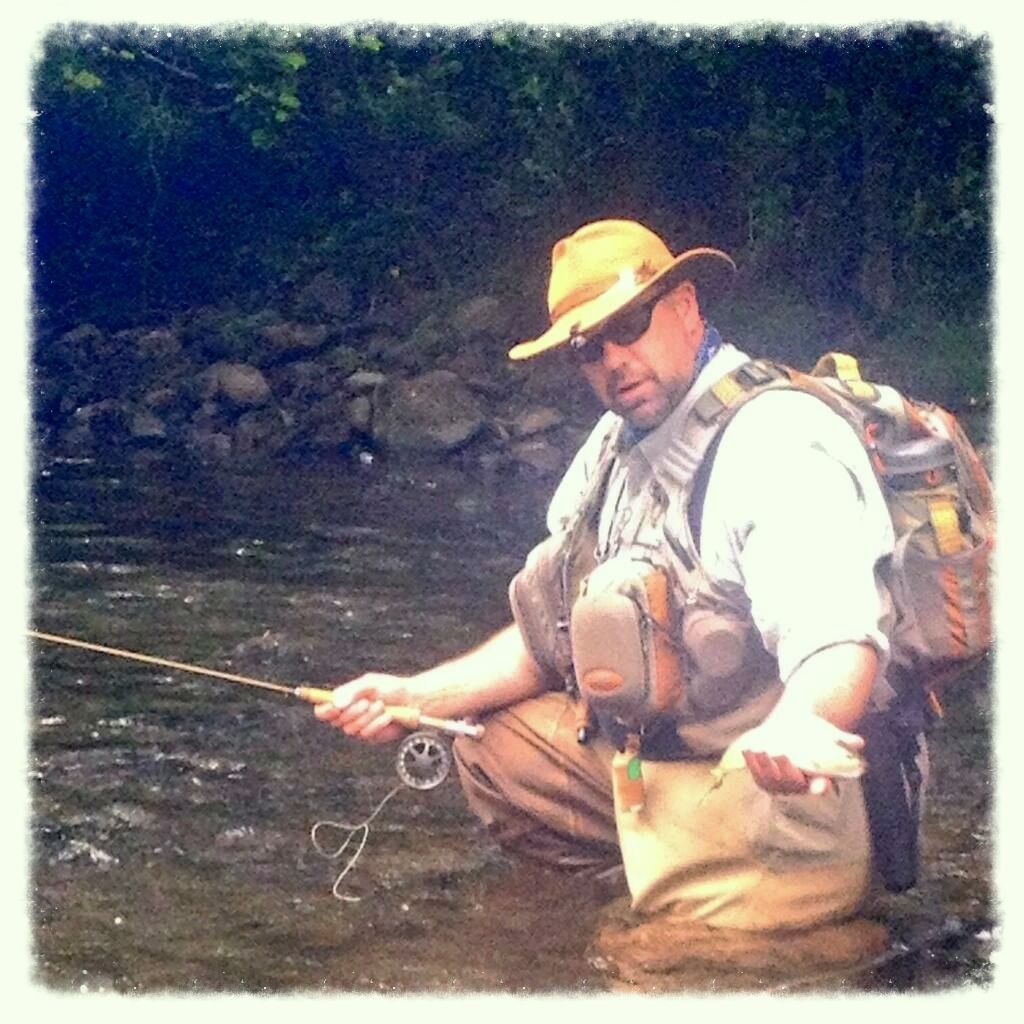

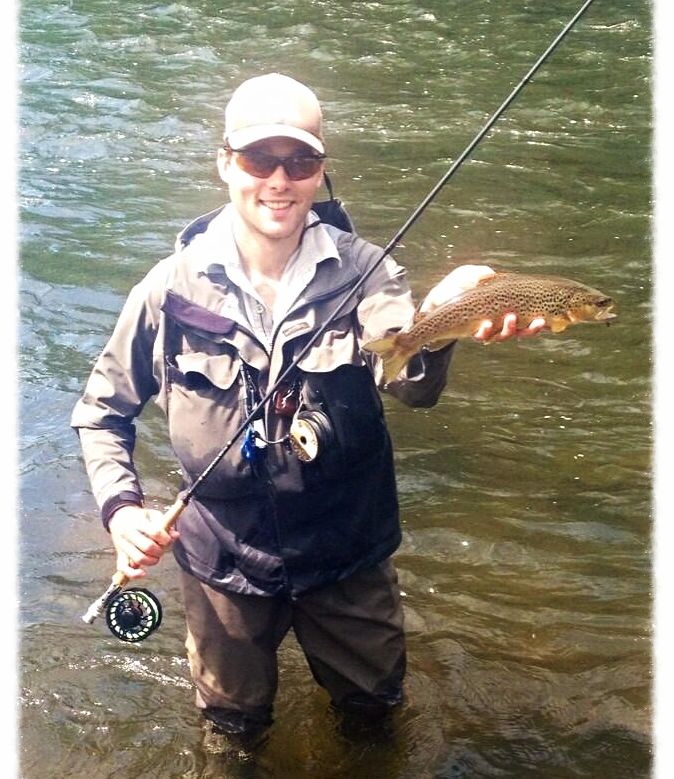
Kris Kent - big man, small trout
Nicholas - the spectra nymph does it again!

Nicholas arrived the evening previous to our day and we stole a late hour (before returning to watch his nation lose in the World Cup). There were a few fish feeding and we caught on Yellow May Dun (YMD) emergers and Blue-Winged Olive (B-WO spinners). The B-WO spinner falls hadn't started properly but this provided a taste of things to come.
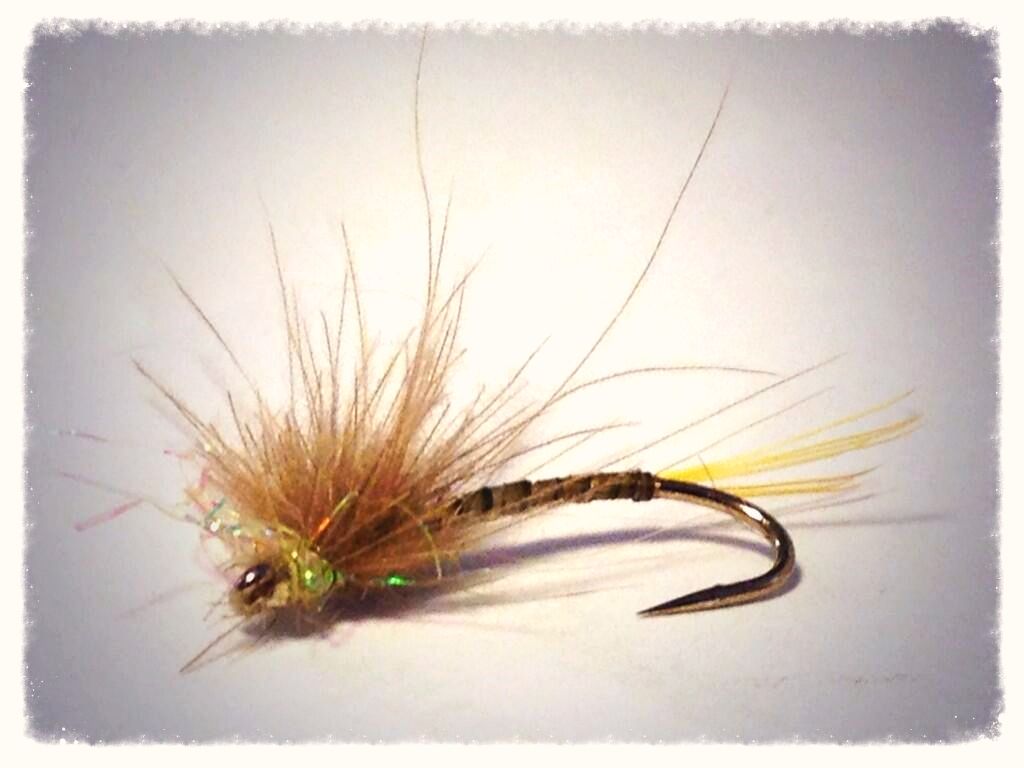


YMD emerger

Early Evening

I started evening fishing during a warm period at the end of May. The fishing was erratic on those early summer evenings but the first few sessions provided some excellent sport. One memorable evening saw more than ten fish landed, with none under twelve inches. The largest was a lean old nineteen inch cock fish with a fierce kype and teeth that cut my finger.
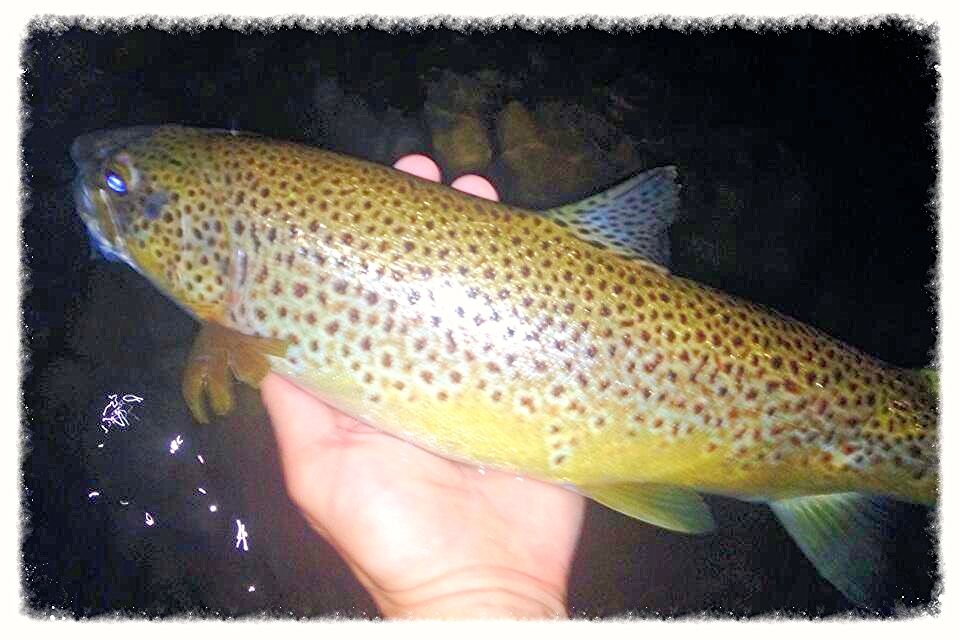

Kyped cock fish
All of those fish fancied my spent CDC & Elk a fly that, since the egg-laying grannom in April, had served me well during the day. That it was the wrong colour to imitate many of the upwing spinners (mainly YMD) on the water didn't matter to these early (less selective)summer fish.


Purple Haze - Usk trout
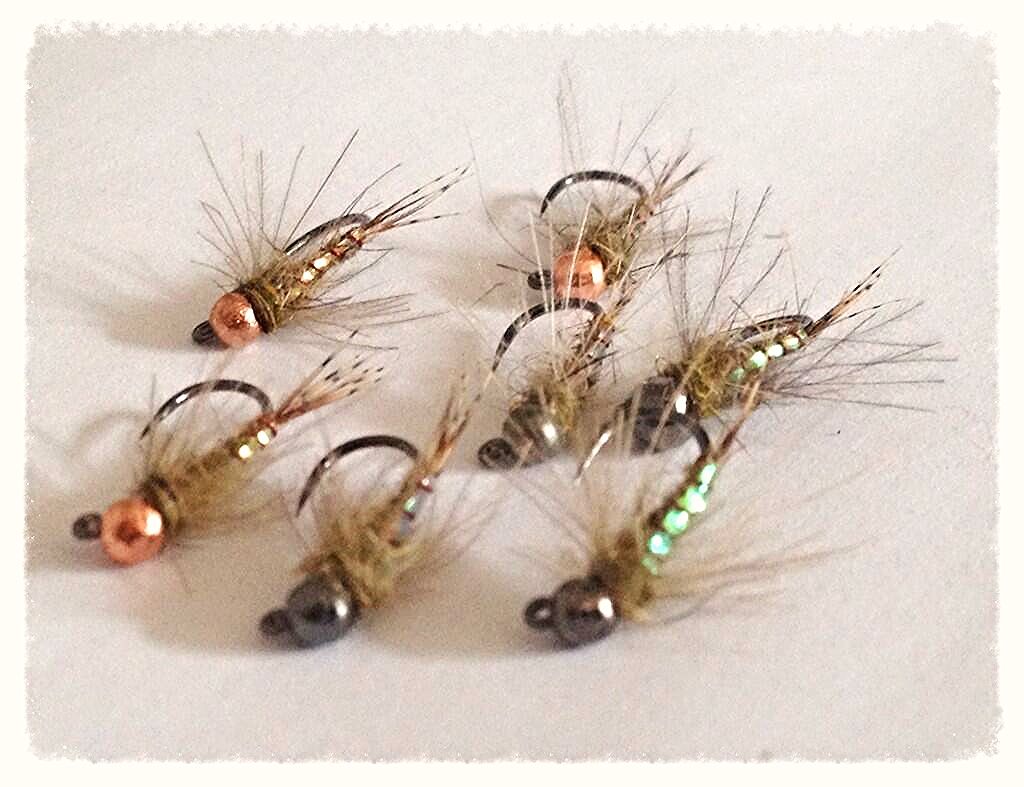
When there was no surface activity (mainly in the early evenings) I fished nymphs, or I should say, a nymph (see below). Apart from a few to a cased caddis pattern, all of my nymph caught summer trout fell to this olivey jig nymph.

Small nymphs for the Usk in summer

Hook: Size 16 or 18 jig (Hannak or Fulling Mill)
Bead: 3mm, 2.5mm or 2mm Copper, black nickel or plain tungsten
Tail: Partridge
Body: Natural hare mixed (2/3) with olive hare (1/3)
Flash back: Pearl mylar or UV blob tail
Rib: Fine red wire
'Hackle': A turn of fine CDC
Collar: See body


I tied the nymph in the style of Craig McDonald's popular 'Duracell' and another nymph fished by Nicholas Steadman. A conversation with Nicholas (and noting his success), made me focus on the profile and resultant silhouette of the pattern and convinced me that partridge would provide the best material for the tail.

The first time I used it, I was fortunate enough to be lent a Hannak Czech Nymph rod to try out by Gareth at Harvey Angling. The high water temperatures drove me up river to a beat with numerous fast runs. That night, I caught many fish at the head of fast runs, with the biggest fish often holding right at the top.
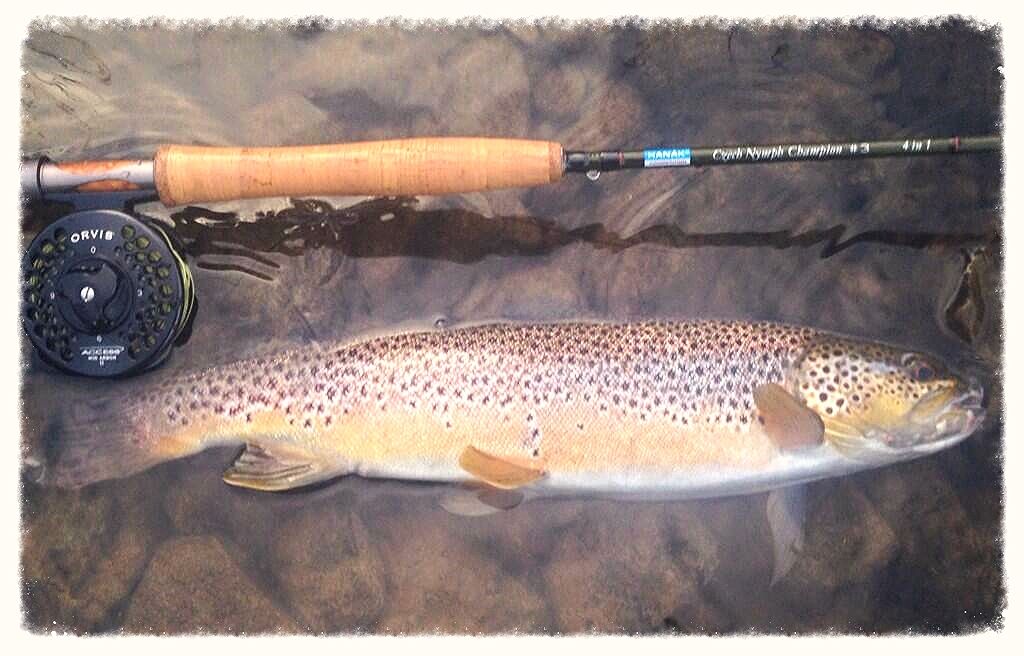
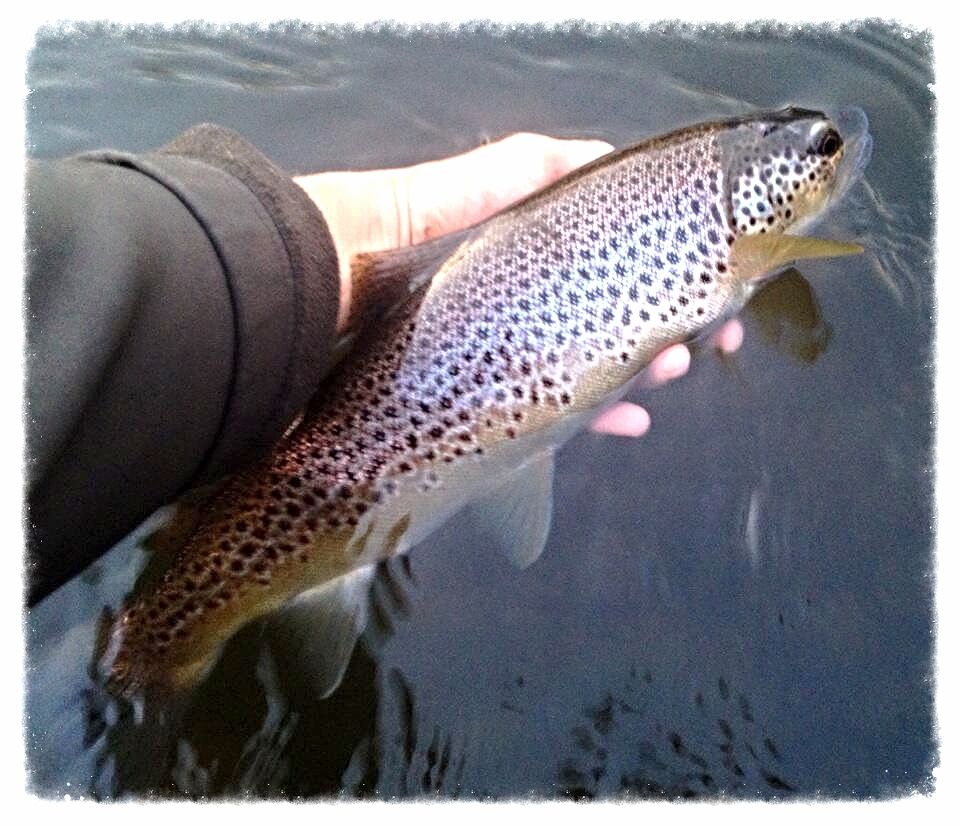
Usk Leopard

In low, clear conditions I either fish a French leader with two small nymphs or, more often, I 'high stick' a very long tapered leader with a duo set up.
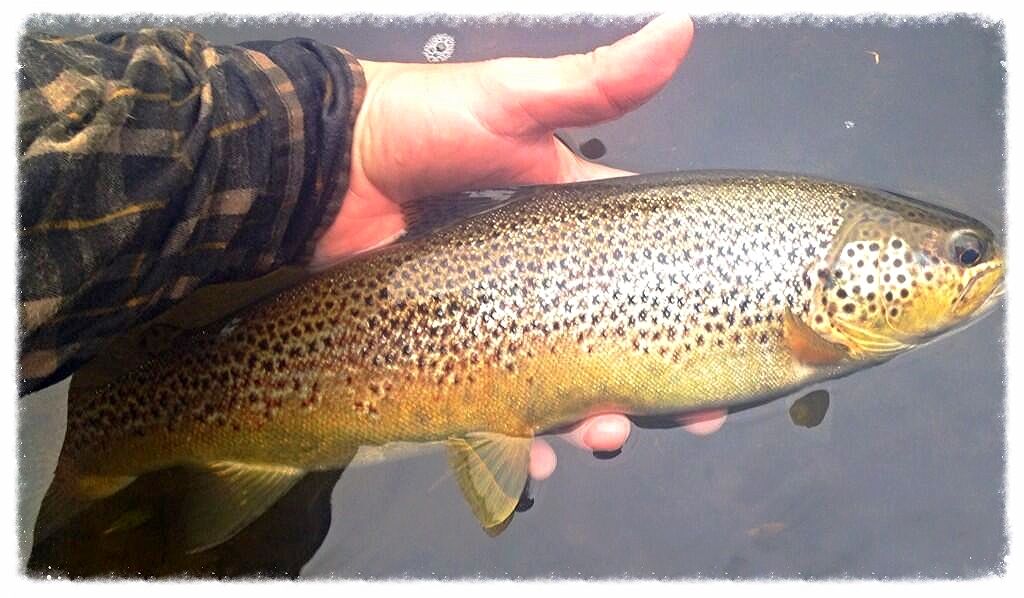

Early evening nymph feeder


Another to the summer nymph

High Summer Spinners

In high summer the larger Usk trout usually start rising in the last hour before dark. An upwing spinner fall will see them feeding hard into the dusk, and some nights they can be heard crashing caddis until the small hours.
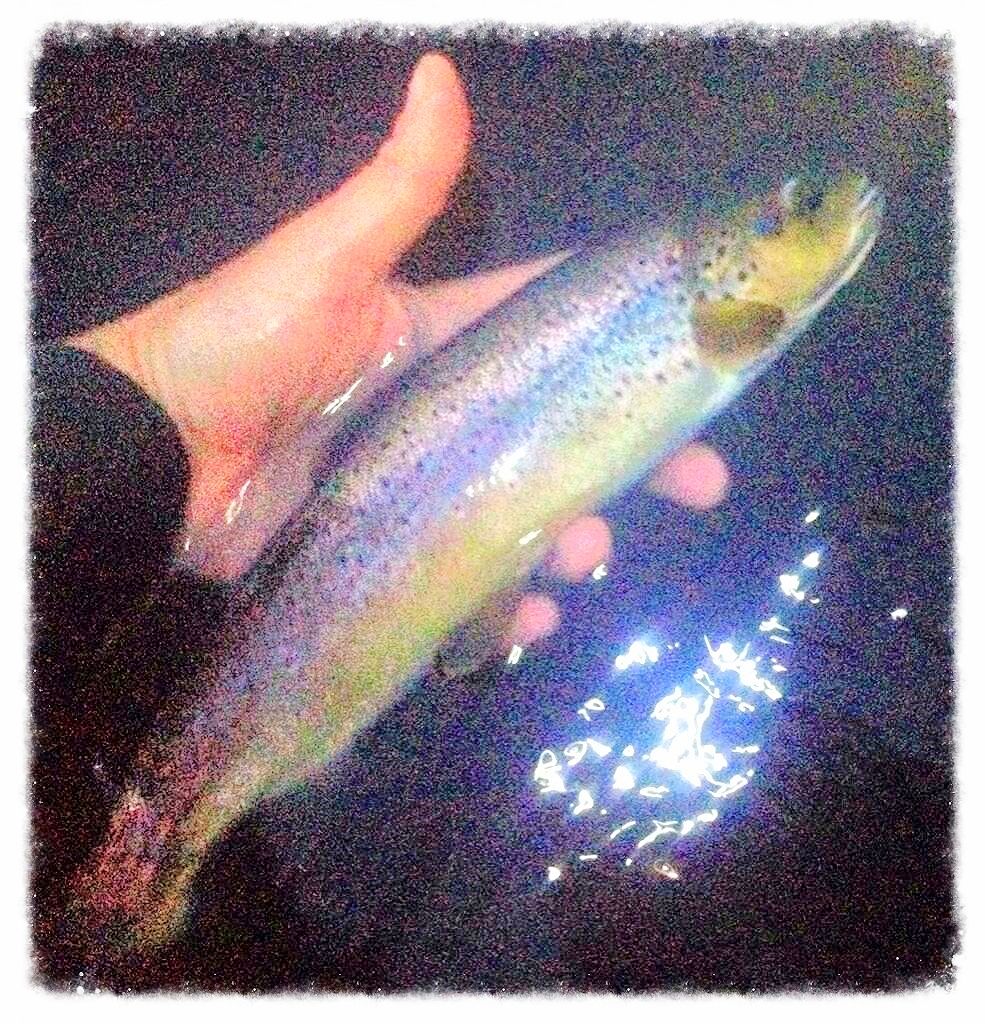

Caught on a skated bleached elk hair caddis
I
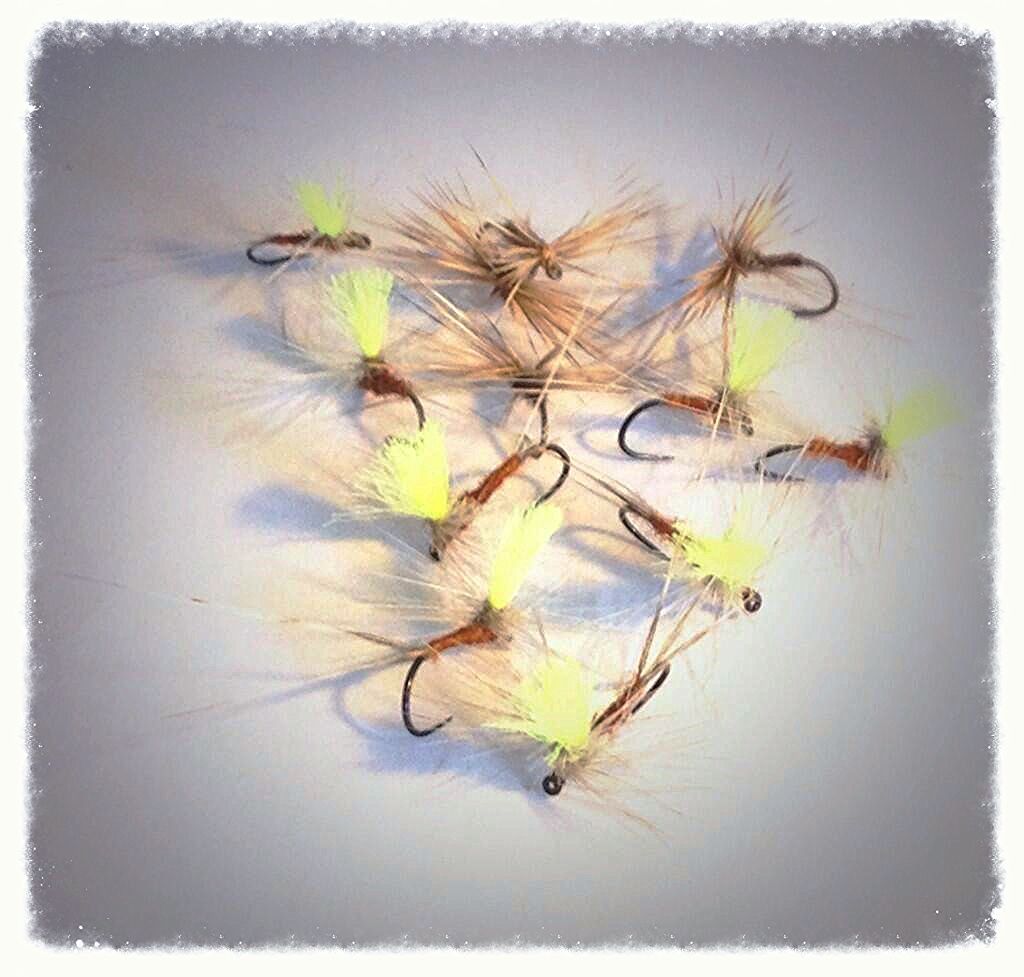
employ a only a few spent fly patterns in various sizes: in the early summer the (previously mentioned) spent CDC and Elk; when the Danica mayfly are on I use a spent mayfly pattern and, when the B-WOs are prolific, I use a Paul Procter para spinner. The latter is my most successful spinner pattern and the fluorescent yellow post is visible in very low light levels.


Spent CDC & Elk and PP Para Spinners


Drag and mircro drag are sport killers when fishing spent flies and, to minimise this, I move as close as I can to the quarry, often within two rod lengths. Good wading technique and patience are essential, particularly in low water; it often takes me five minutes to move into range.

When casting to fish, I usually employ a large upstream aerial mend and move the rod tip down stream at the same speed as the fly (or the speed I think my fly is moving in the dark!). I try to get into a rhythm that allows me to fish the fly effectively when it is too dark to pick it out.
Dark wader

I use a 16 foot leader and, to take the flash off the line, rub it gently with a piece of grass held between my fingers. I can't recall where I read or heard this tip but it seems to work. To further reduce drag and ease lift off, I apply mucilin to the back two thirds of the leader.

Early in the season, when fishing big dry flies (such as Large Brook Dun patterns), I caught wily old trout using 5x diameter tippet. This does not work on the low, gin clear summer Usk. I have experimented with tippet diameters (particularly after reading Peter Hayes' book, 'Fishing Outside the Box'). My conclusions are the same as ever: I catch more fish with 7x than 6x and, when it is still relatively light, I struggle to catch any of the spooky summer trout with 6x.  

Night release

Those who believe that brown trout are rarely selective feeders should fish the Usk in June, July and August - the surface feeders are nearly always selective.

Reading the rise is important when targeting fussy feeders as you don't want to have to change your fly every few casts in the low light. A few evenings this year, I have gone out for the last hour anticipating spinner feeders only to observe fish feeding on B-WO and Danica duns (I have witnessed B-WOs hatching into the dark on sunny days). These dun feeders would not accept a spinner pattern, but readily accepted a dun.
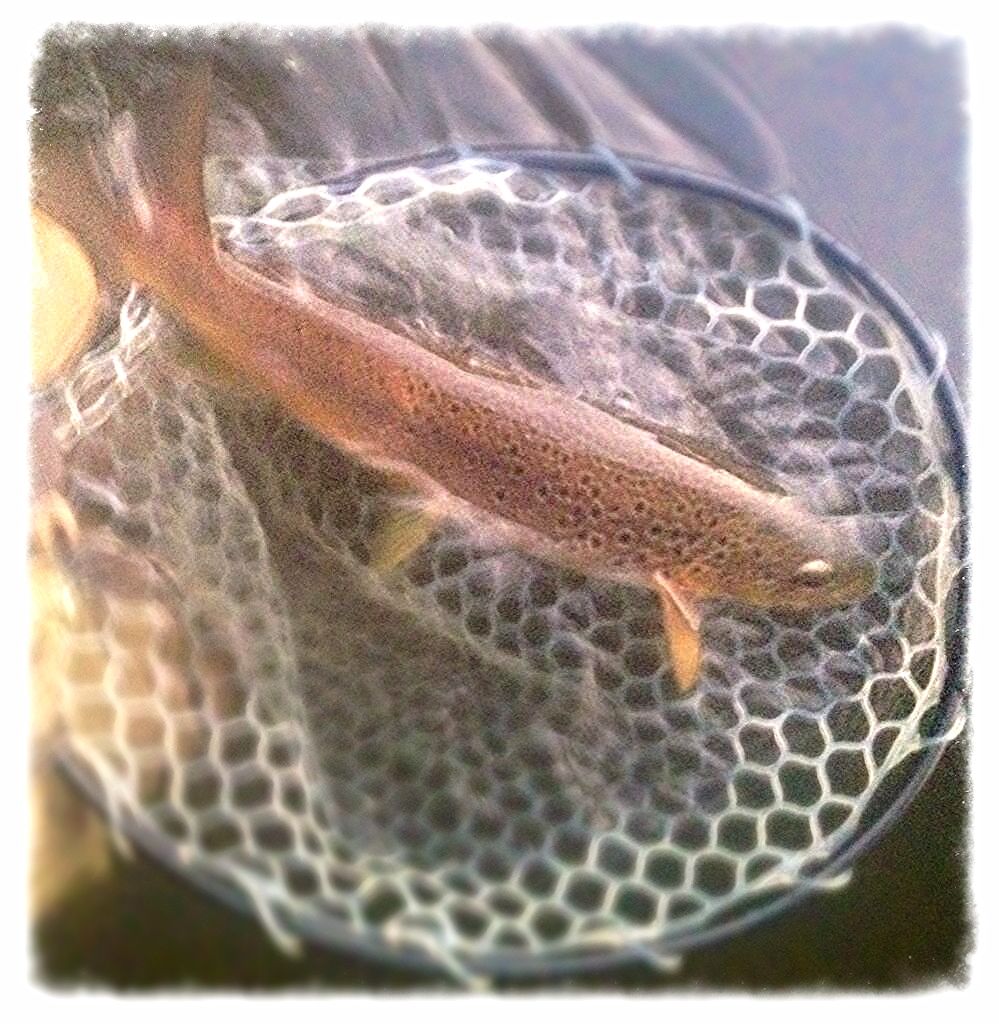
Selective Usk trout

Even in the high water temperatures, the Usk trout fight fiercely with most of the larger fish jumping and running towards snags in the shallow river. I thought the fish below was much larger then the 16 inches it turned out to be and, as it repeatedly ran to submerged tree roots, I feared being snapped. Pound for pound one of the best I've caught - the Manny Pacquiao of the trout world.
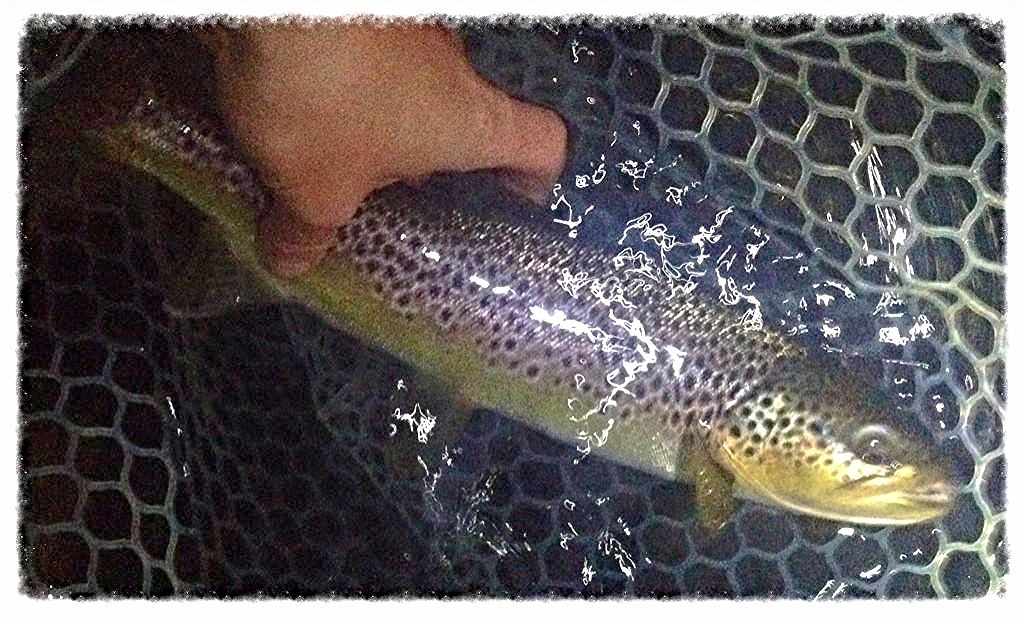
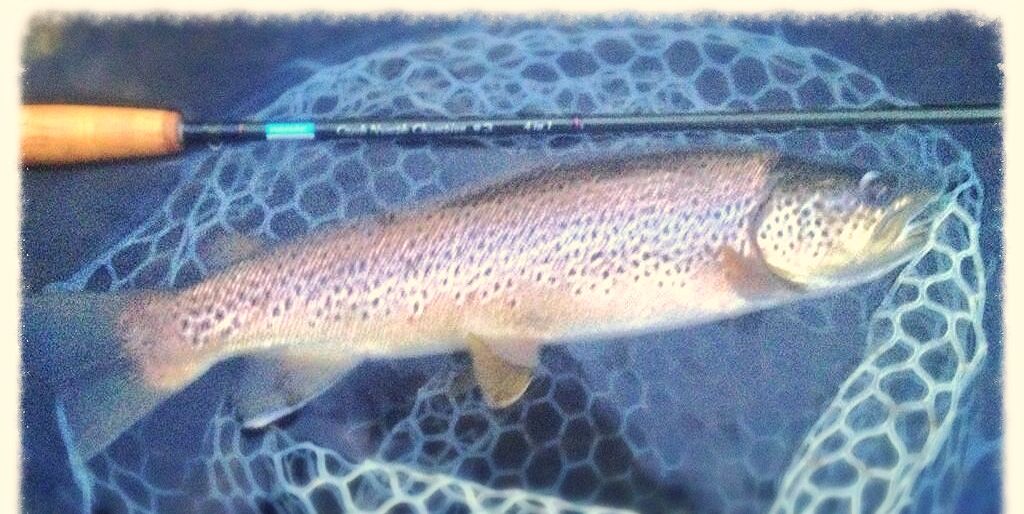
Pound for pound...

Experience has taught me that my leader needs to be constructed correctly and I must play fish skilfully in order not to exhaust them in the warm water when using fine tippets. I prefer copolymer tippet and attach it to a shop bought 12 foot copolymer tapered leader using a two turn water knot (always being careful to ease knots down without pulling the end pieces too tight).

When fighting fish in open water, I try to play them on the reel as quickly as possible with the drag set appropriately to the tippet diameter. When I get it right, I'm occasionally rewarded with fish like the one pictured below.
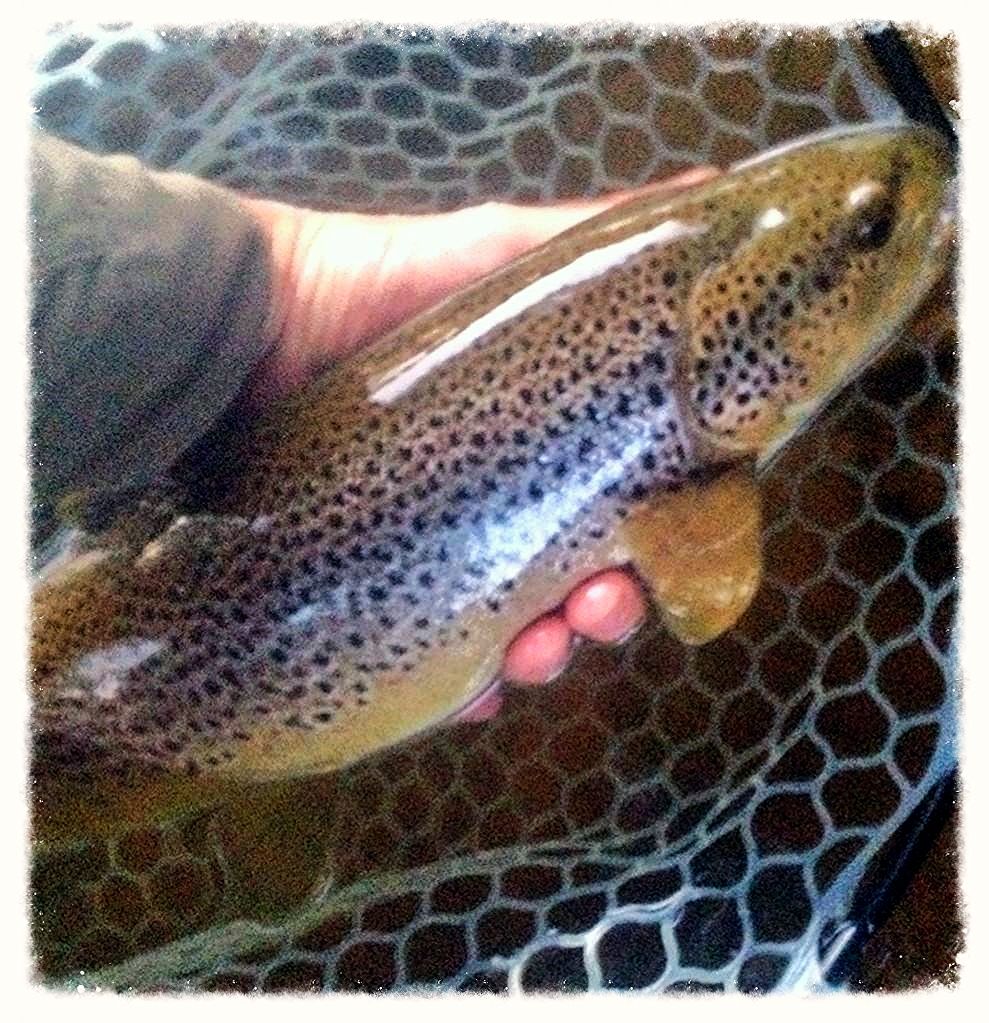
A big fish to a PP B-WO Spinner

Warm Feeling

The walk to the river
There is something very special about summer evenings on the lower Usk, so special that sometimes I barely fish at all. Although peaceful, the quiet is often broken by startled calls of bouncing blue kingfisher, the insect buzz from blossoming lime trees, the occasional splosh of chub as they compete for morsels in the shallow margins and the begging screech of juvenile tawny and barn owls as they wait expectantly in the gloaming for parents to return with their prey.


Usk chub
Occasionally the wildlife can get too close - not that I mind (much)! At the end of one evening I could just make out three fish sipping spinners less than ten feet in front of me. About to cast, I was startled by a loud splash downriver. My first thought was that it was another angler (or a poacher) and so I turned with my headlamp on. Out of the dark two young otters ran up the bank and swam towards my fish. With the torch on I shouted and beat my thigh but they weren't perturbed. The trout, that were lying in the surface, careered off (with the front one moving a significant amount of water)...You can't have it all.

As the forecast tells us the dry spell is (hopefully) nearing an end, I feel that I've taken full advantage of the evening fishing this year; which is just as well. At the end of August, my wife is due to give birth to our first child leaving me to wonder (optimistically) if I'll be out as much next year.
In the gloaming


Wednesday, 9 July 2014

Higher Ground - Llyn Gamallt and Llyn Gwyddior, May 2014

Wild things

I left my meeting near Blaenau Ffestiniog and drove into the slate mining town ('that roofed the world') to pick up Aled who had been to purchase tickets for the next day at Llyn Gamallt.

We have been going on jaunts to fish upland lakes or llynnoedd for a number of years and have come know them as the ‘annual beer and steak trips’. Gwyddior and Gamallt are two favourites and we had arranged to fish them over consecutive days.


Going equipped

True to form, by early evening, we were on the edge of the Snowdonia National Park relaxing with a pint in The Grapes at Maentwrog (our digs for the night). The pub is under new management and the landlord, Simon, is a keen fisherman. The small hotel has an atmospheric bar and recently refurbished rooms. After a decent steak, we talked with the locals until well after bedtime, one of whom fished flies on a bubble float!

Llyn Gamallt, 30th May

Gamallt is not easy to get to but it's worth the effort; the larger than average fish often look up early in the year to take advantage of the surprisingly prolific hatches. The journey requires a short drive in to the spectacular moelwynion above Blaenau Ffestiniog, and then a crawl along a dirt track to a small car park from where there is a walk.

Fully breakfasted, and only slightly jaded, we arrived at the car park by nine. We had departed with the valley floor bathed in sunlight, but up here it was darker, with an occasional ray illuminating sections of the rugged landscape - the sort of light you get only in high places.


Llyn Gamallt
Ready for the off

Suitably attired and loaded, we followed the barely visible path through a peat bog and twenty minutes later, hot and sweaty, we were tackling up. I noticed some caddis and midge and so, fishing only two flies, I selected a pearly pennel on the point and a small muddler for the dropper.

Bring it on
While preparing to launch I spotted a good fish rising tight to a stone drop off beneath a single sapling. Wondering if it was taking sedges, midges or terrestrials, I covered it from the bank. It didn't take. With the position marked by the lonely shrub, I would return later.

Within five minutes Aled, who was bank fishing, had taken a fish on a mallard and claret. As I watched him return it, the line was snatched from my hand by an eleven inch brownie that fancied my flashy pennel.


Golden Gamallt trout / brithyll aur Gamallt
The next half an hour went without seeing a fish. As I neared Aled, he asked politely (!) if I would move away as there were fish rising in front of him. As I paddled out I noticed that there were numerous surface feeders around some weed beds at the windward end of the lake. The sedge were still present, including some huge skaters (that the fish ignored), and I stuck with the muddler on the dropper. The next hour brought four or five savage takes and three fantastically conditioned golden bellied trout to the muddler.


Gamallt surface feeder

Claret dun

With fish still rising, the takes ceased. After unsuccessfully covering two or three I wound in and took time to observe, something I find more effective at water level, when wading or in a float tube. There was a hatch of small, very dark coloured olives - claret duns. 

I changed to a single size 16 dark coloured CDC and Elk. This was the tactic for the rest of the day and numerous fish fell to this simple pattern, cast at rises and fished static.

Dark trout from a peaty lake

By mid-afternoon I remembered the fish near the shrub and decided to paddle back up the lake. As I neared the steep bank I heard a tell tale plop and honed in to see the disturbance beneath the conveniently located sapling. 

Quietly, I paddled into range and cast. The fly hit the water the fish rose confidently. It took me two minutes to land on my five weight rod and, I have to admit, I thought it was bigger than the fifteen inch gold bar that I netted. But I wasn't disappointed in the slightest.


Fish of the day

Happy, and with tired legs, I went to find Aled who had been enjoying some sport pulling dark olive imitations from the bank. I surrendered my float tube to him and he spent a few hours becoming acquainted with this dignified means of fishing transport.


Aled - on the tube

It was early evening before we trudged back to the car, both agreeing to return before the end of the season.

Resting my legs
That night we stayed at the Llew Coch, Dinas Mawddwy. I'll say nothing about the rooms, but food is plentiful and it's a cracking boozer. Despite a tiring, but very rewarding day, we played pool and talked about Dyfi sewin with the locals until the small hours.


It is what it is!


Llyn Gwyddior, 31st May

At nine o'clock sharp we rang the bell of a familiar house in Llanbrynmair (it's best to leave it until then to collect the pre-booked day tickets for Llyn Gwyddior from Emyr Lewis - y dyn o Lanbrynmair). Emyr is a hugely experienced ex-water bailiff fly fisherman, whose Coch-y-Bonddu pattern is known far and wide. He is also a nice man whose house can be recognised by a small sign inscribed with the image of a trout and the words 'Local Trout for Sale'. These rainbow trout are harvested from Llyn Clywedog and he was there that day, so we purchased the tickets from his very helpful wife, the aptly named Dyfi. We would have to chew the fishing fat with Emyr when we dropped the gate keys back to him at the end of the day.

From the village of Llanbrynmair, Gwyddior is a twenty minute drive along rural lanes, through a farm yard, over a brook and up gated forestry tracks. If you're not in an off-road vehicle it's worth checking the weather before you go, as the brook can be very difficult to pass after heavy rain. In fact, it's always worth keeping an eye on the weather when visiting such places...

Five years ago, a friend (who shall remain nameless) and I were in a boat on Gwyddior when a storm hit us. That day I witnessed two things for the first time: a grown man crying while sporting a fishing hat, and a rowing boat surfing a wave only to be deposited on the bank. By the time we descended the mountain, white as sheets, the trees were still and the sun shining.


Llyn Gwyddior

When we arrived at the llyn, I pumped up my tube and gathered my gear. As Aled and I surveyed the water there was a loud bang that triggered a blasphemous exclamation from my friend. One of my tube bladders had punctured! I can only conclude that too much breakfast in the Llew Coch resulted in over inflation.

Bladder malfunction

We had packed an electric engine and some oars so that, if needed, we could use the boat but, in a huff, I elected to bank fish. This proved to be a mistake.

I worked my way over to the opposite side with no success. Then, under a cloudy sky, some large fish started rising in a line about forty meters out, downwind of a large reed bed. Claret duns were hatching on the reeds and being blown onto the water, the fish hitting them as they bobbed past. I persisted with deep wading, trying to cover these surface feeders with a CDC and Elk, catching one and losing two. All good fish but - a schoolboy error - my camera was out of charge.

In the distance, Aled beckoned me over to the boat. By the time we were on the water, the hatch had slowed and we caught no more on the surface.


We tried various methods but it was dead. At these difficult times I resort to shock tactics employing attractor patterns. I attached a slow sinking poly leader and put a size 10 Alexandra on the point. As we approached a submerged fence we knew there would be fish present and, as I joked about a 'fence fish', my rod arced to the pull of a trout of about a pound and a half (which I lost at the boat). Within a few minutes, it was Aled's turn to land a fish of a pound on a large, very flashy claret dabbler.

Then another hour of nothing. In desperation I attached a tungsten cone head black wooly bugger-type streamer. This worked well and I landed a fish of over a pound, losing another before it was time to leave.

With the gear packed away, we started the journey down to civilisation, jobs and families. I was grumbling about a spare bladder for my tube and not taking the boat out soon enough when the sun came out. As we turned the corner I became quiet, stopped and got out to admire the view. I no longer cared.


Higher ground