Showing posts with label River Taff. Show all posts

Wednesday, 7 May 2014

False Starts - River Usk and River Taff, April 2014

What a Difference a Day Makes

Bryn Derwen, River Usk, 12th & 13th April


It was Saturday morning. I had grilled a few cuts of Raglan pig and was relieved when Welsh exile and itinerant angler, Morgan, arrived on time. We had not fished the new beat together and, even though the river was up 15cm and (worse) there was a stiff easterly wind, I was eager to get out.

We had two days and, so rather than just fish a single beat, we drove a mile or so downstream to Llan Farm (GAS water). Upon arrival, the wind funnelled upstream and it was clear I had made a poor choice. A false start.

Back upstream we fished hard until 5pm with only a few fish taken on nymphs. We located no surface feeders and saw very few flies, even in the sheltered spots. The wading on this deep wide beat again proved challenging. The river appeared dead, and we concluded the grannom emergence, that promised much at the end of March, had fizzled out. I was not disheartened as the forecast was far better for the Sunday and the river was dropping fast.

Following more local bacon, and with heads as clear as the spring sky (we must be getting old), we were pleased to be met by still conditions. Immediately, we noticed a few egg laying grannom bouncing on the surface film and were delighted by the sight of a few rising fish.
A better day

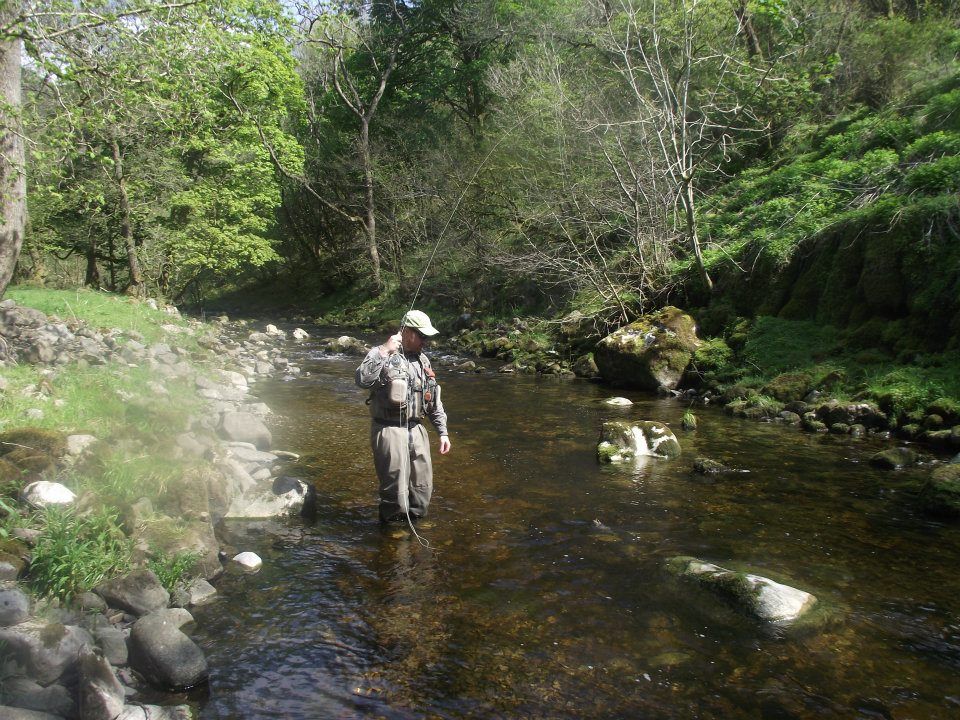
We assumed they were feeding on the spent sedge and selected size 16 split wing CDC and Elk patterns. As fish were again feeding on the far bank, to achieve successful presentation we had to wade deep and cast long; a large upstream aerial mend and a sixteen foot leader helped to achieve the essential drag free drift. When the cast was timed correctly and the presentation spot on the fish accepted our flies and we caught most of those we targeted.

17 inch Bryn Derwen trout


Deep wading reaps rewards
Morgan is a purist at heart and I was pleased that he had some top of the water sport in the peaceful surroundings before his two hour drive back to the rush of the City where they ‘don’t have weather’.

Spectator sport

The Leviathan

Upper Taff, 26th April


Dan arrived for breakfast at mine (more pig) before we planned to fish the Usk. I was worried due to the previous day's rain. As we walked, river bound, through protective ewes and curious lambs, I could make out the reddish brown water. Another false start.

Retracing Dan’s journey, we arrived at the elevated and slightly stained Upper Taff at 10.30 and elected to fish duo tactics with small silver and copper bead PTNs on the dink. This was my first time on this part of the Taff this season and I was excited by the prospect of the eighteen inch plus fish that we often spot in the shallow river.

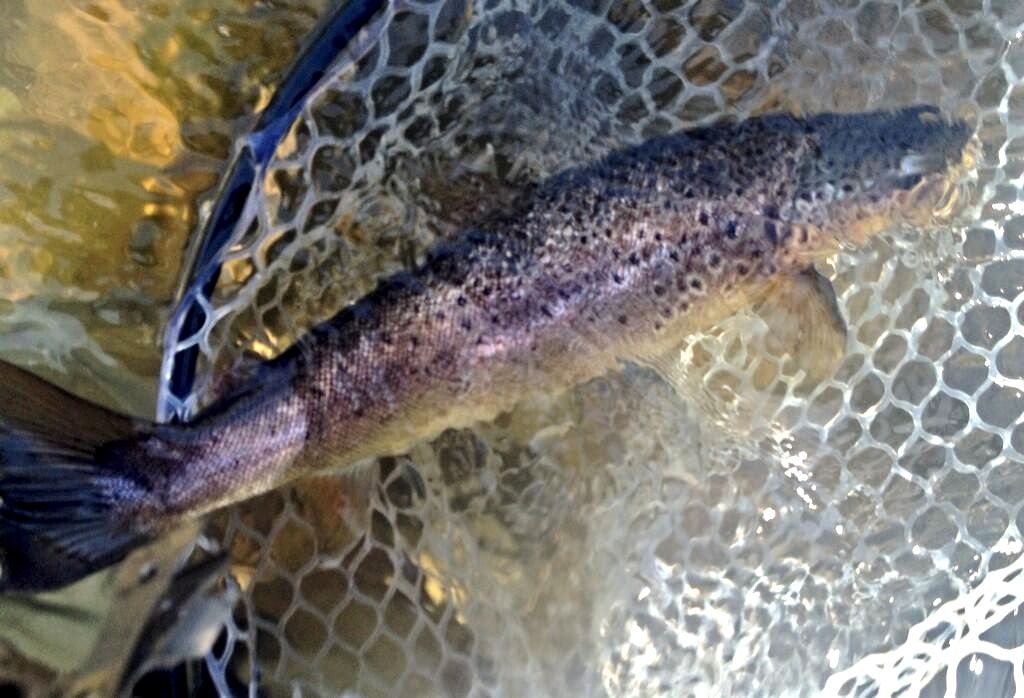
We worked our way upstream taking it in turns to fish through the runs, with both of us catching four or five fish to nymphs. The river had changed over the wet winter and there was a strong and gusty southerly wind that I thought would kill any top of the water sport.
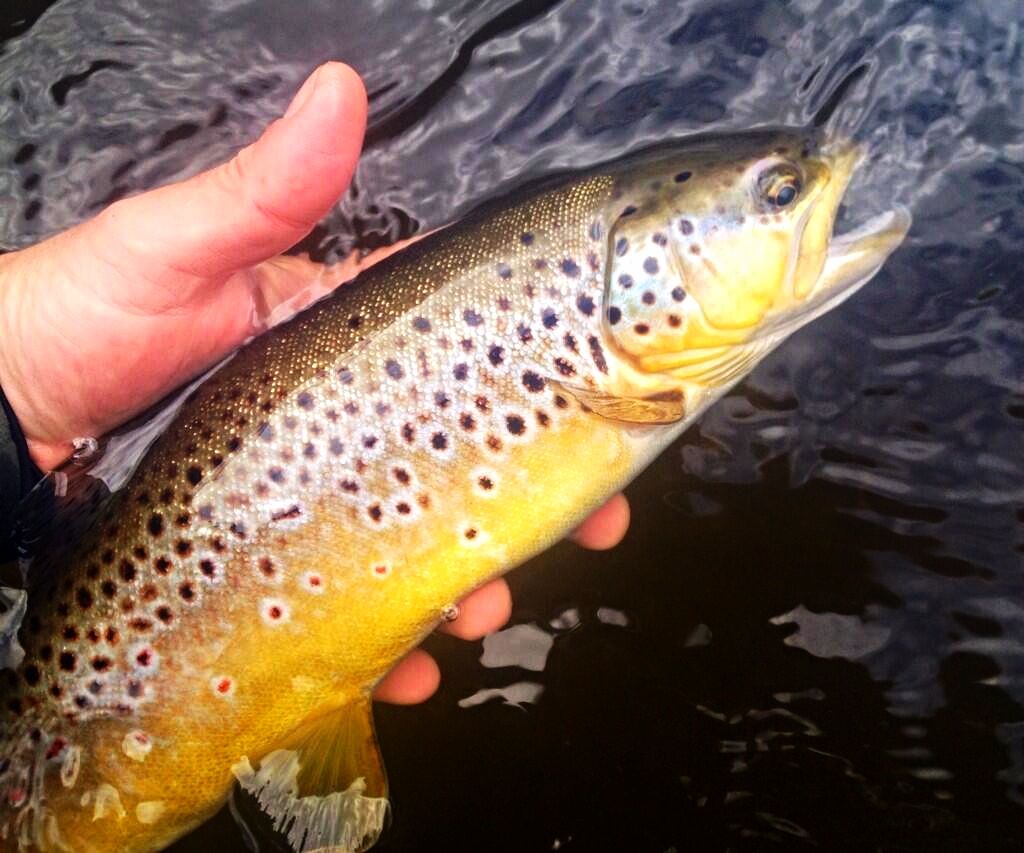
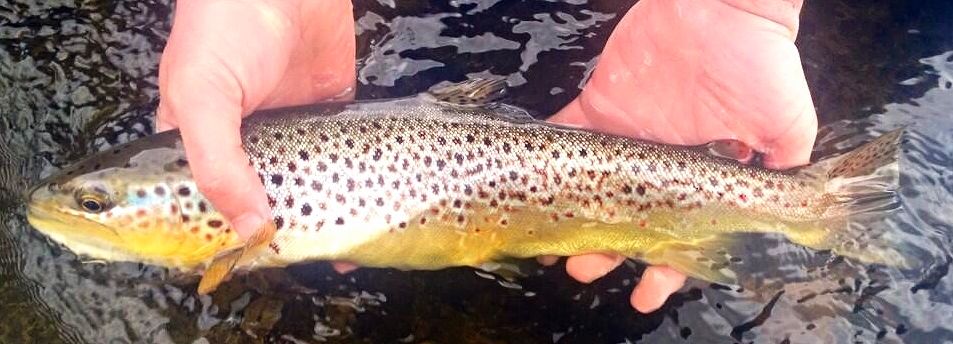
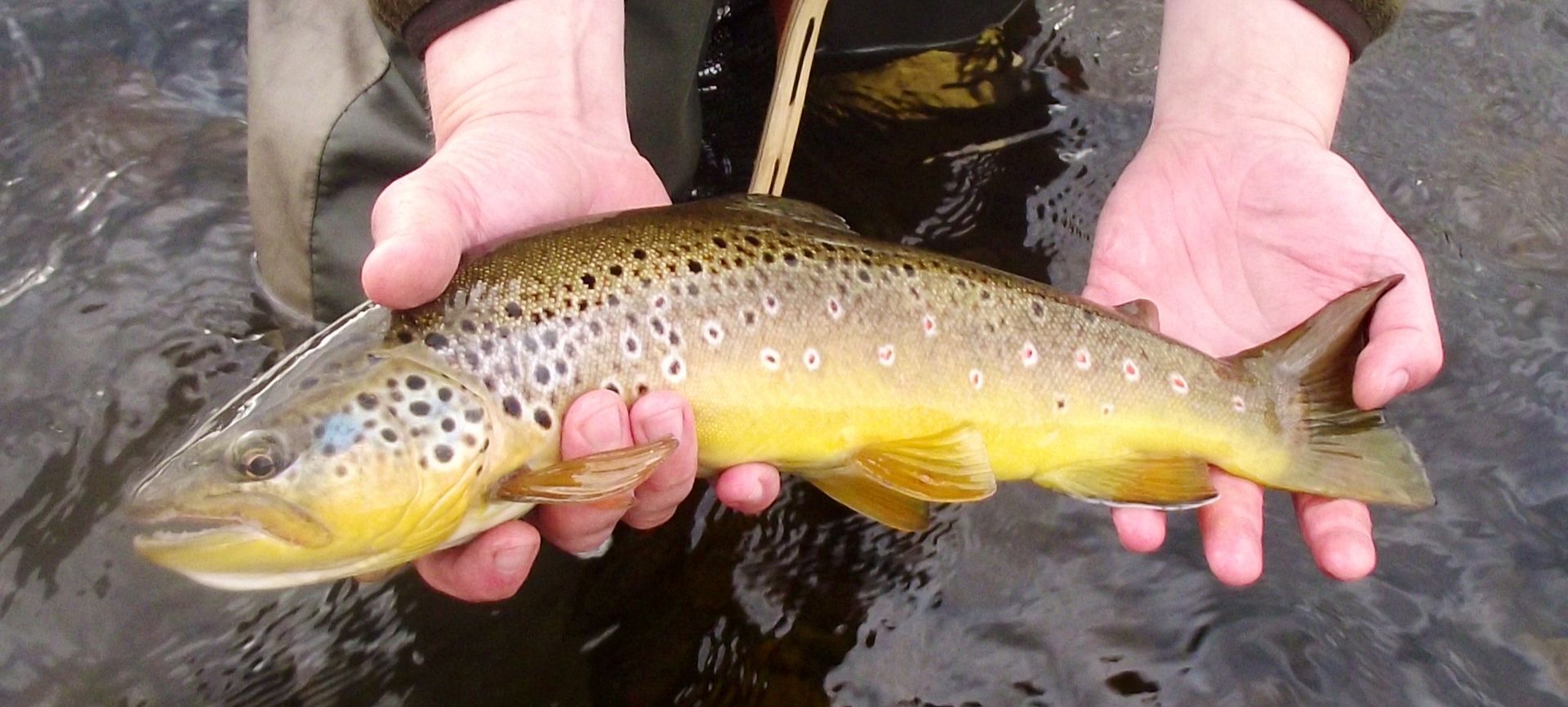
Upper Taff trout

At a favoured long, slow pool the recently arrived house martins were hammering a big hatch of Large Dark Olives (LDOs) and Large Brook Duns (LBDs); a superb site in these urban surroundings. Dan nodded at the river – ‘here we go butty’.

I know no one that understands this piece of water like Dan. He is an instinctive angler and can spot and catch Upper Taff trout in water that most would walk past (or wade through). Just as Morgan was my guest at Bryn Derwen, I was Dan’s there.

We started fishing LDO (emerger and then dun) patterns and caught a few to fifteen inches. We missed only one that I put down when the wind caught my line. Frustrated, I stood and waited until Dan beckoned from further up. In the fast water above the pool, LBDs were hatching in abundance and we needed to change patterns.
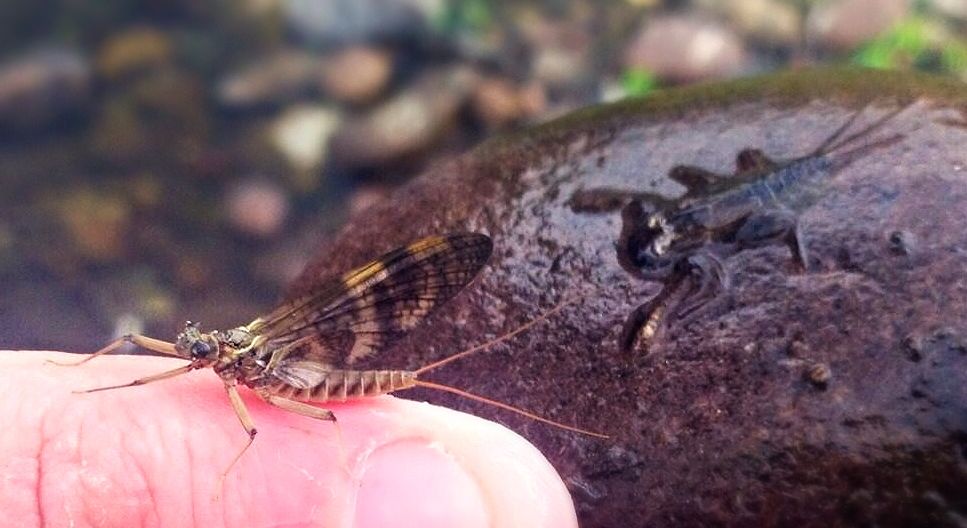
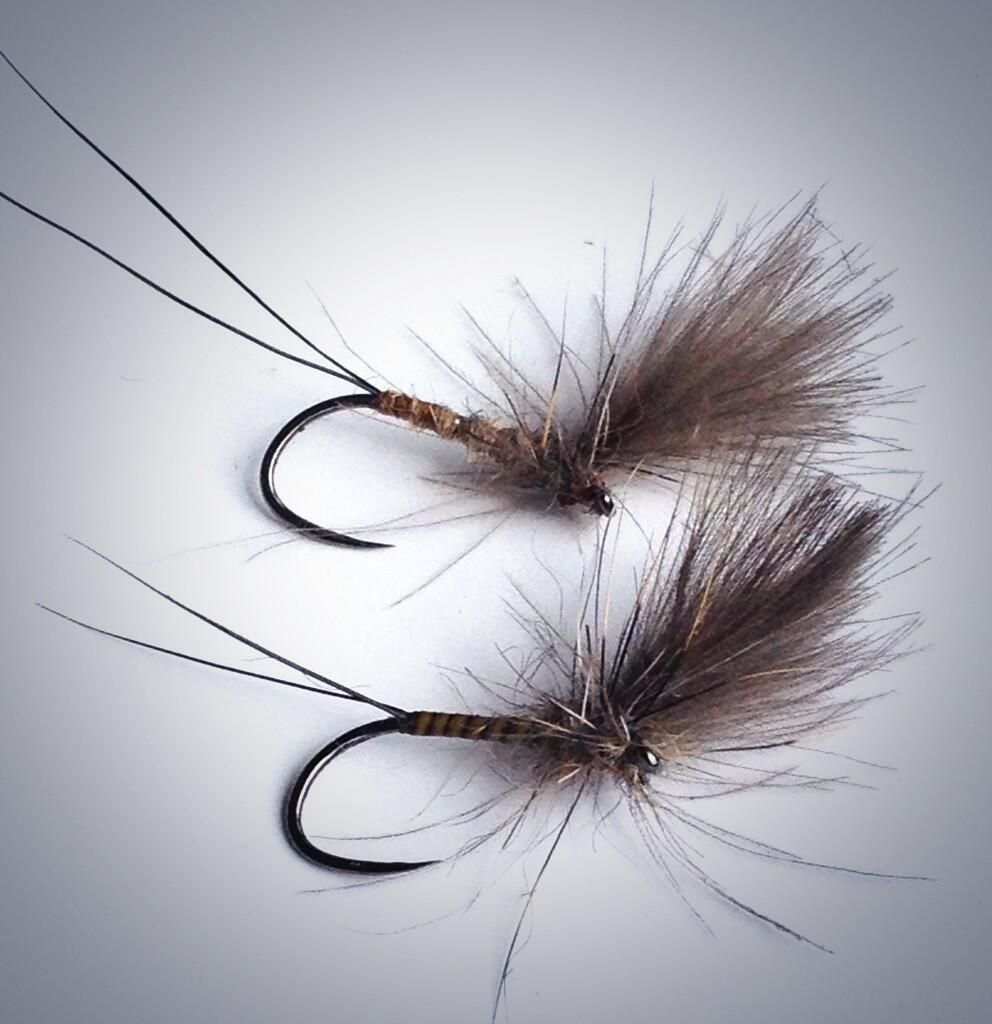
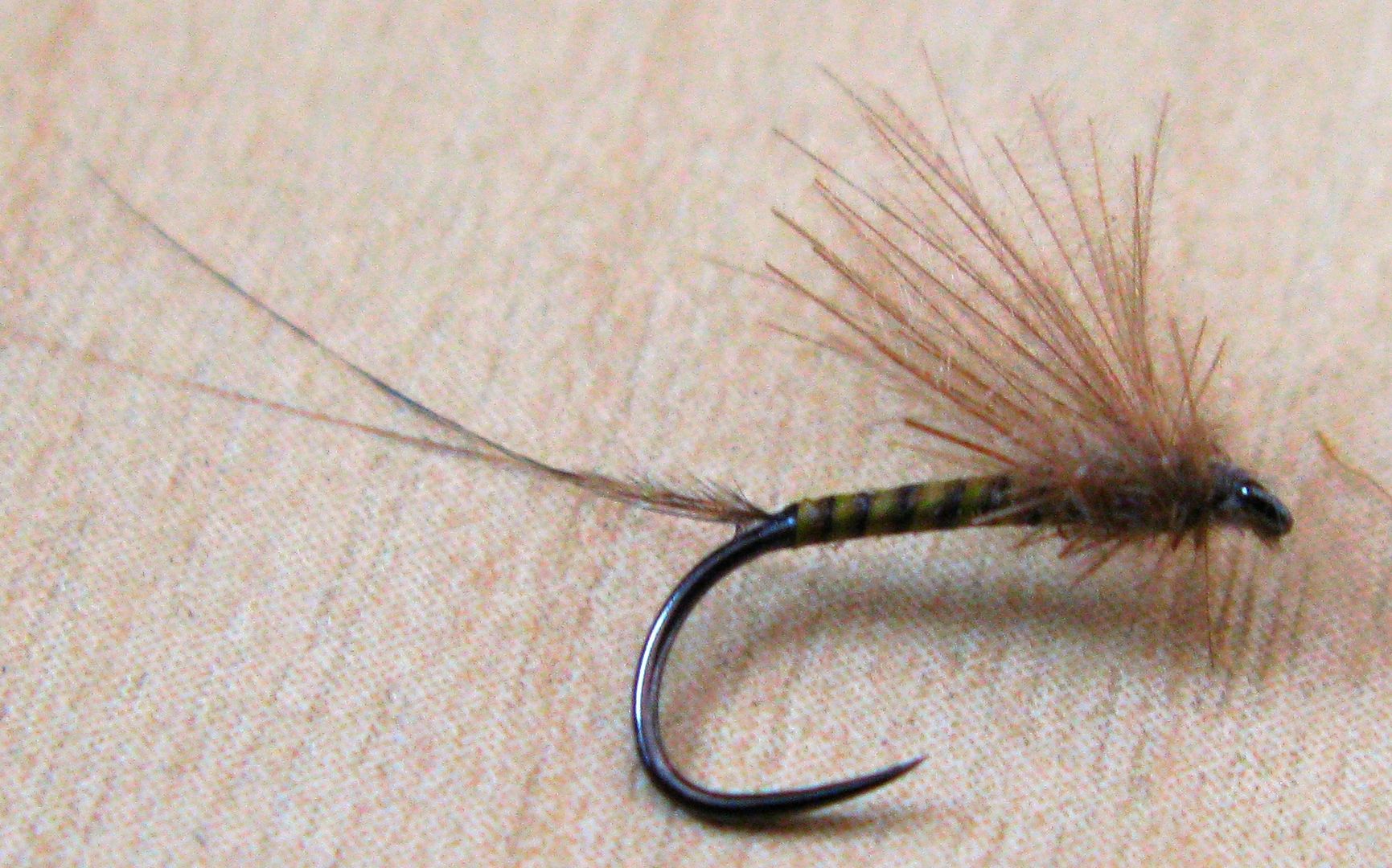
Before and after - Large Brook Dun nymph and sub-imago


Large Brook Duns

Hook: Size 14 - Hanak H 130 BL
Tail: Moose mane
Body: Golden olive quill or light hare's mask ribbed with brown Hends body quill
Thorax: Darker Hare's mask with guard hairs
Wing: CDC


Dan gave me one of his LBD patterns (see similar above). We targeted feeding fish that were on the fin traversing the shallow, clearing river. When fish and fly coincided, we connected. These fish were in superb condition and Dan caught the largest at eighteen inches.
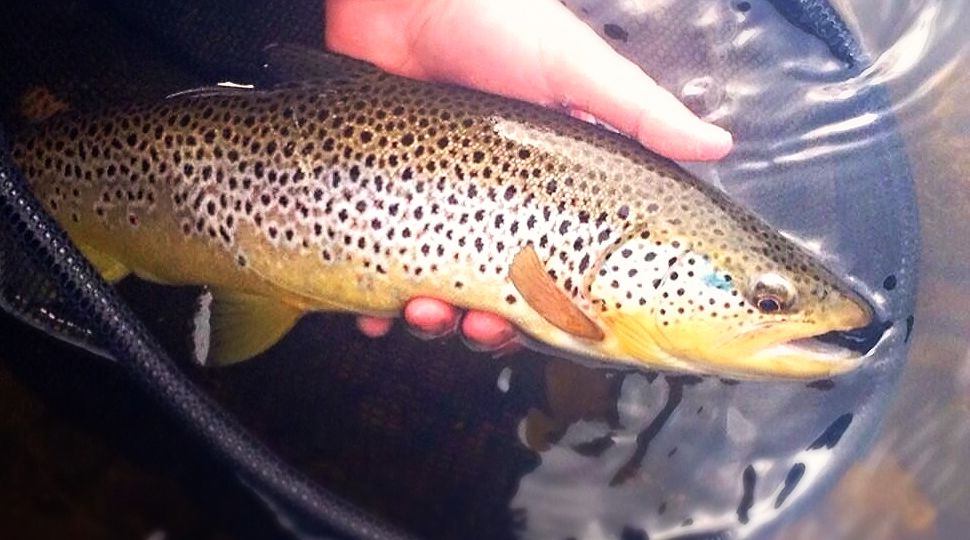
 

18 inch Taff trout

Another to the LBD imitation
We continued to another deep pool, spotting a good trout, I covered, hooked and landed it. It was a wild late afternoon with driving rain and howling wind. We were nearly ready to go home but I elected to have a few last casts with a nymph. As I changed my fly, Dan commented that he could make out the movement of a fish lying deep.

He was right, and it took my size 18 silver bead flashback PTN first cast. For a second it felt like the bottom, ‘Big fish butt!’ I shouted, then all Hell broke loose.

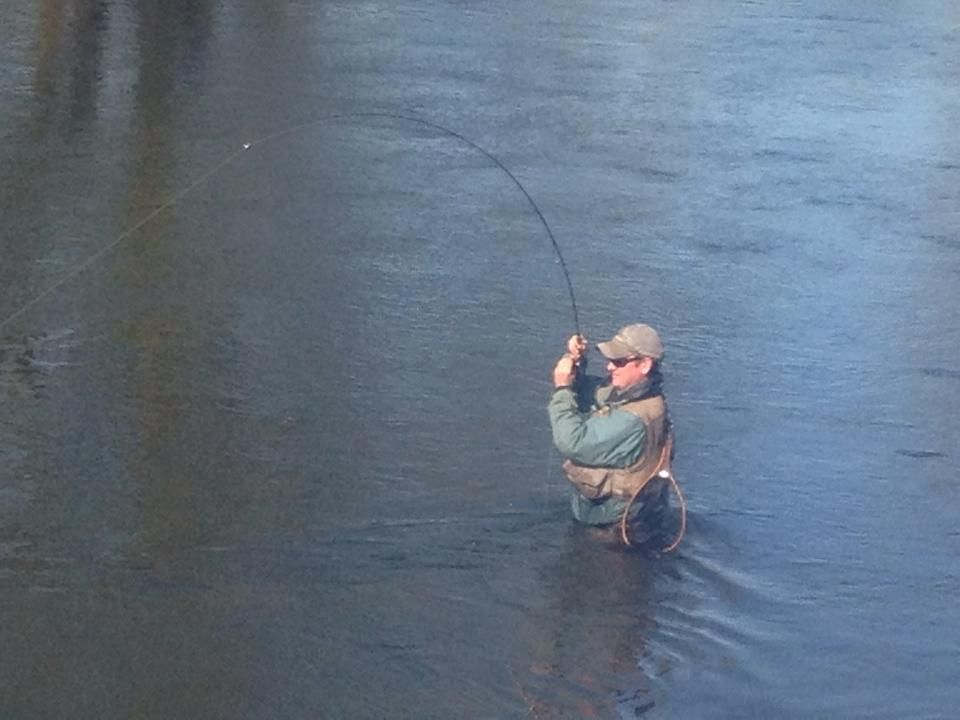
It was a monster brown trout that tail walked and then jumped three times. I swore repeatedly as the fish ran to every snag in the pool, then at me, then at Dan who turned to laugh at the bend in my rod (and the look on my face). In what must have been a comical scene for passing motorists, I bellowed over the wind (melodramatically),

‘It’s going to pop!’ With one hand on the handle and the other on the blank, I kept the rod high and applied side strain as smoothly as my shaking hands would allow. During the ‘jumping phase’ I had noted that the fly was visible in the fish’s mouth but now Dan, who was in the water waving my net, had some unwelcome news.

‘I don’t want to worry you, but the fly is now in his back’. I suspect it dislodged, and relocated, on the last jump and felt sorry this was no longer to be a fair catch. I still wanted my picture with the bugger though and so, with pulse booming in temple, did my best to pump the rod and bring it over my inadequate net. There may have been a split-second opportunity for a lunge (I doubt it would have worked), after which the angry trout ran hard towards a boulder and the fly worked free. As he saw it for longer than me, I asked Dan,

'How big?'

‘It was a leviathan!’ was all he would say.

On the walk back to the car we made determined noises about ‘getting him again’.

Like a Pig


This April, the local rivers didn’t disappoint and from what I’ve seen and heard from others, some quality fishing was had throughout Wales (particularly on the Upper Wye and Usk). I’ve recently seen a few Usk Yellow May Duns and Mayfly; with these hatches to look forward to, and the river on my doorstep, I’m (as a neighbour recently joked to my wife) ‘like a pig in shit’.
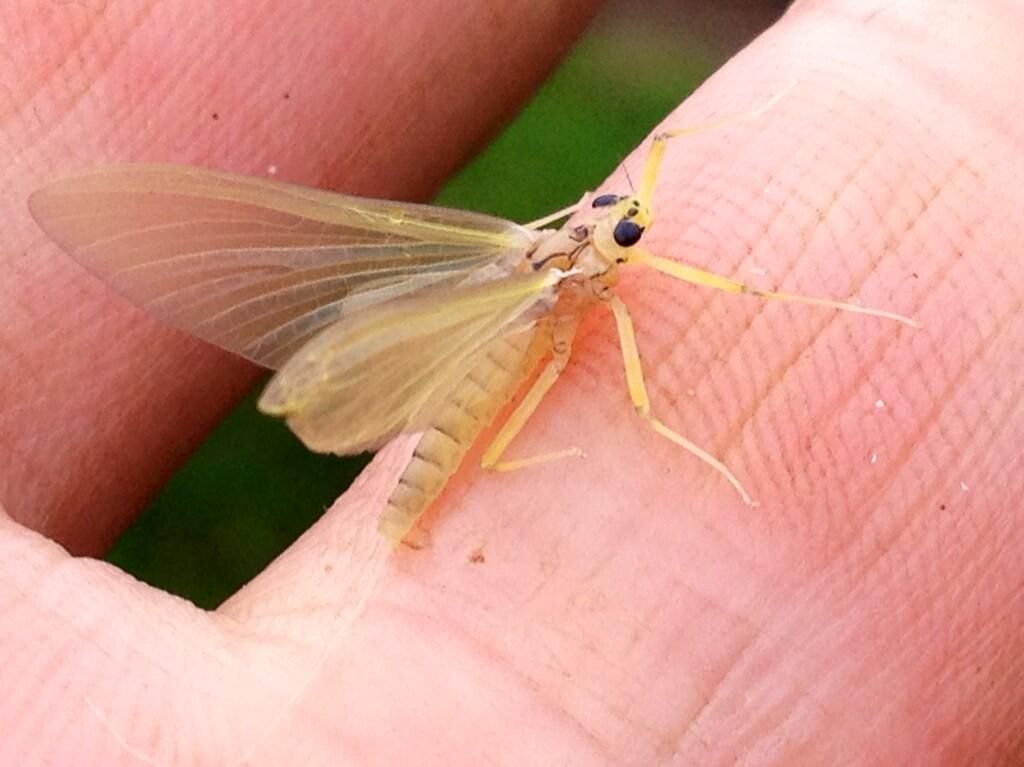
Yellow May Dun


Monday, 20 January 2014

Domestic Bliss, River Taff, January 2014

Buckets of rain

It was Saturday night and a text from Dan Popp indicated that the lower Taff would be fishable the following day. I needed no persuasion as the local rivers had been in spate since November. We arranged to meet the next morning at nine.

Upon arrival the falling river was still pushing fast and slightly coloured. Further rain was forecast for the afternoon and so we fished relatively quickly through half a mile of water in the hope of finding a shoal.

Conditions dictated that we concentrated on slower water, mainly covering the margins, gentler runs and pools. We caught numerous micro grayling, nothing big, but it didn't matter as I’d not seen Dan since before Christmas and I was happy to be out.  
 

Against the clock

By mid-afternoon, the rain had returned and the river was colouring (we suspected it had been raining heavily higher up the catchment). There was just time for a quick move to a slow deep pool that would provide our best chance of some larger fish.
 
At the pool Dan went straight to his favourite spot and I entered the river downstream where I caught, and missed, more small grayling on my heavy bugs. The river is currently stuffed with these 4-5 inch fish but, when the water drops back, I expect them to be hammered by the numerous cormorants that we observed perched on wires above the river.

Almost immediately Dan was into a fish of over a pound. Then another, and another. I worked my way upstream hoping to get in on the action. Ever the gentleman, Dan offered me a turn.

 
One of Dan's


On the first cast I was into what was obviously a large grayling that fought deep and steady. The fish was intent on running downstream and into the main current, but I applied side strain to turn it towards the bank. After a couple of minutes my quarry was steered upstream, along the margins and above my position.

As I pulled the net from my back I caught the appetising whiff of a Sunday roast and could hear the sound of hoovering from a nearby terraced house - a surreal moment. By now Dan was in the river next to me and I told him to bugger off as I was afraid the fish would make a last run towards him. He laughed as he netted the 19 inch grayling. After being subjected to a few sweary exclamations the fish swam away strongly.


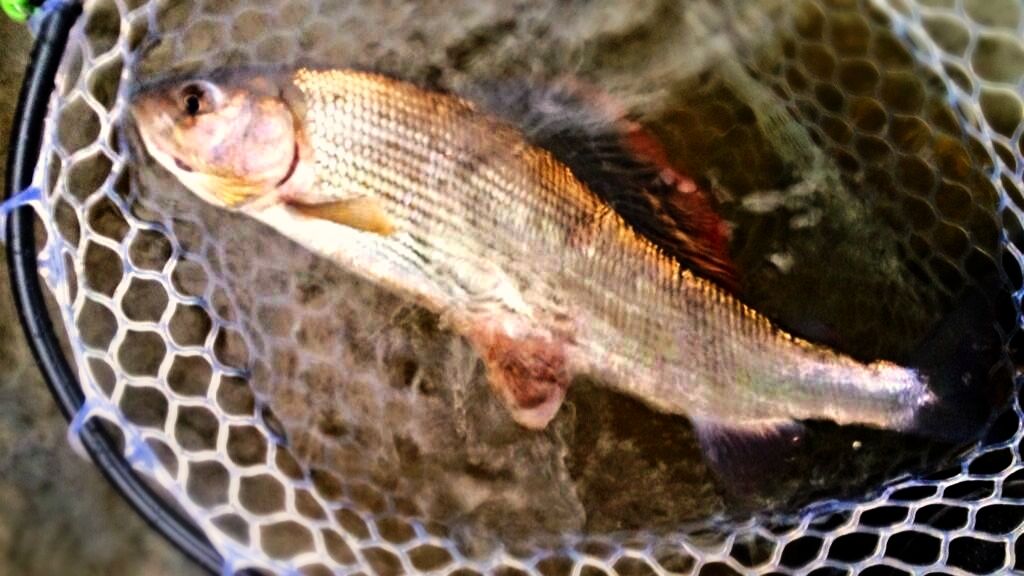
My largest Taff Grayling

Smiling, I patted Dan on the back and made a few casts upriver to calm myself. As I covered the water, I wondered if anyone else had landed a specimen grayling to the smell of warm crackling and the drone of a vacuum cleaner.


Monday, 25 November 2013

Ladies About Town - Urban Grayling, Lower Taff, November 2013

Previously on Thymallus thymallus...

I have fished for river trout on the upper Taff since I was a small boy but, until a few years ago, I had not caught a Taff grayling as they only inhabit the lower river.

I enjoy fishing gentlemen's hours on the urban river in winter; it's convenient (within 40 minutes drive), cheap (£10 buys a ticket for Ospreys Fly Fishers Association water), the fishing can be top drawer (there is a large grayling population with a good number of fish over 2lb) and many of the friends that I meet on the river are proper fisherman and great company.


Landing a Taff grayling


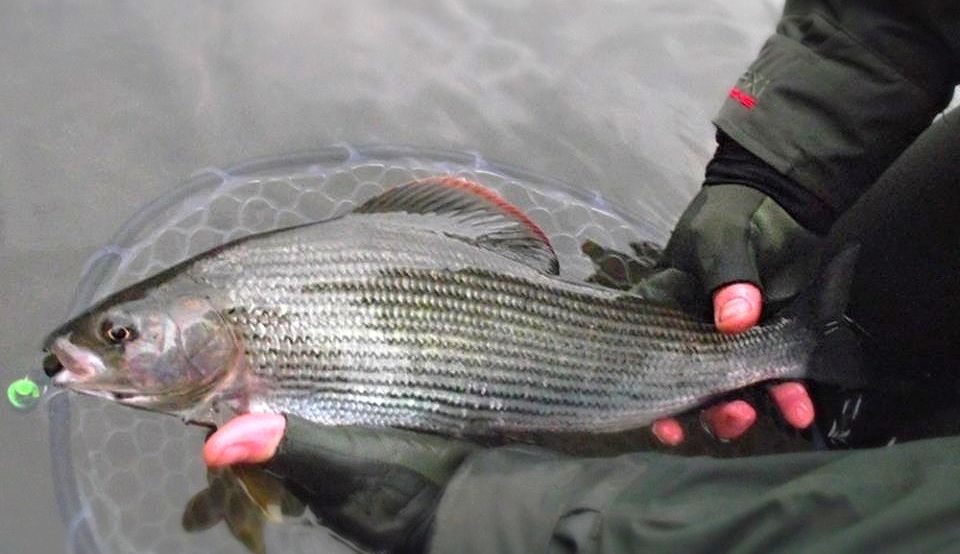
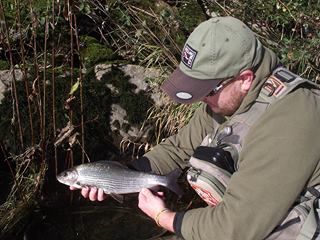
The fish pictured below was one of largest Taff grayling I caught last season. It was captured in a heavily populated area and, upon landing, I received a hearty round of applause from spectators positioned on a nearby bridge. One of the onlookers, a small boy, clearly concerned for my safety shouted, 'Mr there's a f***ing shark behind you!'.


One from last season

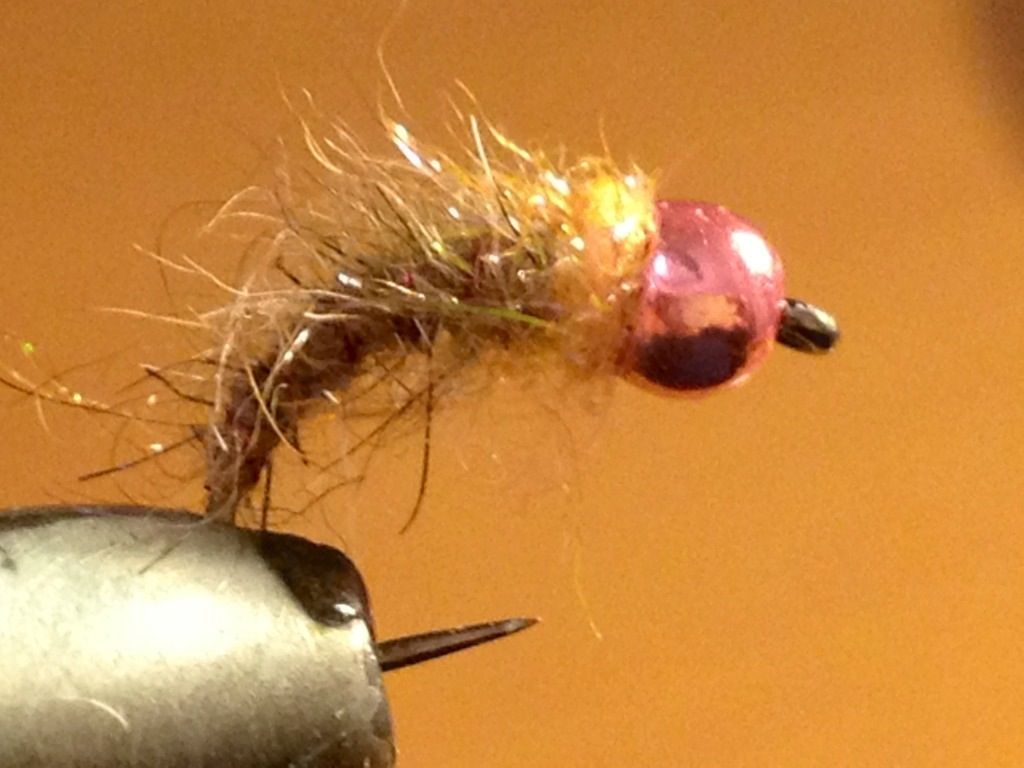
This fish was caught on the pattern below. It worked very well for my friends and I last winter, proving a successful point fly on a number of Welsh rivers and English chalk streams.


Hook: Hannak grub hook - 12, 14 or 16
Bead: Metallic pink - 3mm or 3.5mm
Underbody: Medium lead wire - few turns glued behind bead
Body: Dark hare's mask
Rib: Red or pink wire
Thorax: Ice dub - UV shrimp pink


Cabin Fever, November 2013

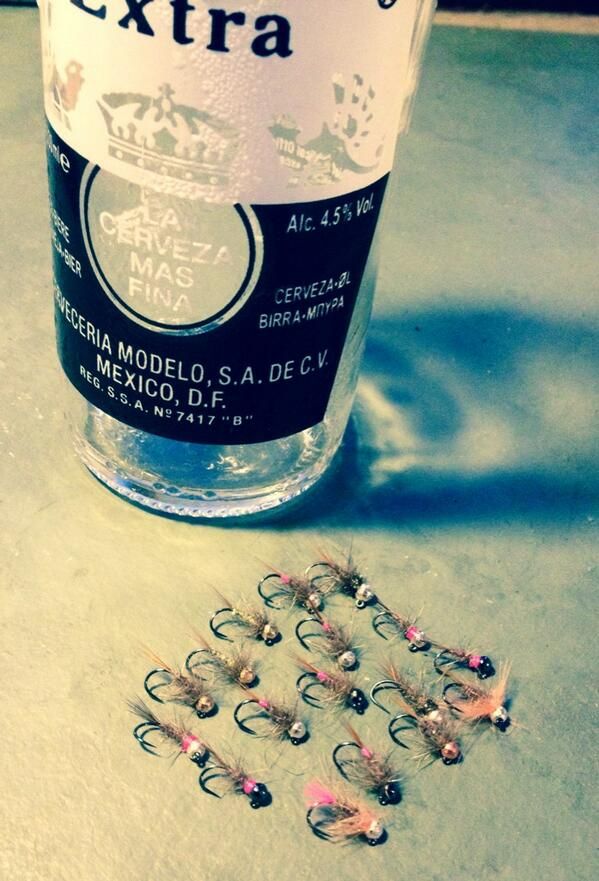
It was a sunny November Sunday morning and it hadn't rained for three days. The local rivers had been unfishable for over a month and I was suffering from cabin fever. I'd been tying for weeks and was itching to wet a few new patters. 


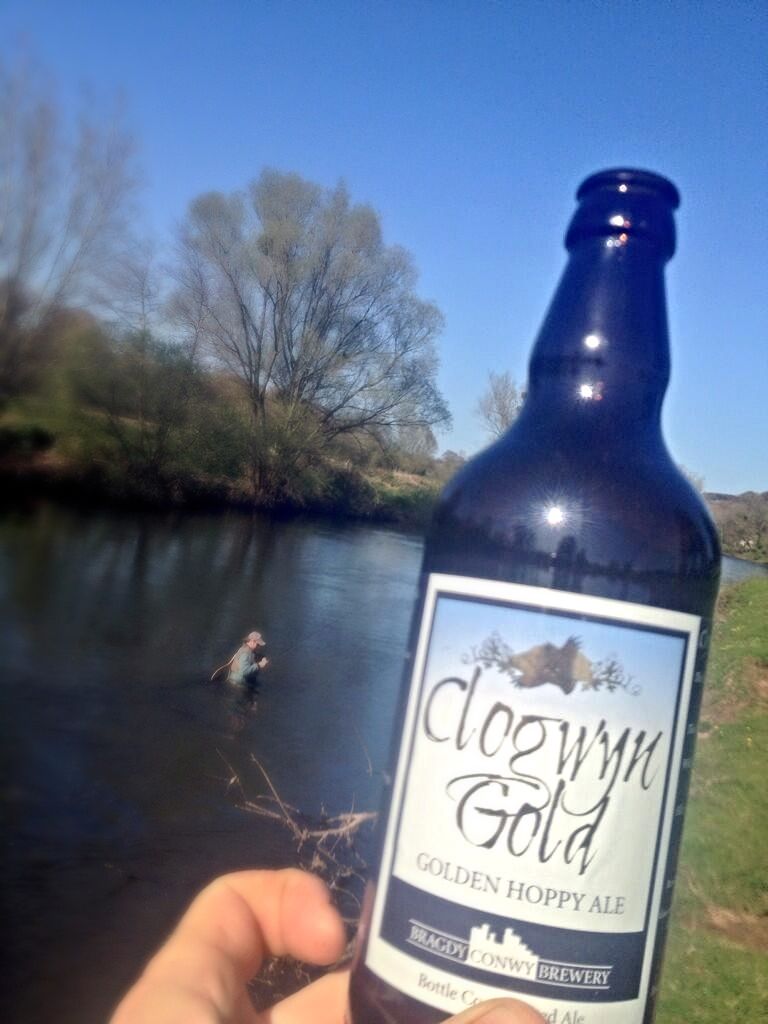
Not my usual tipple


Upon checking, I noted  that the river had dropped to 0.9m at Upper Boat Bridge . The safe level is around 0.7m, but as I was desperate to fish I texted my mate Dan Popp...

I joined Dan and Terry Bromwell on a part of the Ospreys beat that I am relatively well acquainted with. Wading was tricky but we knew that some fish could be caught off the bank. That day we didn't return a huge number - perhaps fifteen between three of us (including out of season trout) - but the proper grayling we did land were well above the Taff average.

Terry was the first to catch. I was stood on the bank above him and saw the fish glint as he set the hook of his red tag HE nymph variant in the slightly coloured water. It put up a strong showing but Terry has had plenty of practice.


Terry with a pristine grayling


As we moved up river we caught several out of season trout (to 1.5lb) and a few small grayling, but did more talking than fishing. At one point I was talking and laughing hard at the end of a cast and, as my body shook, the fly bounced downstream of me and tempted a small grayling. That was not to be the last fish I caught jigging nymphs that afternoon.


Dan Popp into a fish in the coloured water


After a bit of free climbing, and some very difficult wading, we ended up at a pool that was large enough to accommodate the three of us. In the swollen river we knew that some grayling would be close in and so, initially, elected not to wade. I was using a pink butted silver bead hare's mask nymph on the dropper and a pink metallic beaded bug on the point.

I flicked my nymphs upstream, just beyond a weed bed on a line where the current slowed. As the point fly reached the maximum depth, my indicator stopped and I connected with the lady below. Both flies were heavily weighted and this made the difference, ensuring they presented at the required speed in the faster than usual flow.


Nicely conditioned lady


Once we had covered the lies close in, I waded into the river to fish another band of slower current. I varied my casts to cover the water and change the speed of the flies. Nothing took, but as previous experience had shown this to be a productive spot, I persevered. 

Again I cast upstream and slowly led my flies. When directly opposite me, I raised and dipped the rod slightly, repeating as the flies moved with the current. On the second or third rise the fish below hooked itself and put up an arm-aching attritional scrap.


Pleased it's in the net

This chunky fish had taken the dropper and was my largest of the day.


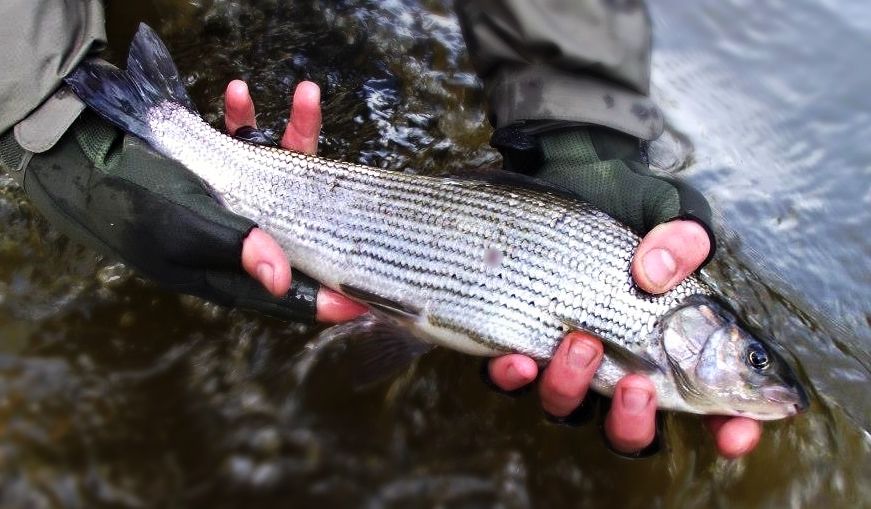
 Thick Taff two pounder


I left the water concluding that, given the conditions, we'd done well, with the quality of the fish more than making up for the relatively low number.  Also, I'd had a great laugh with Dan and Terry and managed to steal a look at a few new flies.

Something for the weekend

This weekend my friends David, Dave and Morgan are coming to stay. On Saturday we are booked to fish Doldowlod on the Upper Wye and later intend to watch Wales play Australia at rugby (in the pub). On Sunday Dave, Morgan and I will (slowly) fish the Taff. David remembers the Taff as an industrial gutter and is going to 'give it a miss'.

I can't guarantee grayling, but can guarantee more good humour and a few beers.


Morgan - elegantly wasted


Friday, 22 March 2013

Looking Forward

As the start of the fishing season coincides with the end of the financial year most of my time is currently spent working, cursing that I am unable to take advantage of the early afternoon LDO hatches on the Usk, or getting in some much needed practice with the double hander. Come the end of the month this should change and, weather permitting, I'll get out a couple of times a week.

This year I have taken membership with Merthyr Tydfil Angling Association, Gwent Angling Association and Ffynnon Taf Angling Club providing access to six beats on the Usk, over ten miles of the Taff and a beat on the lower Wye. All for less than £250 - an absolute bargain.

Local rivers

So far this season, I have managed two excursions: Opening day on the Usk and an afternoon on the Taff.

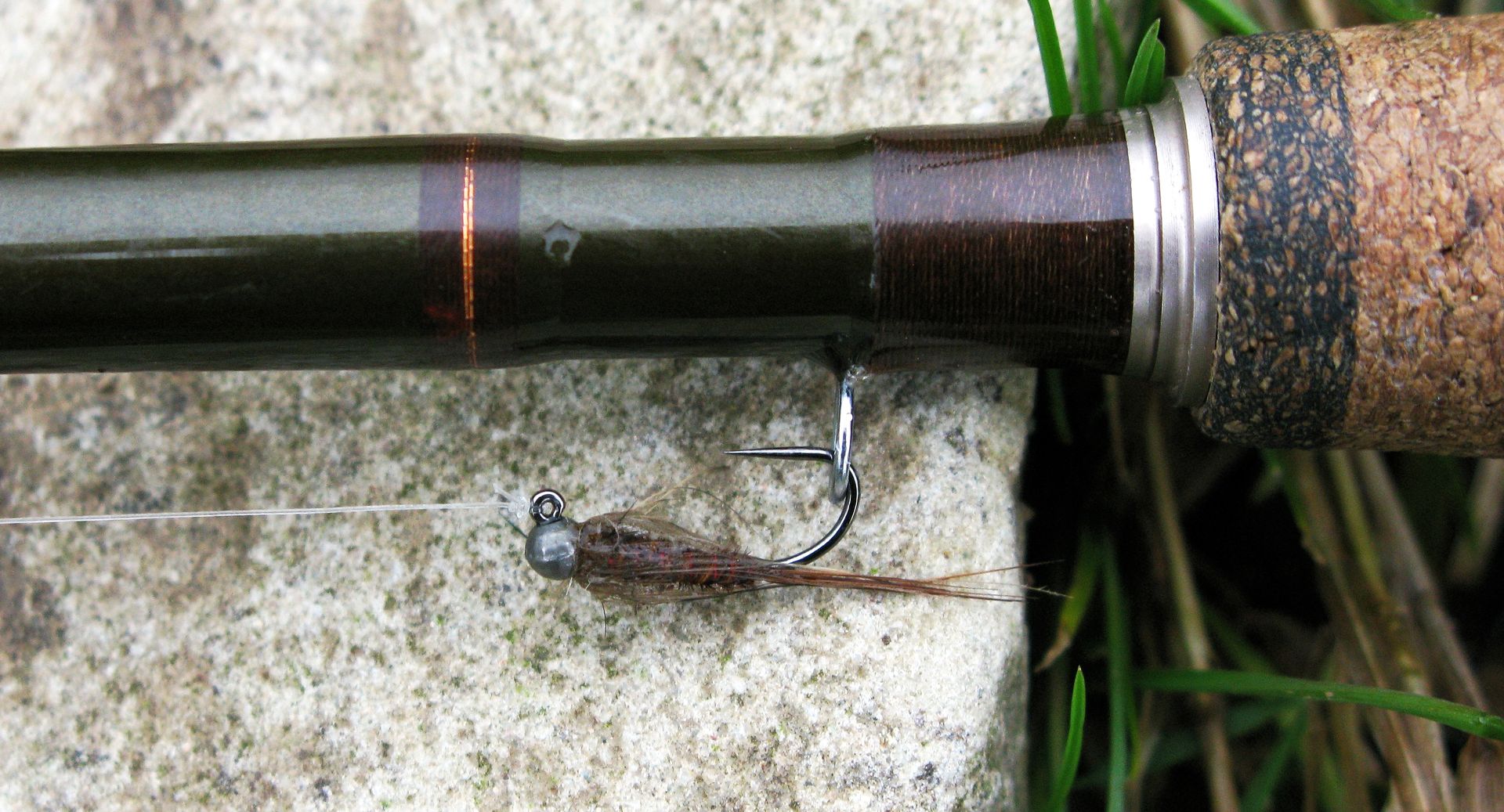
Opening day on the MTAA Mardy Beat was very cold and I managed a single slim 12 inch trout to a pheasant tail jig nymph.


Size 14 PTN with CDC collar and 3mm tungsten bead

I bumped into a few very good competition fishermen that I know, mooched a few new patterns and tried out a new fly line. The fishing was slow!


Terry Bromwell tries some nymphs

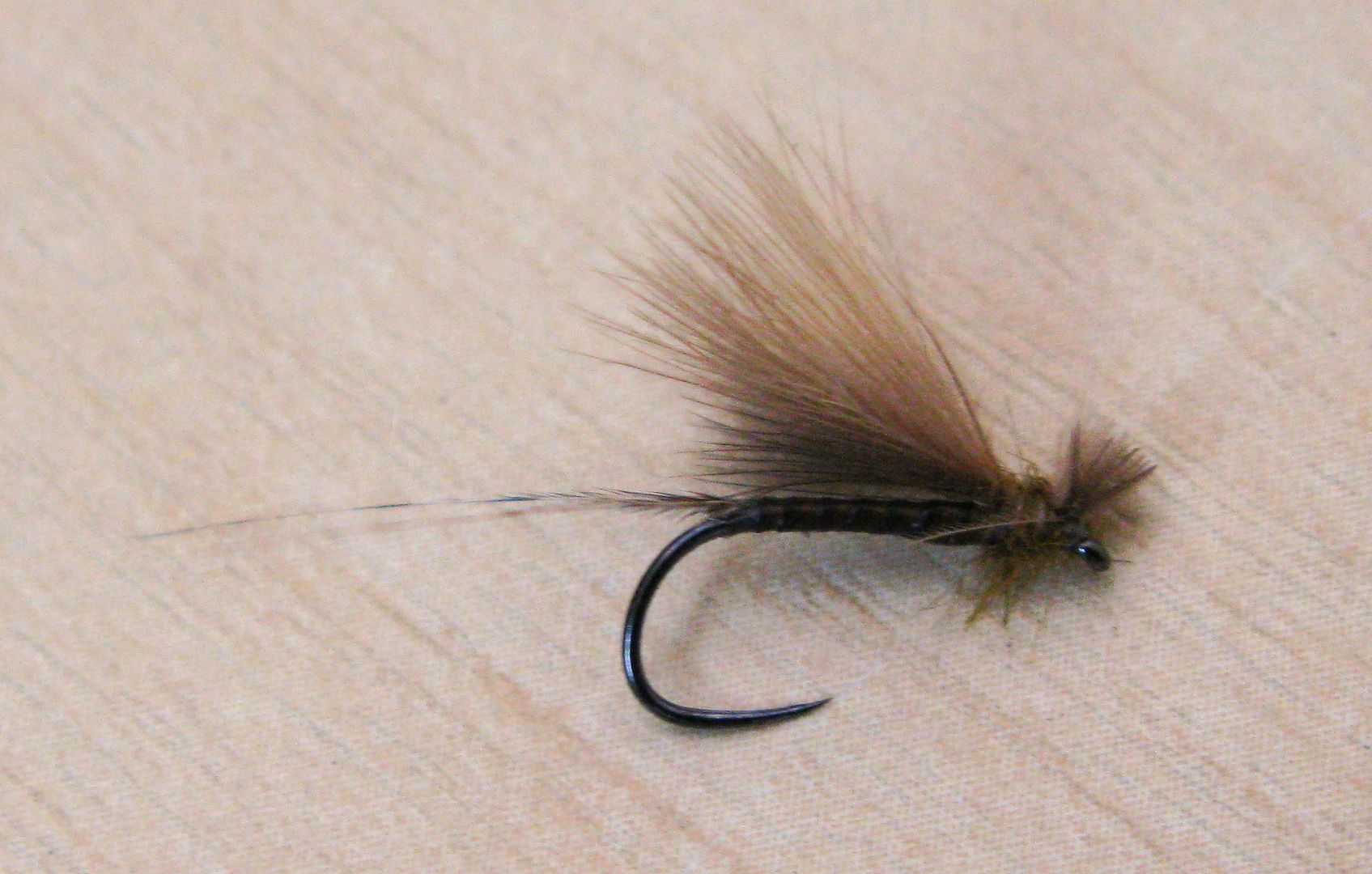
The afternoon on the Taff was more productive, with a decent LDO hatch just after midday. The largest fish touched 16 inches and fell to a new CDC olive dun pattern that I have been trialling. I've experimented with winging techniques for quill bodied dun patterns for a while and now use three styles of CDC wing: 

- A spun CDC wing - my current favourite (see North Country Angler Matt Eastham's blog entry, although I tie the wing slightly shorter to prevent it wrapping around the shank);


- three plumes tied backwards (in two stages); and


- a single plume tied forwards that I use for size 18 and 20 quill bodied patterns (see Jeremy Lucas' single plume tip).  

All catch very well, but the pattern with three CDC plumes is, as expected, more resilient after taking a fish.

Coming up

If I'm a good boy, over the season I hope to fish a number of different waters with various friends, new and old. I look forward to:

The inevitable Taff sessions with Dan and Sion - to include 'The Three in One Special' (a Ponty version of curry half and half that Sion occasionally enjoys);
Teifi, Teifi Estuary and Dyfi swearing sessions with Aled;
the April day I managed to arrange at Llanover, Usk with Pete (guaranteed to be washed off);
an early summer day at Llyn Gamallt with Dick;
a mid summer evening at Llyn Conlog with Marc;
the wager I agreed to with Mike and Anthony at Lake Vyrnwy;
a summer night with Morgan on the Towy; and
(just maybe) a day in May with David on the Avon.

Thoughts of these trips will no doubt ease me through the coming weeks.


Thursday, 17 January 2013

The Upper Taff, Summer 2012 - No Fish in There!

June 2012

'There's no fucking fish in there!' Barked a woman in her forties as she strutted up the pavement.

'You're a rubbish fisherman!' Shouted a teenager from a passing car window as he threw a bread roll and the driver tooted the horn. My friend Dan responded with a two fingered salute, I put my hood up in case I saw anyone I knew.

Later, another hilarious fellow would shout (from a packed minibus), 'I'm coming back with my maggots tonight!' Much to the amusement of his drinking buddies on the bus.

We were fishing near Merthyr Tydfil town centre on a Saturday afternoon in June and the fish were concentrated on the far edge of a slow shallow pool, feeding on large dark olive duns. There were several splashy rises from smaller fish interspersed with the tell tale sips of larger more efficient feeders. 

I was using my 11ft #3 weight rod, employing leader to hand tactics with an olive klinkhammer type fly. After watching Dan return a couple of good sized trout -and landing a decent fish of my own- I noticed a small sip further out into the pool (about 8 metres directly opposite me). The fish lay in less than 1.5 metres of water and rose every minute or so. Not risking spooking the target in the shallow clear water, I remained in the same spot. Ideally I would have moved downstream, but it is far easier to ensure drag free drift for longer using leader to hand techniques, so this was not critical. 

Another rise, I waited until what felt like the right moment and cast well upstream of where the dimpled rise form had been. Nothing. Then, another small rise to a beatis dun, accompanied by that barely audible sound. I waited a little longer this time and made my second cast, a tiny sip and (yes!) the fish was on.  After a few strong runs and a very brief photo opportunity, this slim early summer fish was safely returned. 


Caught near Merthyr town centre

This is typical of how the summer fishing on the Taff unfolded. I often accompanied Dan (an almost ever-present figure on the upper river), surface feeding fish could usually be located and I experimented with leader to hand techniques (with varying degrees of success).

A reluctant reintroduction

I first became a member of Merthyr Tydfil Angling Association in 1986 and have been an on-off member ever since. I have retained constant membership for the the last ten years, but in this time, I have concentrated on fishing club beats on the Usk and Talybont Reservoir. Prior to last year, I hadn't ventured onto the upper Taff since before I left home, aged eighteen.

This all changed in April last season when I bumped into the aforementioned MTAA member Dan Popp on the Mardy beat of the Usk. Being someone that has always enjoyed peace and quiet when fishing, I was sceptical when Dan asked if I wanted to join him on Merthyr Town water for a day on the following weekend. Despite the excellent reports (two pounders are very common on the Taff), I was dubious that I'd enjoy myself in the cluttered urban surroundings.

I recalled fishing there as a boy and catching plenty of fish on the only five patterns in my box: Grey dusters, dry pheasant tails, partridge and orange spiders, pheasant tail nymphs and gold ribbed hare's ear nymphs. I also remembered plastic bags, old settees, being threatened by someone with a hammer and wondering what all the submerged sanitary towels were. It was against my better judgement that I agreed to meet Dan in the car park of the local leisure centre on the following Saturday in the third week of April. 


The river

The Taff has spluttered its way from the north of the Merthyr valley down grade to Cardiff through two centuries of heavy industry. For a long time much of the river was rendered unfishable; Tony Rees MBE (the chairman of Merthyr Angling Association) once wrote a letter to the chairman of Welsh Water requesting miners' lamps for the fish in order that they could find their way up river, such was the extent of the pollution. Since the decline of the industry, the river continues to recover.

Management is minimal. It is stocked with several thousand fish annually, poached extensively, its mouth is barraged, there are numerous sewage outfalls, mink and cormorant abound and yet in many ways, the river thrives. Aquatic life is prolific and the upwing hatches can be huge. This is no doubt attributed to the improved water quality resulting from the industrial decline and absence of diffuse agricultural pollution. Fifteen years ago, the Morlais Brook tributary in Merthyr Tydfil was dubbed by Environment Agency staff as the most polluted stream in Wales.

'There were toilets flushing directly into it. It was like Calcutta’, an ex EA officer once told me. This year, trout have been recorded spawning at the confluence.

 
The urban main river at Merthyr Vale


Stockies


The debate often rages on the Taff thread on Fly Fishing Forums as to which image is of a grown on stocked fish or a wild brown trout. Some of you reading this may suspect that the fish pictured here are grown on stockies. For me, this is not a significant issue. The trout fought superbly, were feeding naturally when I caught them (on methods I enjoy) and I have fond memories. That's all that matters to me. I have no reason to think they are stocked but I'll admit that unless a fish has been introduced in the season I catch it, or it has stunted or damaged fins, I am unsure as to whether I could identify it as a stocked fish.

September 2012

It was early September and I had taken the day off work. Dan and I met near Merthyr Tydfil in the early afternoon. It was a muggy day and the fishing was slower than usual, but by early evening blue winged olive spinners danced in the air, many complete with egg sacks.


The town centre air thick with blue winged olive spinners

As there was little surface activity I was using the duo method and Dan his favoured French leader. We caught some decent fish on pheasant tail nymphs and I had a few smaller fish to Dan's favourite olive klink variant. All season we had caught well on this fly (on the Taff and the Usk) but I had been trying to tweak it; changing to a dubbed thorax instead of peacock, a pearly rib, a more neutral coloured post, a different hook. But I couldn't improve upon the catch rate of Dan's version and I am reminded of the adage, 'if it ain't broke'...


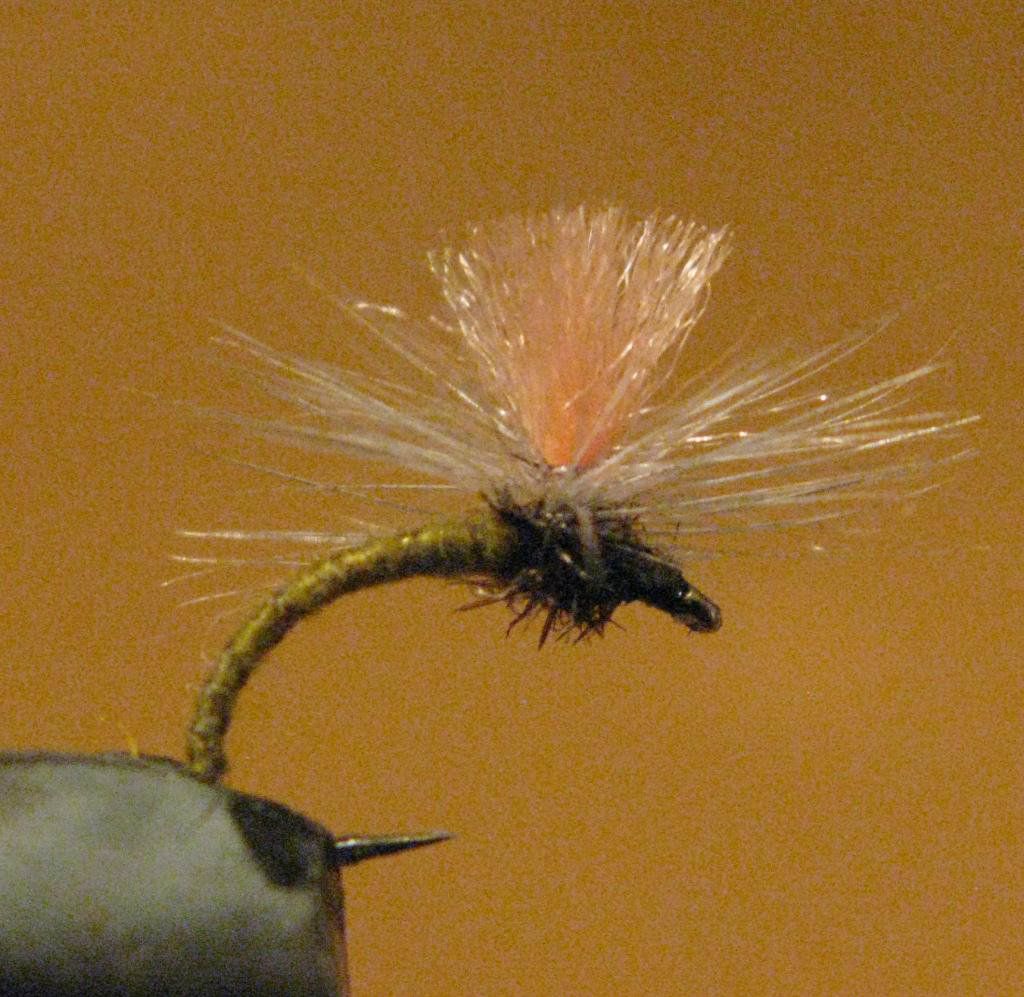
Dan's Olive Klink
Hook: Kamasan B100
Post: Light pink aerodry
Body: Light olive dubbing
Rib: Olive tying thread
Thorax: Peacock herl
Hackle: Light blue dun


By seven o'clock we had (intentionally) worked our way up to a pool that usually holds a good number of surface feeders and we were greeted by a few fish rising to what I assumed where the spent BWOs.

Off came the nymph and klink and on went a yellow single plume tip, then a yellow quill spinner, then a red quill spinner. For over an hour I caught smaller fish on all of these flies, but the large fish -that I could see rising- ignored my offerings. Meanwhile, further down the pool, Dan had a caught a fish that weighed over 2lb on his favourite fly.

In the fading light (when I could no longer see many of the rising fish) -it is likely that I'd put a few of them down- on went the klink. As darkness set in I could just make out a regular rise by the light of a streetlamp. I covered the fish and, sip, there it was (tinged in sulphur yellow). This well conditioned fish made four or five powerful runs before a few last gasp lunges saw it into the net. I don't normally weigh and measure fish, but I very carefully did this, as Dan and I disagreed on its size. (I'd underestimated and Dan turned out to be correct). I'd be interested to know how long and heavy any readers of this think the fish below is.

Last cast trout

A river of contradictions

The Taff is a river of contradictions; dirty but clean, urban yet wild, neglected and thriving. An ugly lovely river favoured by many, but not for everyone.


The rural Taff Fechan - a tributary of the main river