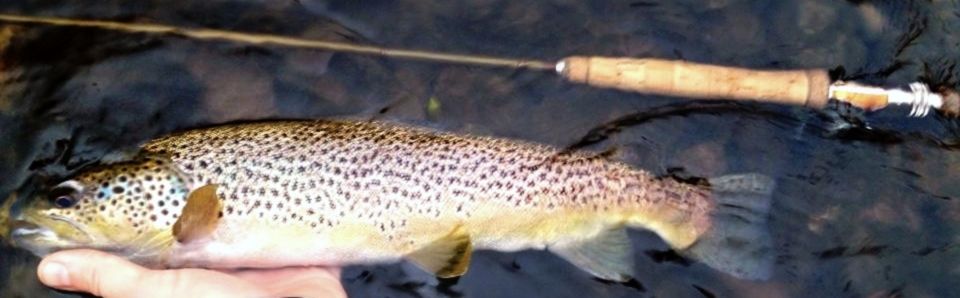
Wednesday, 7 May 2014

False Starts - River Usk and River Taff, April 2014

What a Difference a Day Makes

Bryn Derwen, River Usk, 12th & 13th April


It was Saturday morning. I had grilled a few cuts of Raglan pig and was relieved when Welsh exile and itinerant angler, Morgan, arrived on time. We had not fished the new beat together and, even though the river was up 15cm and (worse) there was a stiff easterly wind, I was eager to get out.

We had two days and, so rather than just fish a single beat, we drove a mile or so downstream to Llan Farm (GAS water). Upon arrival, the wind funnelled upstream and it was clear I had made a poor choice. A false start.

Back upstream we fished hard until 5pm with only a few fish taken on nymphs. We located no surface feeders and saw very few flies, even in the sheltered spots. The wading on this deep wide beat again proved challenging. The river appeared dead, and we concluded the grannom emergence, that promised much at the end of March, had fizzled out. I was not disheartened as the forecast was far better for the Sunday and the river was dropping fast.

Following more local bacon, and with heads as clear as the spring sky (we must be getting old), we were pleased to be met by still conditions. Immediately, we noticed a few egg laying grannom bouncing on the surface film and were delighted by the sight of a few rising fish.
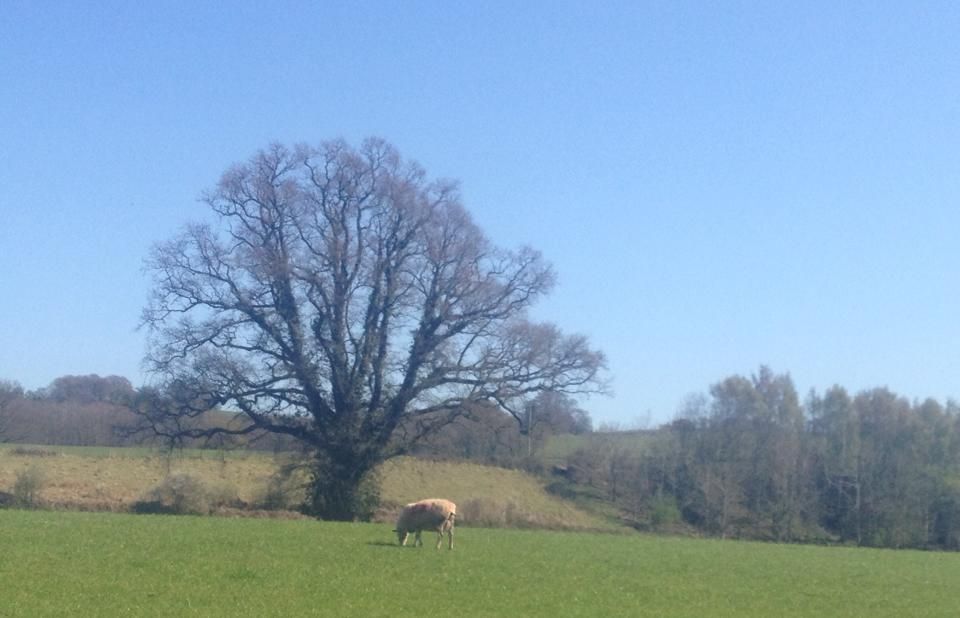
A better day

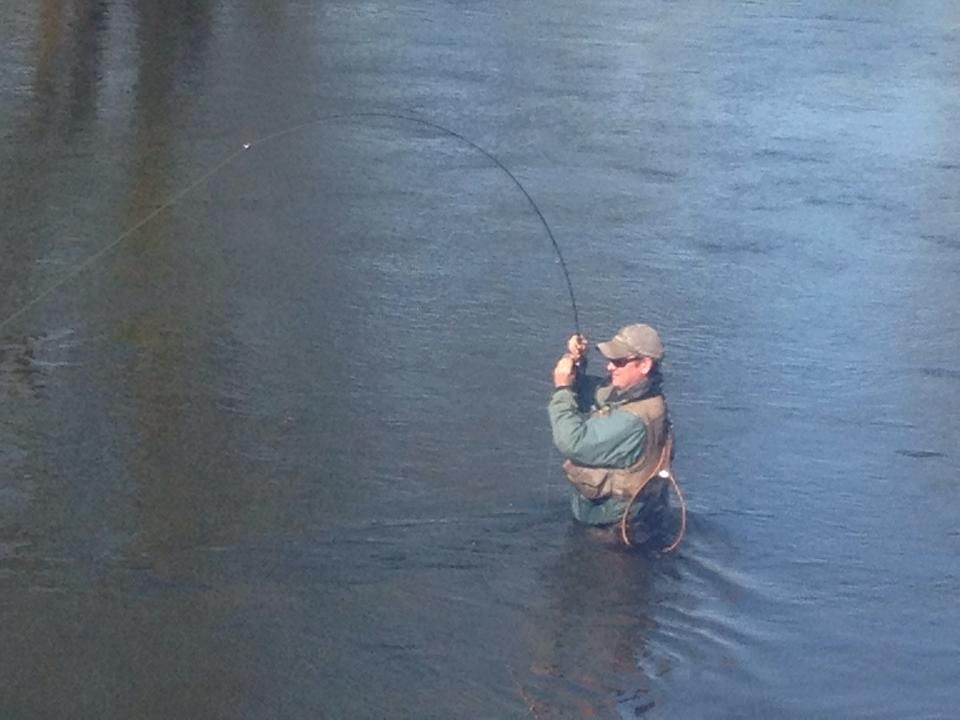
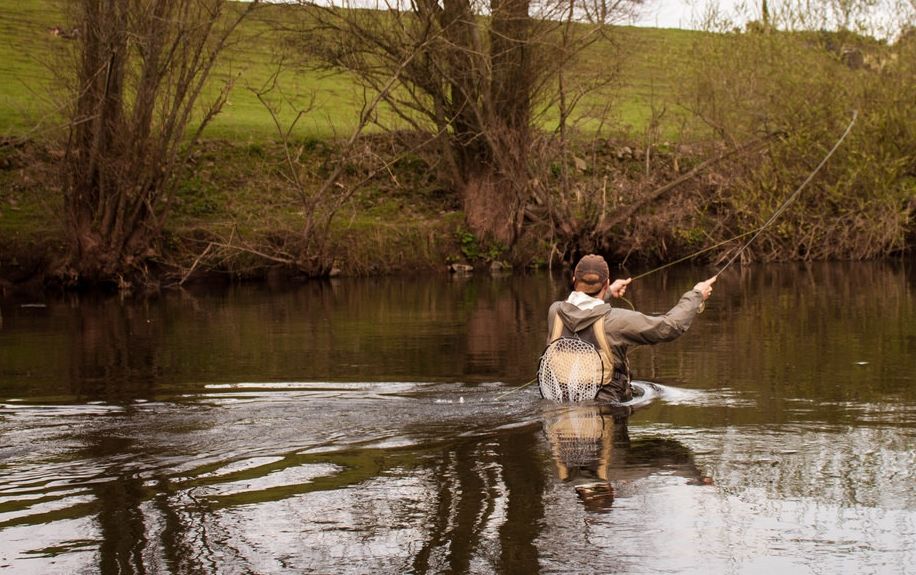
We assumed they were feeding on the spent sedge and selected size 16 split wing CDC and Elk patterns. As fish were again feeding on the far bank, to achieve successful presentation we had to wade deep and cast long; a large upstream aerial mend and a sixteen foot leader helped to achieve the essential drag free drift. When the cast was timed correctly and the presentation spot on the fish accepted our flies and we caught most of those we targeted.
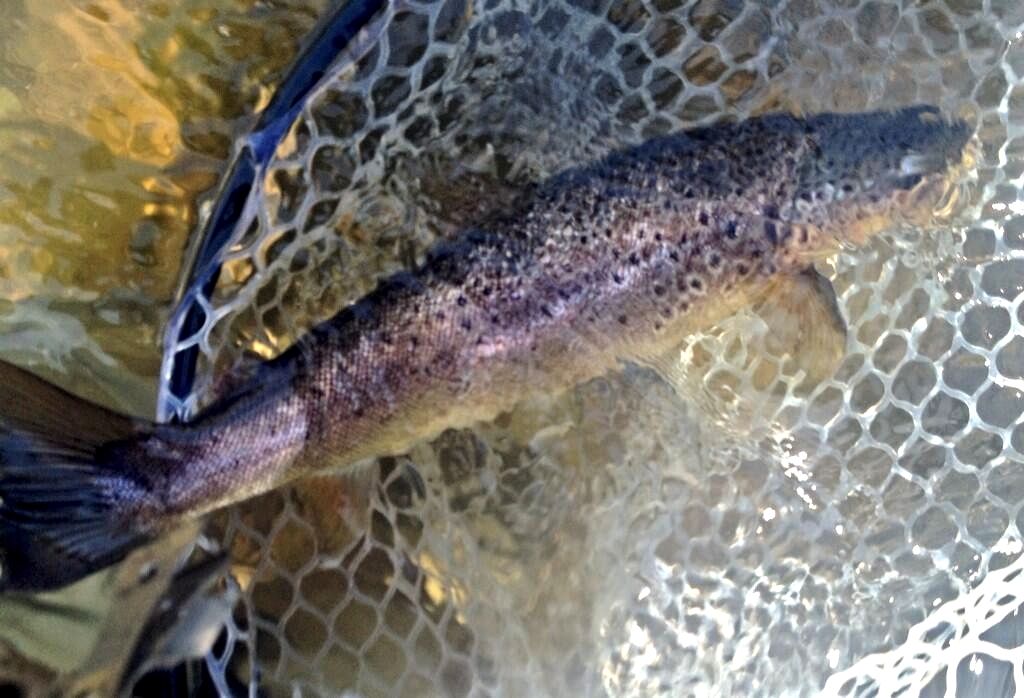

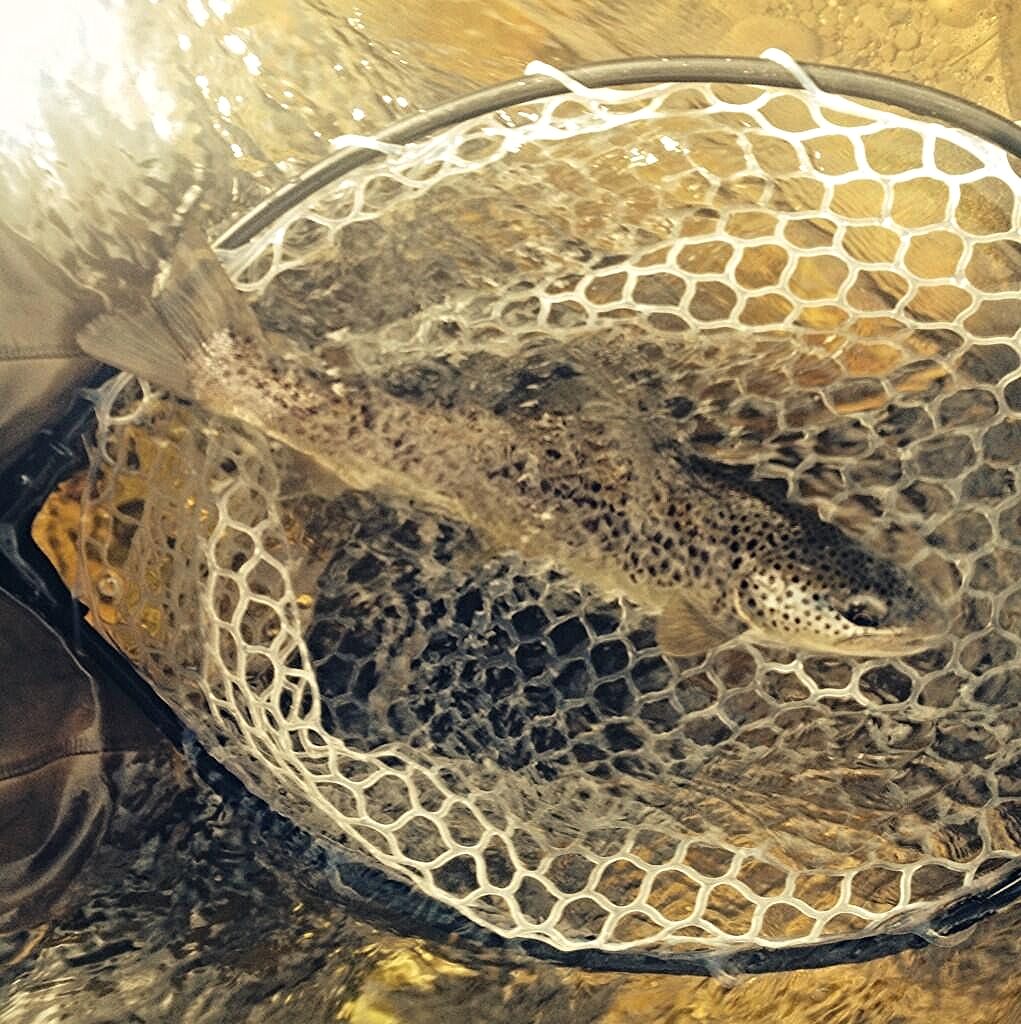
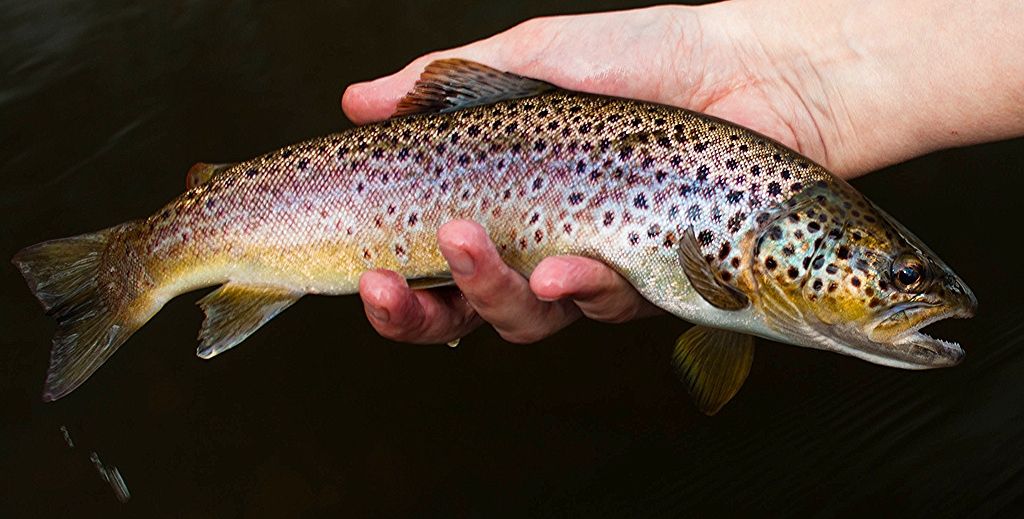
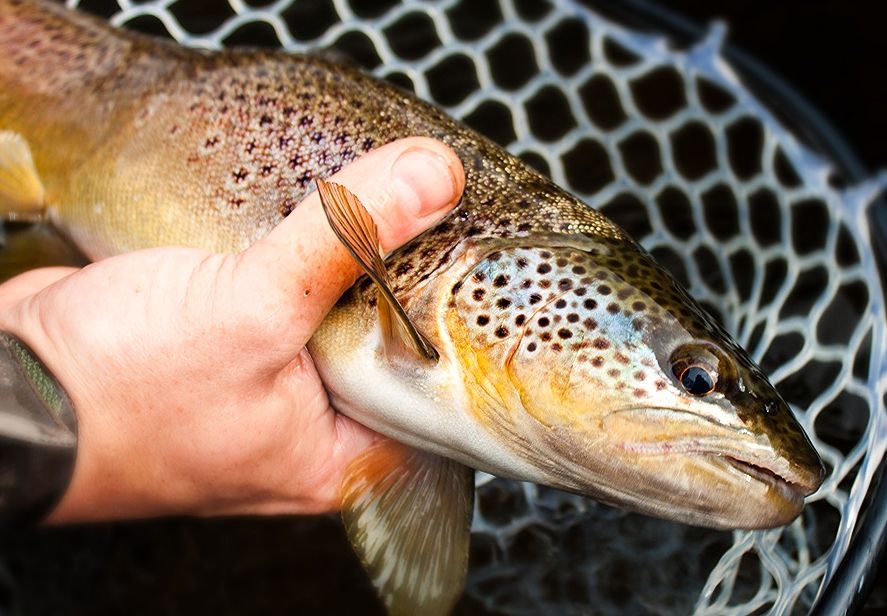
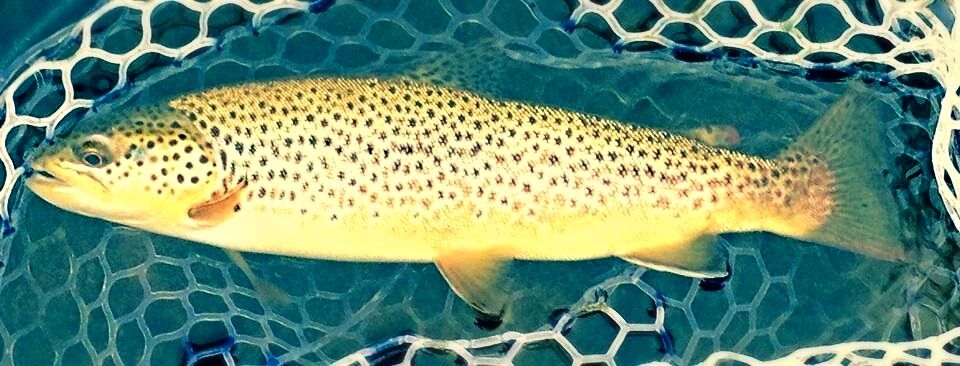
17 inch Bryn Derwen trout


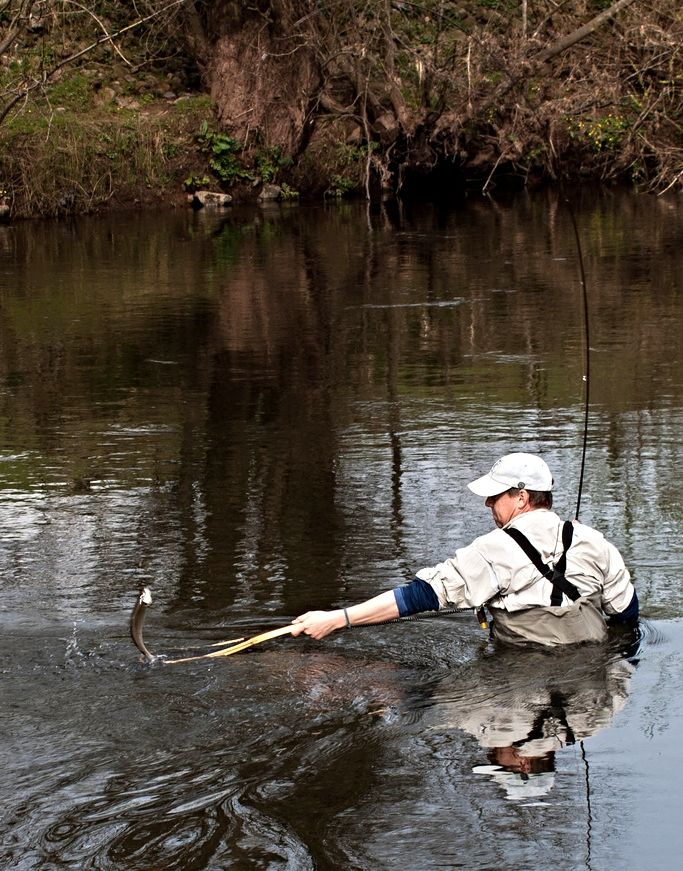
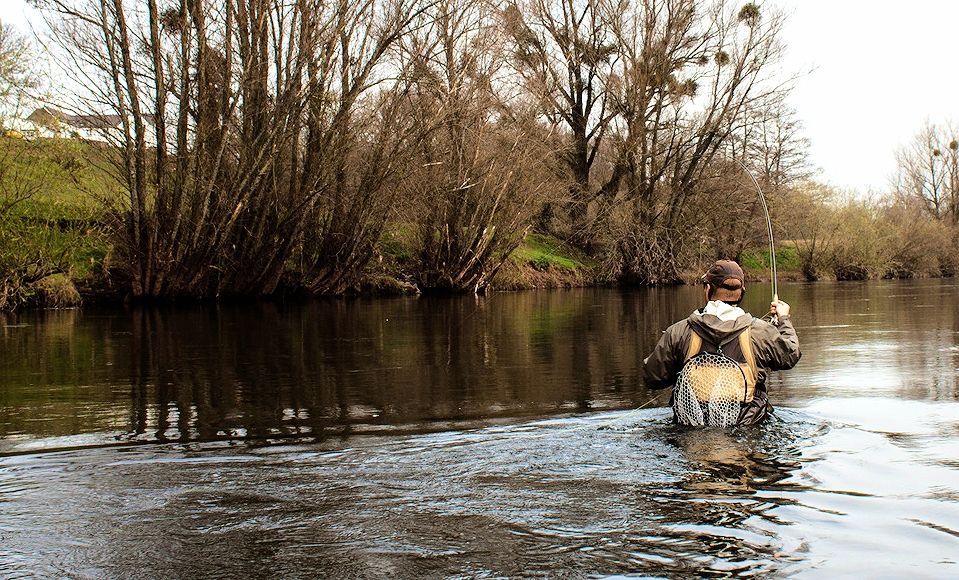
Deep wading reaps rewards
Morgan is a purist at heart and I was pleased that he had some top of the water sport in the peaceful surroundings before his two hour drive back to the rush of the City where they ‘don’t have weather’.

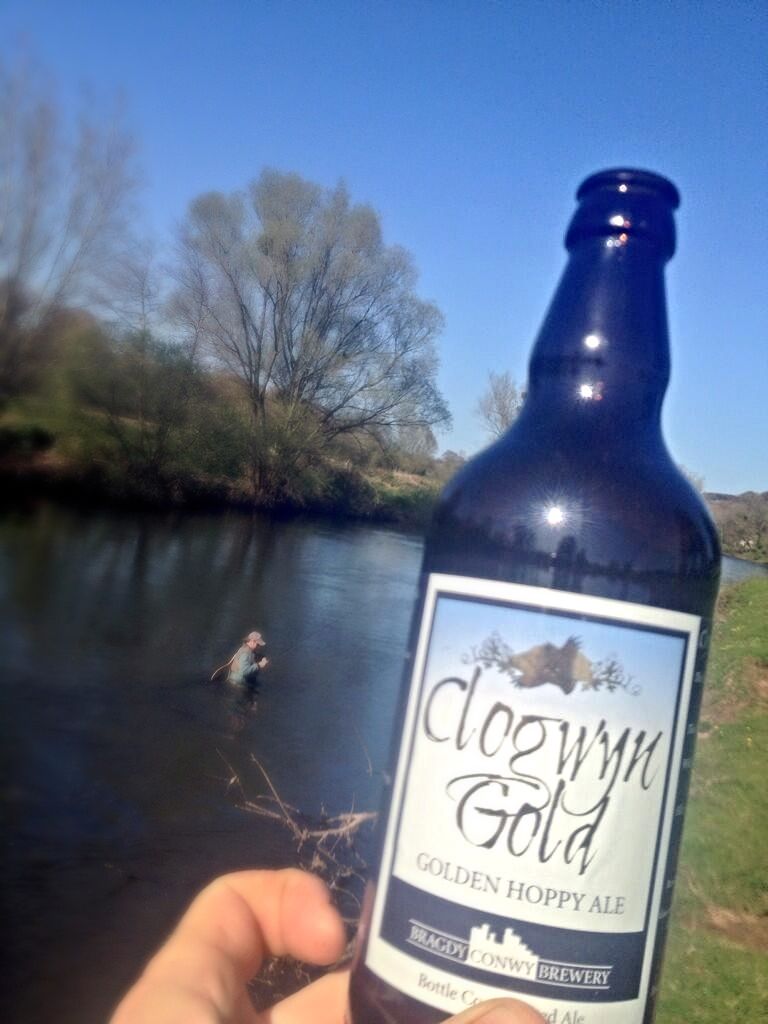
Spectator sport

The Leviathan

Upper Taff, 26th April


Dan arrived for breakfast at mine (more pig) before we planned to fish the Usk. I was worried due to the previous day's rain. As we walked, river bound, through protective ewes and curious lambs, I could make out the reddish brown water. Another false start.

Retracing Dan’s journey, we arrived at the elevated and slightly stained Upper Taff at 10.30 and elected to fish duo tactics with small silver and copper bead PTNs on the dink. This was my first time on this part of the Taff this season and I was excited by the prospect of the eighteen inch plus fish that we often spot in the shallow river.

We worked our way upstream taking it in turns to fish through the runs, with both of us catching four or five fish to nymphs. The river had changed over the wet winter and there was a strong and gusty southerly wind that I thought would kill any top of the water sport.
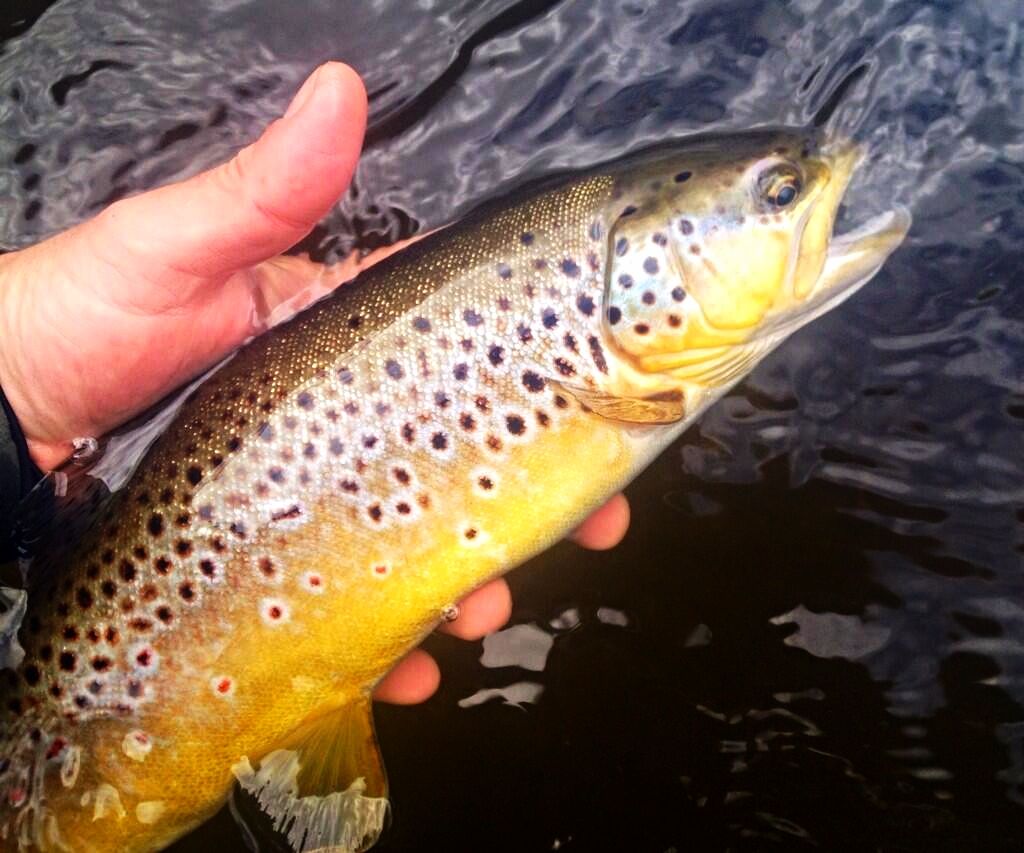
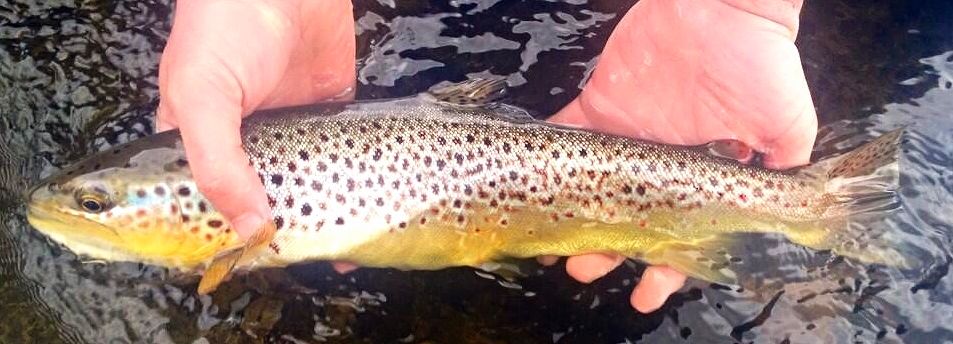
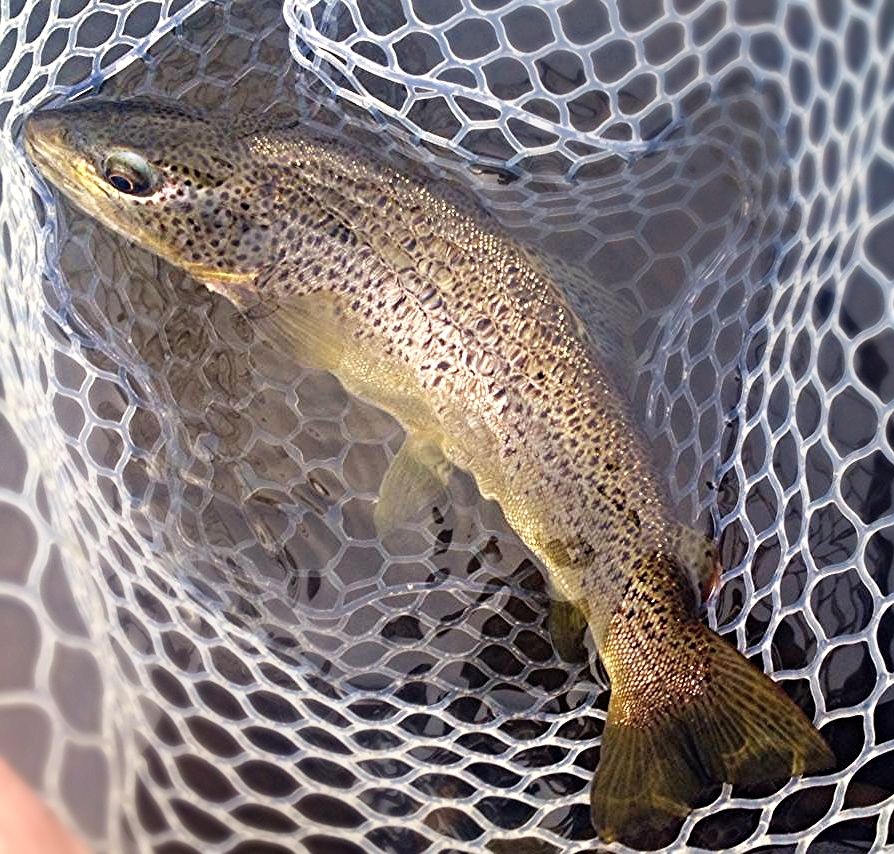
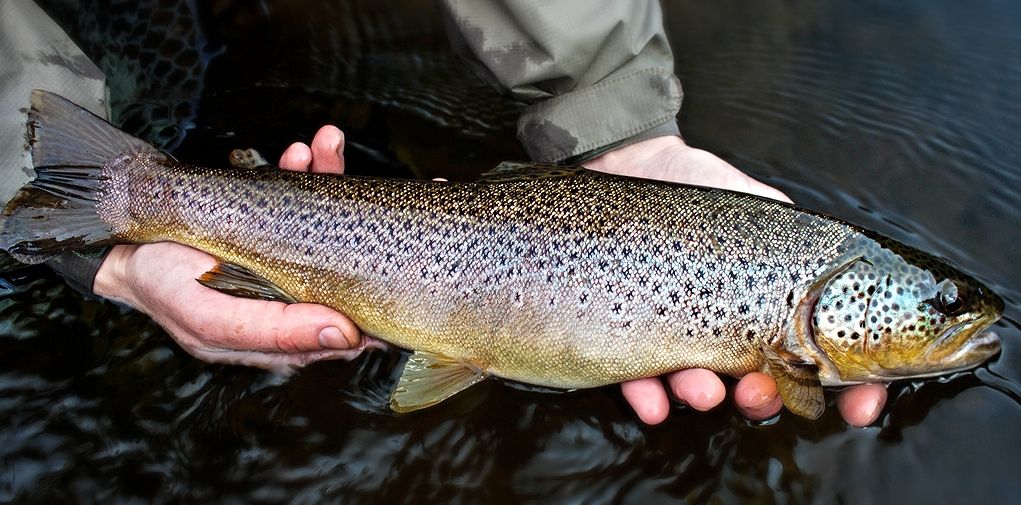
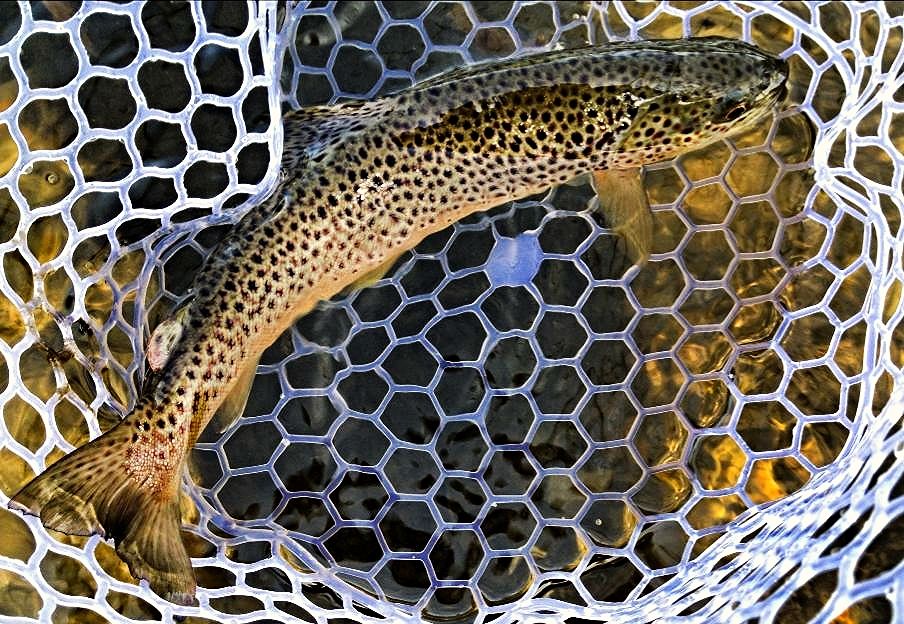
Upper Taff trout

At a favoured long, slow pool the recently arrived house martins were hammering a big hatch of Large Dark Olives (LDOs) and Large Brook Duns (LBDs); a superb site in these urban surroundings. Dan nodded at the river – ‘here we go butty’.

I know no one that understands this piece of water like Dan. He is an instinctive angler and can spot and catch Upper Taff trout in water that most would walk past (or wade through). Just as Morgan was my guest at Bryn Derwen, I was Dan’s there.

We started fishing LDO (emerger and then dun) patterns and caught a few to fifteen inches. We missed only one that I put down when the wind caught my line. Frustrated, I stood and waited until Dan beckoned from further up. In the fast water above the pool, LBDs were hatching in abundance and we needed to change patterns.
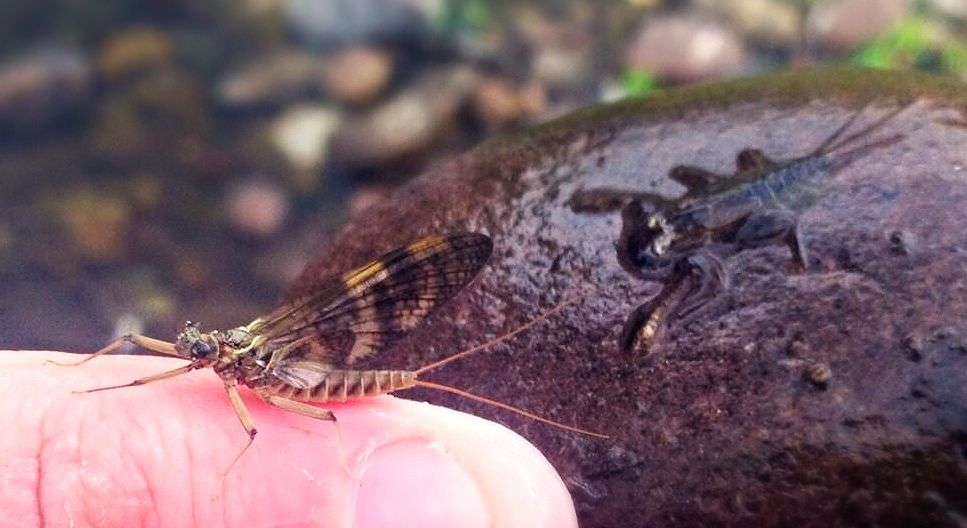
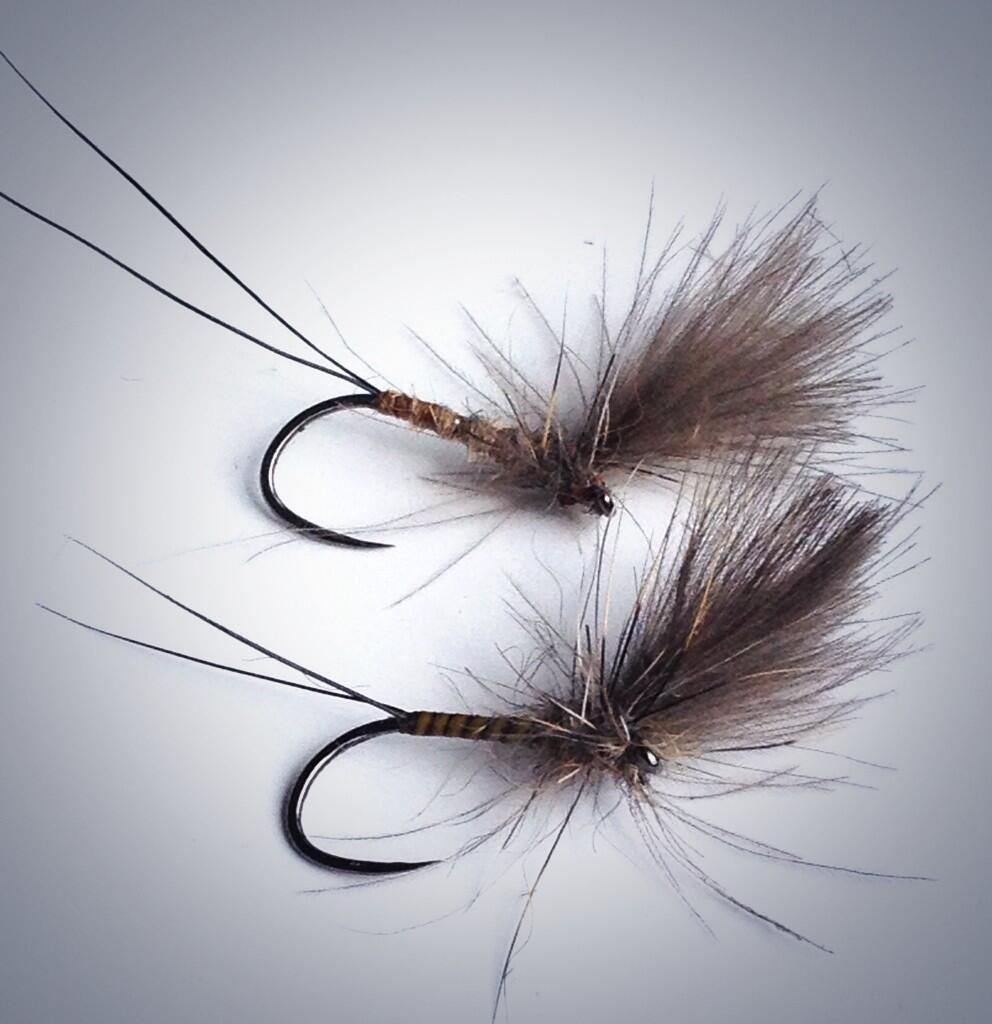
Before and after - Large Brook Dun nymph and sub-imago


Large Brook Duns

Hook: Size 14 - Hanak H 130 BL
Tail: Moose mane
Body: Golden olive quill or light hare's mask ribbed with brown Hends body quill
Thorax: Darker Hare's mask with guard hairs
Wing: CDC


Dan gave me one of his LBD patterns (see similar above). We targeted feeding fish that were on the fin traversing the shallow, clearing river. When fish and fly coincided, we connected. These fish were in superb condition and Dan caught the largest at eighteen inches.
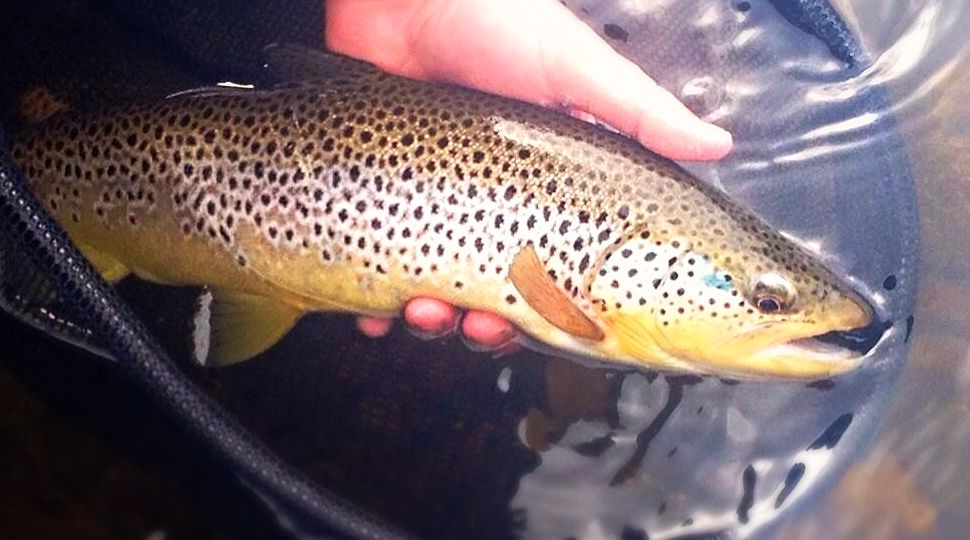
 

18 inch Taff trout

Another to the LBD imitation
We continued to another deep pool, spotting a good trout, I covered, hooked and landed it. It was a wild late afternoon with driving rain and howling wind. We were nearly ready to go home but I elected to have a few last casts with a nymph. As I changed my fly, Dan commented that he could make out the movement of a fish lying deep.

He was right, and it took my size 18 silver bead flashback PTN first cast. For a second it felt like the bottom, ‘Big fish butt!’ I shouted, then all Hell broke loose.

It was a monster brown trout that tail walked and then jumped three times. I swore repeatedly as the fish ran to every snag in the pool, then at me, then at Dan who turned to laugh at the bend in my rod (and the look on my face). In what must have been a comical scene for passing motorists, I bellowed over the wind (melodramatically),

‘It’s going to pop!’ With one hand on the handle and the other on the blank, I kept the rod high and applied side strain as smoothly as my shaking hands would allow. During the ‘jumping phase’ I had noted that the fly was visible in the fish’s mouth but now Dan, who was in the water waving my net, had some unwelcome news.

‘I don’t want to worry you, but the fly is now in his back’. I suspect it dislodged, and relocated, on the last jump and felt sorry this was no longer to be a fair catch. I still wanted my picture with the bugger though and so, with pulse booming in temple, did my best to pump the rod and bring it over my inadequate net. There may have been a split-second opportunity for a lunge (I doubt it would have worked), after which the angry trout ran hard towards a boulder and the fly worked free. As he saw it for longer than me, I asked Dan,

'How big?'

‘It was a leviathan!’ was all he would say.

On the walk back to the car we made determined noises about ‘getting him again’.

Like a Pig


This April, the local rivers didn’t disappoint and from what I’ve seen and heard from others, some quality fishing was had throughout Wales (particularly on the Upper Wye and Usk). I’ve recently seen a few Usk Yellow May Duns and Mayfly; with these hatches to look forward to, and the river on my doorstep, I’m (as a neighbour recently joked to my wife) ‘like a pig in shit’.
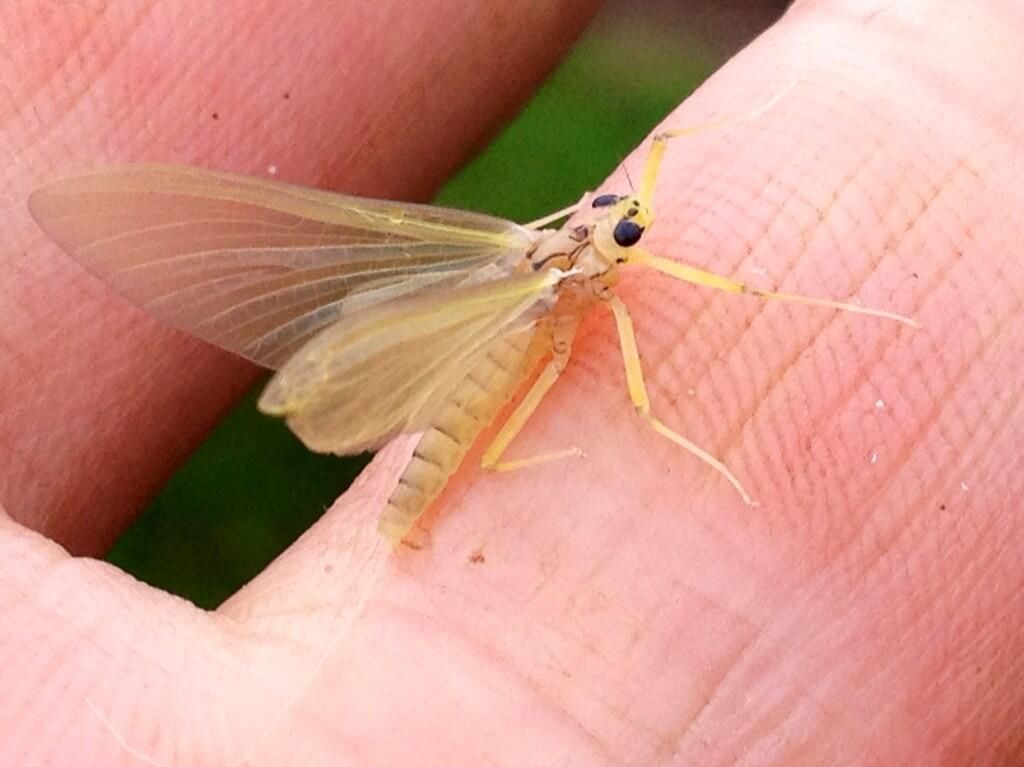
Yellow May Dun


Wednesday, 2 April 2014

Brand New Beat - March Browns and Grannom, River Usk, March 2014

Death, Taxes and Leaky Waders - Ty Mawr (GAS), 14th March

American author John Gierach called it right; there are three certainties in life, namely 'Death, Taxes and Leaky Waders'. The inevitable came to mind, yet again, on a windy Friday afternoon the day before the Ides of March. It was my first session of the year on the Usk and I could feel cold patches spreading beneath my Simms G3s. This, and the strong northerly wind, was making me irritable but the stunning scenery set against a blue sky, the sight of long tailed tits and  the occasional Large Dark Olive (LDO) eased my troubled mind.

Trout were hard to come by, especially rising trout. Nymph tactics brought two to a size 12 hare and squirrel fur jig nymph that I copied from Terry Bromwell. This early season fly has served me well as a loose imitation of a March Brown (rithrogena germanica) nymph (I think).

Between gusts - Ty Mawr, March 2014

Becoming Acquainted - Bryn Derwen, 15th &16th March

On Saturday and Sunday (11.00am until 3.00pm), with crudely glued waders, I enjoyed (slightly) less windy conditions. I recently joined the Bryn Derwen Sporting syndicate and I am yet to get to know the beat, but as the fishing starts a couple of hundred metres from my house, I hope to do so over the coming season.

I caught three on Saturday and seven or eight on Sunday, nothing over 13 inches and all on the same nymph. I spotted only three oncers rising to the sparse hatches of March Browns and Large Dark Olives.

It was pleasing to see the Usk March Browns and I think that a report from Dave Collins the previous week may have been the earliest recorded UK sighting for 2014. These flies look similar to Large Brook Duns (LBDs) but I wouldn't usually expect to see LBDs until well into April. Upon close inspection, the March Browns I collected were identifiable by the presence of black areas on all femurs (upper legs), the absence of a yellow leading edge to wing and dark brown bodies with distinct gold(ish) banding.


Image courtesy of Dave Collins

Warming Up - Bryn Derwen, 22nd & 23rd March

The following weekend there were small hatches of LDOs and a few good flurries of March Browns. Despite the wind the fish began to look up; the occasional rising fish that would oblige when flies were hatching. I caught three on the Saturday (two to a CDC LDO dun pattern and another to a March Brown emerger) and three on the Sunday (all to the March Brown emerger).

The first top of the water trout of the season
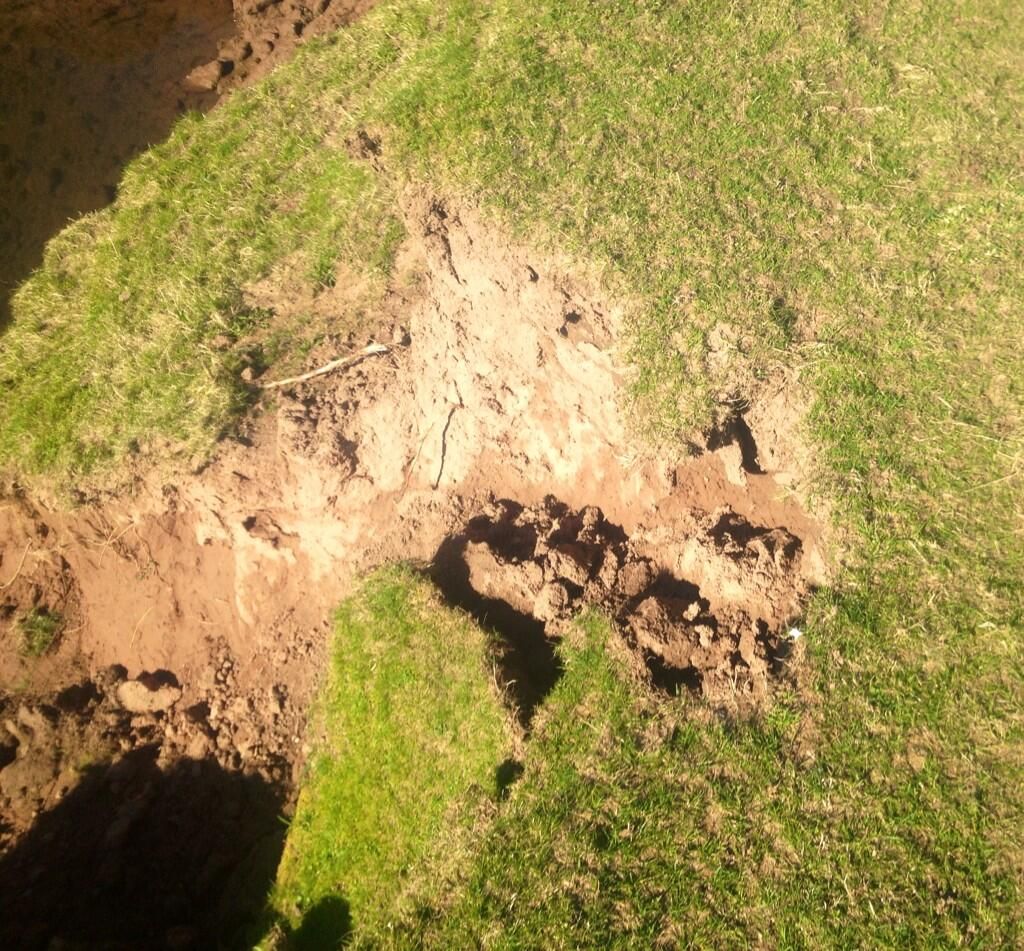
On the first day, I managed to fall down when a badly undercut bank gave way. I jarred my left shoulder but luckily I cast right handed.


Falling down
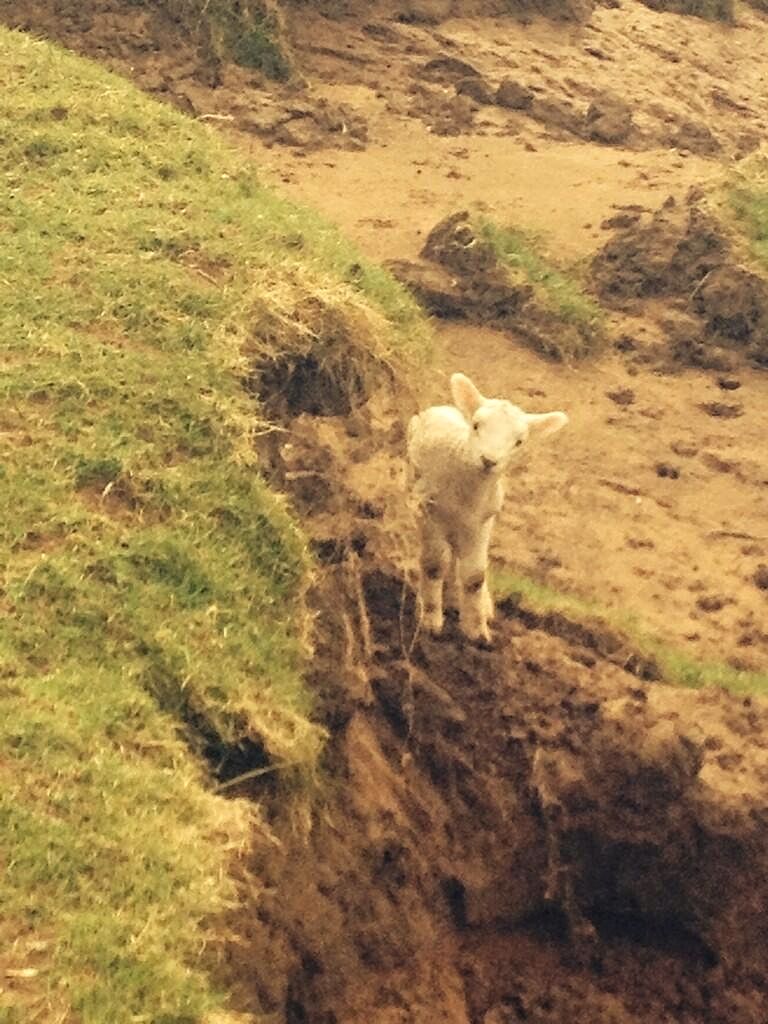
The next day I came across a frightened looking lamb and returned it to its ewe. She had fallen down the same section of bank and I smiled as my shoulder reminded me when I lifted her to field level.

In spite of my good deed the wader Gods frowned upon me once more and my left leg was soaking by the end of the session.
River bank emergency

Grannom - Bryn Derwen, 31st March

Last Monday Dave Smith visited to help me 'get know the new beat'. I hadn't seen Dave for a few months and was looking forward to putting the world to rights and, hopefully, catching a few on the surface.  

After breakfast we tackled up and walked to the river where we noticed clouds of flies drifting up stream - unmistakably grannom. The previous day, Mark Roberts had informed me that they'd begun to hatch further up. Dave and I scanned the water and almost immediately observed a number of kidney shaped rise forms towards the far bank. A sure sign! We knew then were in for a good day and my hands trembled slightly and I talked too much as I tied on a GH grannom/sedge emerger.


Gwilym Hughes and Dave Collins Grannom emergers


We expect grannom to start hatching from the second week of April, but I couldn't recall whether I'd seen them earlier than this year, and so consulted a very experienced fly fisherman, Dave Collins (see the emerger above). He remembers (and so do I now) that about five years ago, after a very warm February and a winter of low water levels, they were present from the third week of March. He also informed me that we saw Yellow Mays in the fourth week in April that year (when we usually expect to see them the first week in May).


In Deep

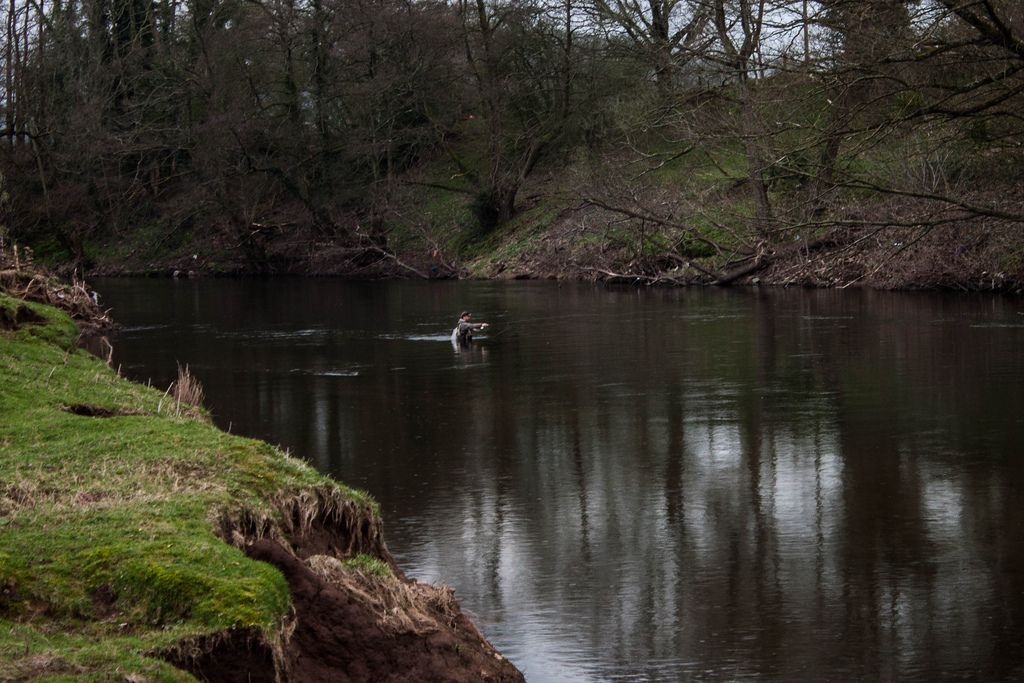
To allow more control and drag free drift, I try to carefully wade within about ten metres of a rising fish, but this is not always possible on the wide, deep lower Usk. As the water levels were high and the majority of fish feeding tight to the opposite bank, Dave and I had to wade deep and cast long. This was made more difficult by a limited back cast in many areas. 

I was using an 11ft #3 loaded with a 4 weight line. The longer rod offers more control at distance and the 4 weight line allows me to work the rod with less line in the air (I normally fish 'one up' when sewin fishing).


Fish rising on the opposite bank...
Timing our casts correctly, we caught fish. The targets would not respond immediately after rising with the most enthusiastic feeding at around thirty second intervals. We took it in turns to spot and cast to fish, both losing large trout that had appeared highly efficient feeders in their bankside lies.


Bryn Derwen beauty


Average stamp
We were impressed by the stamp of the fish (and the numbers in evidence) and, by lunch time, were at the top of our waders targeting what were very challenging trout.

Dave - and for my next trick...
The fish, again tight to the opposite bank, were stationed just off the cover of tree roots and submerged branches. They required a long slack line but (thankfully) were feeding confidently and we successfully hooked many of them.


Gill plate blues


Root and branch
We worked our way slowly upstream picking fish off as we went. On one of my 'turns' we noticed a very small kidney shaped indentation just off a clump of roots over deep water. Suspecting a large fish I concentrated. After a few nervous passes it took the CDC emerger and proved us correct.

Retreating to land the fish
Three or four minutes, a few heart stopping jumps and plenty of side strain later and the fish was in the net. Dave and I marvelled at the perfectly conditioned eighteen inch March beauty.

Grannom feeding Usk brown trout

Dave soon spotted what looked like another good fish, where the water was even deeper and the back cast more limited. Single minded in his approach, he overflowed his waders resulting in a slightly early bath for both of us (not that I minded as it had started raining and my waders were leaking again).

Certainties

Back at the house, we discussed our day over a warming cup of tea and, upon our goodbyes, Dave left me in no doubt that he would like to return to 'the new beat' in the near future.

I've all but given up on my year old Simms waders and, in a desperate attempt to keep dry, I have chanced my arm, ordering a reconditioned pair of Vision waders from Diver Dave. At £120, considering the places I fish and (I'm told) my odd shape, one other thing is certain:
 I'll be very happy if I can laugh in the face of Gierach and stay waterproof until the end of the season.

*Thanks to Dave Smith for some of the above images

Friday, 28 February 2014

Touching Distance - February 2014

Winter of Discontent 

During the wettest winter on record the local grayling fisheries were flooded for long periods, and I only managed four sessions in total. Hugely disappointing. 


Another winter pastime also suffered as I didn't do much ferreting. To make matters worse Nel, my lurcher, has a severely damaged back leg and will be permanently lame. I think a lot of the bitch and this is a bitter blow.


Long netting an orchard

Early Season Patterns

After time spent indoors my river trout fly boxes are somewhere near where I would like them.

Winter evenings
Over the last few years, there have been significant hatches of Large Brook Duns (LBDs) on the Usk and Taff, and improving hatches of March Browns on the Usk. While they are believed to emerge differently the nymphs, like the duns, looks similar and I have tied the following (size 12) pattern to imitate them.
 
LBD / MB Nymph

I have had success with the emerger pattern below on the Usk, Monnow and Taff. On the Monnow and Usk, fish have taken the fly during the sporadic hatches of March Browns. On the Taff they have taken this fly during large hatches of LBDs.

Reading John Goddard's Waterside Guide as a boy, I learnt that the stone clinging LBD nymphs don't hatch in open water and that an emerger pattern is of little value. I am no great entomologist, but what I know (now) is that increasing numbers of LBDs find their way onto the surface of the Taff and Usk, trout feed on them and the size 12 emerger below is successful at these times.
 
 
LBD / MB Emerger
 
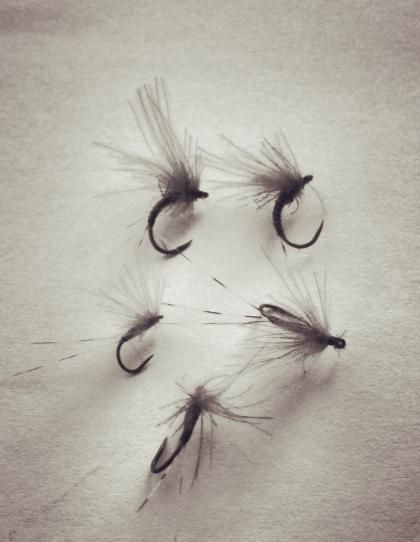
We all know early season fish feed on Large Dark Olives and I have included a few of the patterns used to imitate the nymph and dun. I also catch fish on olive coloured CDC emerger patterns (similar to the one above) and olive jinglers.


UV Back PTN Jig
 
Olive Quill Paraduns
 
LDO Quill CDC Dun
 

The Red River

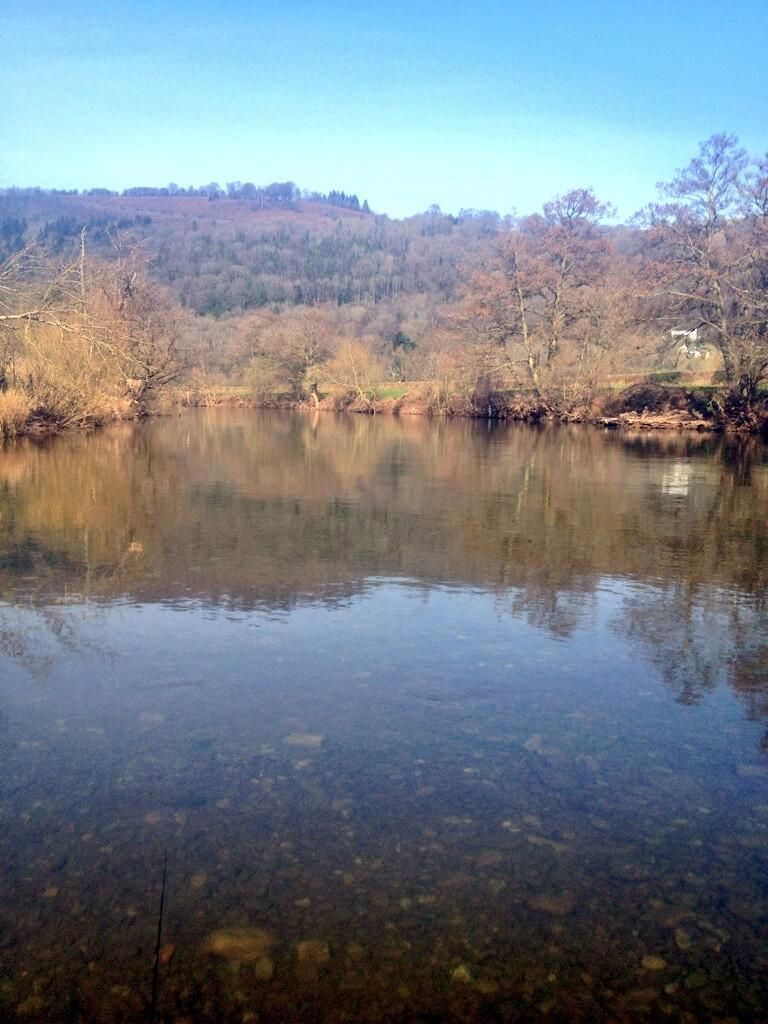
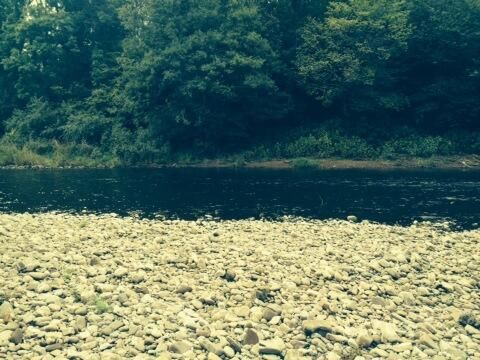
The season cannot come quickly enough. As all my thoughts turn to Usk trout, I know the river will be different this year. The high water has not only eroded banks but washed away natural features, fishermens' seats and even bridges. The pictures below were taken in the same spot, and at the same elevation, six months apart.


Summer low - Bryn Derwen, Usk, August 2013

The Red River - Bryn Derwen, Usk, February 2014
I have recently joined a syndicate to fish the Bryn Derwen beat, Usk (pictured above). This beat starts less than 200m from the house and is known for a couple of named salmon pools. It is lightly fished, especially for trout, and I hope to spend many happy hours becoming acquainted with the water and its inhabitants. I am also allowed to take a guest...

We need a dry week before the river drops to the desired level and, with unsettled weather forecast and the season commencing on Monday, it doesn't look good for the Usk.

As Elvis once sang - so close, yet so far.


Usk LDO dun feeder


Monday, 20 January 2014

Domestic Bliss, River Taff, January 2014

Buckets of rain

It was Saturday night and a text from Dan Popp indicated that the lower Taff would be fishable the following day. I needed no persuasion as the local rivers had been in spate since November. We arranged to meet the next morning at nine.

Upon arrival the falling river was still pushing fast and slightly coloured. Further rain was forecast for the afternoon and so we fished relatively quickly through half a mile of water in the hope of finding a shoal.

Conditions dictated that we concentrated on slower water, mainly covering the margins, gentler runs and pools. We caught numerous micro grayling, nothing big, but it didn't matter as I’d not seen Dan since before Christmas and I was happy to be out.  
 

Against the clock

By mid-afternoon, the rain had returned and the river was colouring (we suspected it had been raining heavily higher up the catchment). There was just time for a quick move to a slow deep pool that would provide our best chance of some larger fish.
 
At the pool Dan went straight to his favourite spot and I entered the river downstream where I caught, and missed, more small grayling on my heavy bugs. The river is currently stuffed with these 4-5 inch fish but, when the water drops back, I expect them to be hammered by the numerous cormorants that we observed perched on wires above the river.

Almost immediately Dan was into a fish of over a pound. Then another, and another. I worked my way upstream hoping to get in on the action. Ever the gentleman, Dan offered me a turn.

 
One of Dan's


On the first cast I was into what was obviously a large grayling that fought deep and steady. The fish was intent on running downstream and into the main current, but I applied side strain to turn it towards the bank. After a couple of minutes my quarry was steered upstream, along the margins and above my position.

As I pulled the net from my back I caught the appetising whiff of a Sunday roast and could hear the sound of hoovering from a nearby terraced house - a surreal moment. By now Dan was in the river next to me and I told him to bugger off as I was afraid the fish would make a last run towards him. He laughed as he netted the 19 inch grayling. After being subjected to a few sweary exclamations the fish swam away strongly.


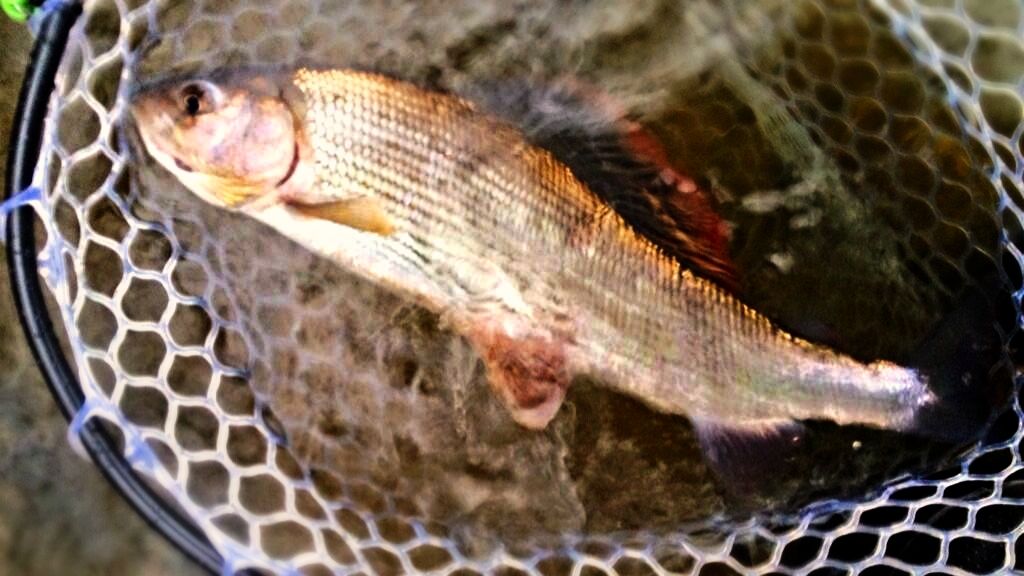
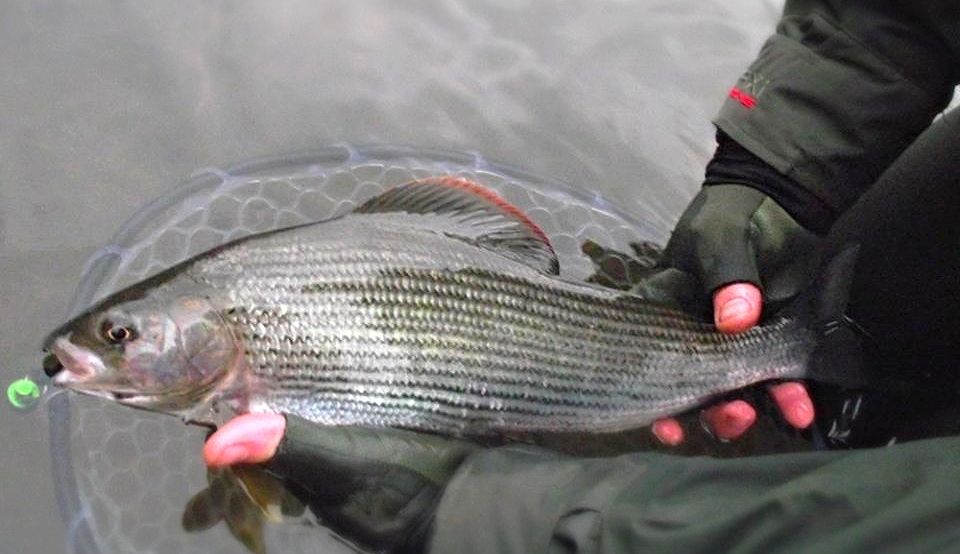
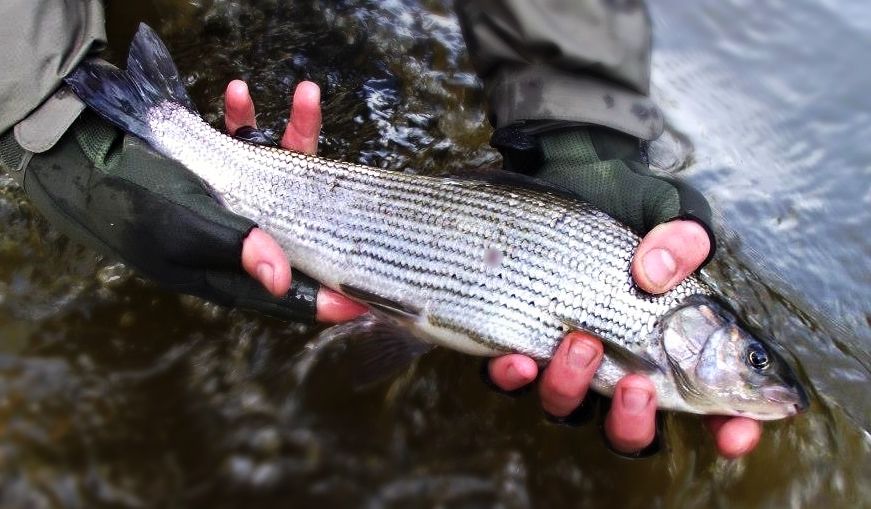
My largest Taff Grayling

Smiling, I patted Dan on the back and made a few casts upriver to calm myself. As I covered the water, I wondered if anyone else had landed a specimen grayling to the smell of warm crackling and the drone of a vacuum cleaner.


Monday, 25 November 2013

Ladies About Town - Urban Grayling, Lower Taff, November 2013

Previously on Thymallus thymallus...

I have fished for river trout on the upper Taff since I was a small boy but, until a few years ago, I had not caught a Taff grayling as they only inhabit the lower river.

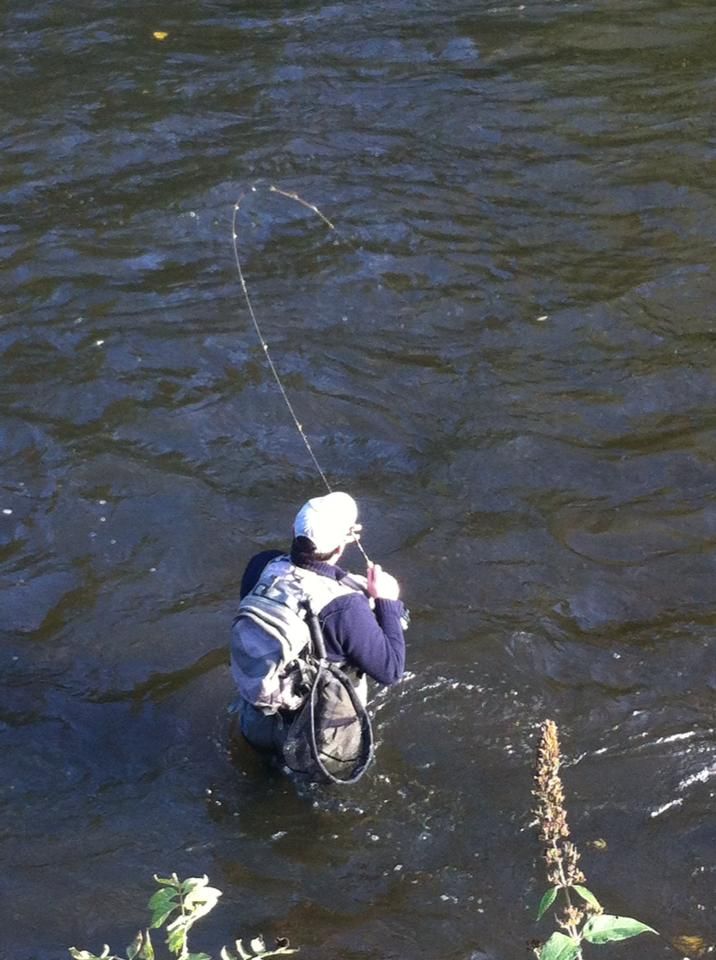
I enjoy fishing gentlemen's hours on the urban river in winter; it's convenient (within 40 minutes drive), cheap (£10 buys a ticket for Ospreys Fly Fishers Association water), the fishing can be top drawer (there is a large grayling population with a good number of fish over 2lb) and many of the friends that I meet on the river are proper fisherman and great company.


Landing a Taff grayling


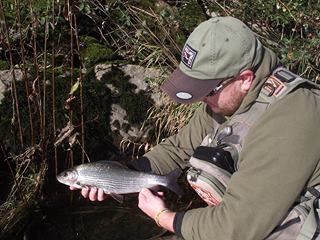
The fish pictured below was one of largest Taff grayling I caught last season. It was captured in a heavily populated area and, upon landing, I received a hearty round of applause from spectators positioned on a nearby bridge. One of the onlookers, a small boy, clearly concerned for my safety shouted, 'Mr there's a f***ing shark behind you!'.


One from last season

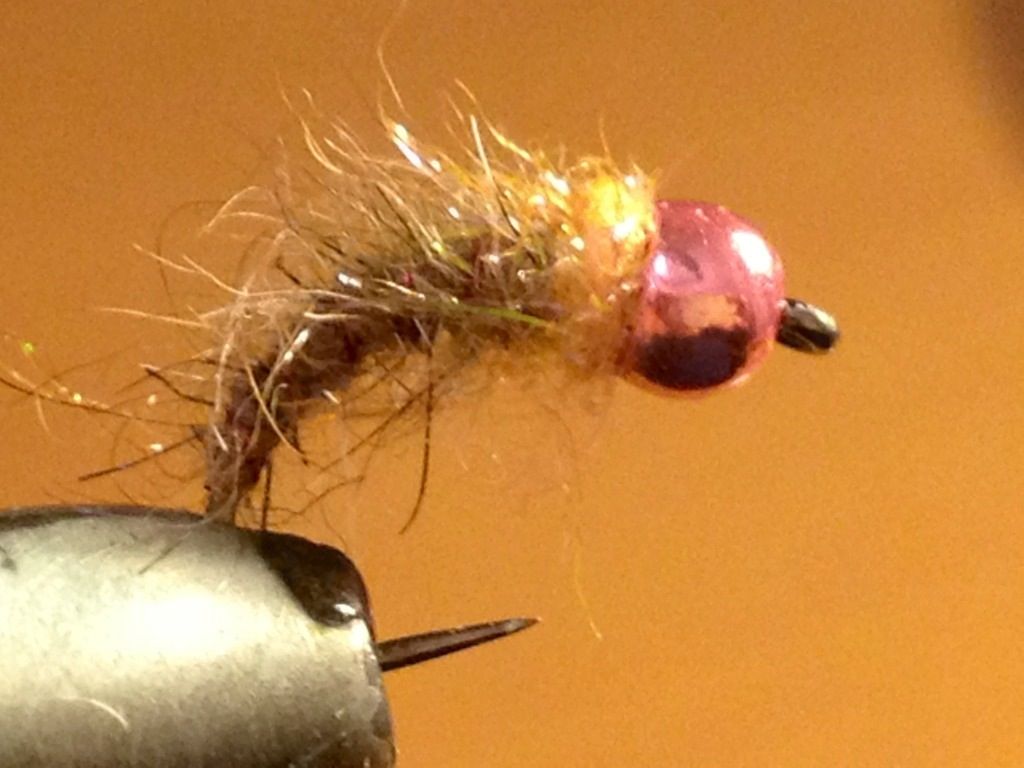
This fish was caught on the pattern below. It worked very well for my friends and I last winter, proving a successful point fly on a number of Welsh rivers and English chalk streams.


Hook: Hannak grub hook - 12, 14 or 16
Bead: Metallic pink - 3mm or 3.5mm
Underbody: Medium lead wire - few turns glued behind bead
Body: Dark hare's mask
Rib: Red or pink wire
Thorax: Ice dub - UV shrimp pink


Cabin Fever, November 2013

It was a sunny November Sunday morning and it hadn't rained for three days. The local rivers had been unfishable for over a month and I was suffering from cabin fever. I'd been tying for weeks and was itching to wet a few new patters. 


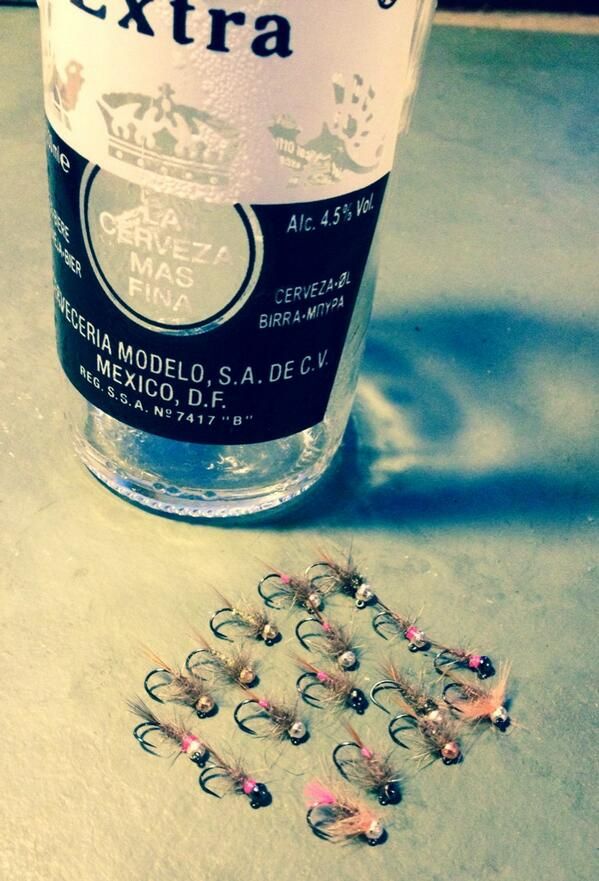
Not my usual tipple


Upon checking, I noted  that the river had dropped to 0.9m at Upper Boat Bridge . The safe level is around 0.7m, but as I was desperate to fish I texted my mate Dan Popp...

I joined Dan and Terry Bromwell on a part of the Ospreys beat that I am relatively well acquainted with. Wading was tricky but we knew that some fish could be caught off the bank. That day we didn't return a huge number - perhaps fifteen between three of us (including out of season trout) - but the proper grayling we did land were well above the Taff average.

Terry was the first to catch. I was stood on the bank above him and saw the fish glint as he set the hook of his red tag HE nymph variant in the slightly coloured water. It put up a strong showing but Terry has had plenty of practice.


Terry with a pristine grayling


As we moved up river we caught several out of season trout (to 1.5lb) and a few small grayling, but did more talking than fishing. At one point I was talking and laughing hard at the end of a cast and, as my body shook, the fly bounced downstream of me and tempted a small grayling. That was not to be the last fish I caught jigging nymphs that afternoon.


Dan Popp into a fish in the coloured water


After a bit of free climbing, and some very difficult wading, we ended up at a pool that was large enough to accommodate the three of us. In the swollen river we knew that some grayling would be close in and so, initially, elected not to wade. I was using a pink butted silver bead hare's mask nymph on the dropper and a pink metallic beaded bug on the point.

I flicked my nymphs upstream, just beyond a weed bed on a line where the current slowed. As the point fly reached the maximum depth, my indicator stopped and I connected with the lady below. Both flies were heavily weighted and this made the difference, ensuring they presented at the required speed in the faster than usual flow.


Nicely conditioned lady


Once we had covered the lies close in, I waded into the river to fish another band of slower current. I varied my casts to cover the water and change the speed of the flies. Nothing took, but as previous experience had shown this to be a productive spot, I persevered. 

Again I cast upstream and slowly led my flies. When directly opposite me, I raised and dipped the rod slightly, repeating as the flies moved with the current. On the second or third rise the fish below hooked itself and put up an arm-aching attritional scrap.


Pleased it's in the net

This chunky fish had taken the dropper and was my largest of the day.


 Thick Taff two pounder


I left the water concluding that, given the conditions, we'd done well, with the quality of the fish more than making up for the relatively low number.  Also, I'd had a great laugh with Dan and Terry and managed to steal a look at a few new flies.

Something for the weekend

This weekend my friends David, Dave and Morgan are coming to stay. On Saturday we are booked to fish Doldowlod on the Upper Wye and later intend to watch Wales play Australia at rugby (in the pub). On Sunday Dave, Morgan and I will (slowly) fish the Taff. David remembers the Taff as an industrial gutter and is going to 'give it a miss'.

I can't guarantee grayling, but can guarantee more good humour and a few beers.


Morgan - elegantly wasted


Tuesday, 8 October 2013

There is a Season - River Usk, September 2013

Rock bottom - Early September 2013

Following a very dry summer that saw me out with the double hander on only three or four occasions, the Usk was on its bones for most of September. Even when we did receive water the river level fell back while still highly coloured. All very worrying and no doubt exacerbated by the numerous abstractions along the river.

Usk trout are some of the spookiest I encounter and, when the river is at rock bottom, fishing can be extremely frustrating.

Summer low

Early in the month there were some decent evening rises with fish feeding mainly on small dark olives, sedge and midge. If I could get anywhere near those feeding in slow water -usually after shuffling in and standing stock still for ten minutes- any hint of drag, line flash or spray and the fish either refused or were spooked. I also had to be pinpoint accurate as the targets were virtually lying in the surface film. With a 16 foot leader, 7x point and size 20 - 24 dries drifted drag-free past their snouts, I managed a few, but experienced many last second refusals.


Size 20 and 22 spun CDC emergers and duns

On those evenings I'm ashamed to say I yearned for the large dark olive hatches of the early season; the April day Pete and I fished at Llanover, the session with Morgan in the heavy rain and the solo day I was snapped on the Mardy beat (see earlier entries). Even though the water was low and clear for the time of year, those afternoon fish were hungry, deep lying and often obliging. Certainly not easy, but less difficult.


Autumn Usk trout

Beginning of the End - Mid September, Ty Mawr (GAS)

By the second week of September, the windspeed increased and I had resorted to nymph tactics spending two happy late afternoon and evening sessions on Ty Mawr. I had given up on creeping around fish that lay in the margins and shallow runs, and concentrated on the deeper water where I had more cover. 

Duo and trio tactics, with a sliding klink and spectra jig nymphs, worked well. During the first session I caught numerous fish up to 14 inches and was grateful for the lively sport provided by the well marked autumn browns.


Pretty Ty Mawr trout

The second session started off the same, but after an hour or so, where I caught several small fish, I became bored and reverted to my favoured dry fly tactics. Again, I left the water having been unable to connect with many of the occasional surface feeding fish.  

End of Sports - Late September, Mardy (MTAA)

By the last Thursday in September, all pure thoughts had deserted me and I left the car armed with only my 11ft Streamflex rod and French leader rig. Informed by my recent experiences I knew the spectra jig nymphs would work well and, as I was headed for some fast runs, I selected two black nickel size 16s (a 3mm bead on the point and the 2.5mm on the dropper).


Wet spectra jig nymph

Hook:   16 Hannak or Fulling Mill jig
Tail:      Coq de leon (I like to splay it)
Rib:       Red ultra wire (the finest diameter I can find)
Body:    Hare's mask dubbing
Thorax: Hends spectra dubbing No.15
Collar:   Soft hare mask 
Bead:    2.5mm or 3mm tungsten black nickel


While I've made some changes, I've seen similar patterns tied by Terry Bromwell, Kieron Jenkins, Nicholas Steedman, Gareth Lewis and others. For this pattern I have included a spun hare's mask collar but I (and others) also use spun CDC, pine squirrel and various soft feather fibres.

Some may consider a 3mm bead to be too large for a size 16 jig hook, this is not the case. I catch lots of trout and grayling on size 16s with 3mm beads. Last year, my most consistent winter grayling pattern was a size 16 3mm sliver bead HE PTN variant.

I walked to the bottom of the beat to a run that has produced numerous good fish over the last few years. It's very fast and, as such, is hardly fished. As I made my way up the run I caught three fish around the pound mark. At its head, on the other side of the main current, there is a slightly deeper channel and back water from which I have caught a number fish over 2lb. That  evening was to deliver one such fish (perhaps my biggest Usk brown of the season).

Apologies for the poor picture but the current is so fast, even in the margins, that I couldn't take my usual 'in the net' photograph and I didn't want to take time in returning the fish after a two minute fight. Safe to say this brown was a 20 inch minter and the image does not do it justice - you can only just see the double blues!


Late season Usk belter


The release


Looking Both Ways

It's been a good season on the Usk; I've learnt many important lessons and,  probably as a result, have hooked more quality fish (not that I landed them all). We have certainly done the right thing in moving to within spitting distance of the river, although there have been some torturous moments when walking the dog along the bank (and being too busy to fish) during a proper evening rise.

I don't want to tempt fate but, for next season there is a chance I may be able to fish a mile or so of water within a two minute walk of the house (see below). This would be a true privilege and, if it comes off, I shall be a very lucky man.


The sun sets on another Usk trout season